Listen to this podcast in the app for free: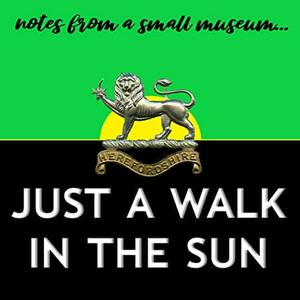 Download for free in the App Store
radio.net
Sleep timer
Save favourites
Just A Walk In The Sun with the Hereford Regiment Museum
Herefordshire Light Infantry Museum
Latest episode
Available Episodes
5 of 39
- Hold it, flash, bang, wallop, what a picture - a seasonal look at images in the Museum collectionSend us a textIf you're missing those nostalgic days of nothing more than a small picture behind each door on your Advent calendar, Col Andy Taylor and Rev Paul Roberts take a stroll around the museum's collection of photographs and images: each with a fascinating story to tell.Delving into the archives of our monthly feature The Camera Returns, our picturesque duo, explore some of their favourite images then and now - from group photographs in Hereford, Holland and beyond, to spigot mortars on King George V playing fields, long gone railway lines and poignant reunions. Despite failing to adequately locate the town of Rushden, once home to the Herefordshire Regiment pre-Gallipoli employment (its in Northamptonshire by the way), Andy and Paul delve into the value of the image in the work of the family, military and social historian - even through this very non-visual media of a podcast! But then, we always knew they both had looks ideally suited for radio!Check out our Camera Returns feature to see what Paul and Andy were seeing and look out for further fascinating updates. Look out too for a Christmas special taking our presenters back over a 100 years to test out a famous culinary delight!Support the showIf you like what you hear, don't forget to like and subscribe to help us reach a wider audience. Visit our website - Herefordshire Light Infantry Museum; follow us on Facebook Herefordshire Regimental Museum | Facebook or visit our Youtube channel Herefordshire Regimental Museum - YouTube.Support the Museum? Become a Patreon supporter or a Become a FriendTheme Tune - The Lincolnshire Poacher, performed by the outstanding Haverhill Silver Band. This podcast generously supported by the Army Museums Ogilby Trust.--------33:52
- Waterless, rocky ridges and ravines - the Battle of Khuweilfe 1917Send us a textWelcome back to Series 3. Reverend Paul Roberts and Colonel Andy Taylor take a misty November wander and discuss events of the summer and the significance of November for the Herefordshire Regiment. As well as Remembrance, the 1st November 1917 marks the anniversary of the battalion's bloodiest battle of the First World War - Khuweilfe. After evacuation from Suvla Bay, the regiment regrouped in Egypt, joining the Suez Canal defences and participating in the Battle of Romani in 1916.The defeat of Turkish forces opened the way for British advances across the Sinai, with significant logistical challenges due to harsh desert conditions and limited infrastructure. Strong defensive lines were established between Gaza and Beersheba. The latter fell on 31 October 1917, prompting Ottoman retreats to defensive high ground, including Tel-el-Khuweilfe. The terrain was described as a stony, waterless desert with difficult fighting conditions compounded by rain and cold.The Herefordshire Regiment and supporting units attacked these defences. The Regiment sustained its worst losses of the war: 79 fatalities recorded in a single day, with estimated total casualties (including wounded) about 400—over half the battalion.Modern and historical photographs of Tel-el-Khuweilfe, show preserved trench lines.The capture of Gaza opened the road to Jerusalem, which was reached at Christmas 1917 under Allenby’s leadership.Support the showIf you like what you hear, don't forget to like and subscribe to help us reach a wider audience. Visit our website - Herefordshire Light Infantry Museum; follow us on Facebook Herefordshire Regimental Museum | Facebook or visit our Youtube channel Herefordshire Regimental Museum - YouTube.Support the Museum? Become a Patreon supporter or a Become a FriendTheme Tune - The Lincolnshire Poacher, performed by the outstanding Haverhill Silver Band. This podcast generously supported by the Army Museums Ogilby Trust.--------28:16
- The remarkable Hull Brothers - from South Africa, Hereford Cathedral, Internment Camp to the Three Choirs FestivalSend us a textIn this month's episode, in the run up to the Three Choirs Festival, Col Andy Taylor and Revd Paul Roberts explore the fascinating and poignant story of brothers Claude and Percy Hull of Hereford. Claude a member of the Herefordshire Rifle Volunteers served in the Boer War, emigrated to Canada and served during the First World War with Canadian Forces.His brother Percy, sang in Hereford Cathedral Choir where he later became Assistant Organist. He found himself in Germany at the outbreak of the First World War and was interned along with thousands of other men - musicians, sportsmen, businessmen and merchant seaman among them - at Ruhleben Internment Camp, west of Berlin. Hear about the fascinating self-governing community at Ruhleben, including the story of professional footballer and coach Stephen Bloomer.After the war Percy became Organist at Hereford Cathedral and was instrumental in restarting the Three Choirs Festival. He was later knighted for similar efforts restarting this oldest musical festival in the world after the Second World War.Support the showIf you like what you hear, don't forget to like and subscribe to help us reach a wider audience. Visit our website - Herefordshire Light Infantry Museum; follow us on Facebook Herefordshire Regimental Museum | Facebook or visit our Youtube channel Herefordshire Regimental Museum - YouTube.Support the Museum? Become a Patreon supporter or a Become a FriendTheme Tune - The Lincolnshire Poacher, performed by the outstanding Haverhill Silver Band. This podcast generously supported by the Army Museums Ogilby Trust.--------28:14
- A night at the Town Hall: Op Blackout and the story of reuniting Doenitz' baton and pennantsSend us a textIn this episode we listen in to the Museum's presentation of Op Blackout, 80 years after the last operation of WW2 and the first of the rebuilding of post-war Germany in which the Herefordshire Regiment took a pivotal role. On 18th May 1945 The Herefordshire Regiment helped to liquidate the puppet Government headed by Hitler's nominated successor, Grand Admiral Doenitz. This administration was suspected of harbouring a number of hard-line Nazis and Doenitz was summoned to a meeting, while troops moved in to round up his government at Flensburg Castle. Men of the Herefords arrested Doenitz and relieved him of his car pennants and later his baton was taken into safe custody also. Today the baton is proudly displayed at the Soldiers of Shropshire Museum in Shrewsbury Castle and on our Op Blackout evening these items were reunited for only the third time in 50 years.Listen in to Colonel Marius Coulon of the Soldiers of Shropshire Museum who had the unenviable task of bringing Doenitz's baton down the A49; Hugh Patterson, chair of the Herefordshire Light Infantry Museum Trust and Colonel Andy Taylor who tells the story of Op Blackout (apologies for the poor quality of this section). Finally thanks are given by HM Lord Lieutenant for Herefordshire, Mr Edward Harley.Support the showIf you like what you hear, don't forget to like and subscribe to help us reach a wider audience. Visit our website - Herefordshire Light Infantry Museum; follow us on Facebook Herefordshire Regimental Museum | Facebook or visit our Youtube channel Herefordshire Regimental Museum - YouTube.Support the Museum? Become a Patreon supporter or a Become a FriendTheme Tune - The Lincolnshire Poacher, performed by the outstanding Haverhill Silver Band. This podcast generously supported by the Army Museums Ogilby Trust.--------34:11
- Investigating a quintessentially Territorial award - the enigmatic Territorial Force War MedalSend us a textIn this month's episode, Col Andy Taylor and Rev Paul Roberts take a "deep dive" into a scarce and unusual award for the First World War made only to Territorial soldiers 1914-1919. They investigate the origins and exacting criteria for this WW1 campaign service medal, common misconceptions and the many anomalies caused by it, along with the character of the men and women who were awarded it. A fascinating insight into policy of deploying Territorial troops to garrison the British Empire and the willingness of part time soldiers and nurses from Herefordshire - and across the country - to sign up to serve overseas, which they were under no obligation to do under Territorial Force Regulations until May 1916. One of the illustrations they use is their shared ancestor, Charles Percy Taylor from Ledbury.Paul and Andy discuss research possibilities for the military and family historian alike of this attractive and enigmatic award, by far the scarcest of all First World War service medals. And how First World War service medals can still be claimed today, over a century later in certain circumstances.Support the showIf you like what you hear, don't forget to like and subscribe to help us reach a wider audience. Visit our website - Herefordshire Light Infantry Museum; follow us on Facebook Herefordshire Regimental Museum | Facebook or visit our Youtube channel Herefordshire Regimental Museum - YouTube.Support the Museum? Become a Patreon supporter or a Become a FriendTheme Tune - The Lincolnshire Poacher, performed by the outstanding Haverhill Silver Band. This podcast generously supported by the Army Museums Ogilby Trust.--------35:54
More History podcasts
 EmpireHistory
 Titanic: Ship of DreamsHistory, Society & Culture, Documentary
 Journey Through TimeHistory
 Short History Of...History
 The AncientsHistory
 Betwixt The Sheets: The History of Sex, Scandal & SocietyHistory
 After Dark: Myths, Misdeeds & the ParanormalHistory, Society & Culture, True Crime
 British ScandalHistory, Society & Culture, Documentary
 Dan Snow's History HitHistory
 WW2 Pod: We Have Ways of Making You TalkEducation, History, Society & Culture
Trending History podcasts
 Time TeamHistory, Science
 Noble BloodHistory, Society & Culture
 The Unauthorized History of the Pacific WarEducation, History, Society & Culture, Courses, Documentary
 Decoding The UnknownHistory
 School of WarArts, Business, History, Books
 WW2: Both Sides of The Wire | A Battle Guide ProductionHistory
 The Holy Quran, Sheikh Maher Al-Muaiqly | القران الكريم ماهر المعيقليEducation, History, Religion & Spirituality
 SPYCRAFT 101Education, Government, History
 Calm History - Bedtime Sleep Stories for Education & RelaxationHealth & Wellness, History, Alternative Health, Mental Health
 Bad GaysHistory
 Forbidden HistoryHistory, Society & Culture, Documentary
 Tony Robinson's CunningcastArts, History, Society & Culture, Performing Arts
 Legends of the Old WestArts, History, Society & Culture, Documentary
 SpyCastEducation, History, News
 Cool People Who Did Cool StuffHistory, Society & Culture
 Misquoting Jesus with Bart EhrmanHistory, Religion & Spirituality, Christianity
 And Colossally That's History!History, Leisure, Sports, Automotive
- History For Sleep with the Drowsy HistorianHistory
 Stuff You Missed in History ClassHistory, Society & Culture
 The Country House PodcastHistory, Leisure, Society & Culture, Home & Garden, Places & Travel
 Emperors of RomeHistory
 ThroughlineHistory, Society & Culture, Documentary
 Les grands dossiers de l'Histoire par Franck FerrandHistory
 Queens, Kings, and Dastardly ThingsHistory, Society & Culture
 WW1: Not So Quiet On The Western Front! | A Battle Guide ProductionHistory
 Everything Everywhere DailyEducation, History
 Aaron Mahnke's Cabinet of CuriositiesHistory, Society & Culture
About Just A Walk In The Sun with the Hereford Regiment Museum
A monthly podcast from the Herefordshire Light Infantry Museum. Hosted by Colonel Andy Taylor and Rev Paul Roberts. Stroll with us around the highways and byways of Herefordshire while we explore the story of the our regiment and county in war and peace. Special guests, featured items from the museum's collection and highlights from the lives of those who served from our beautiful county... and a pint or two as well!
Podcast websiteListen to Just A Walk In The Sun with the Hereford Regiment Museum, Empire and many other podcasts from around the world with the radio.net app
Get the free radio.net app
- Stations and podcasts to bookmark
- Stream via Wi-Fi or Bluetooth
- Supports Carplay & Android Auto
- Many other app features
Get the free radio.net app
- Stations and podcasts to bookmark
- Stream via Wi-Fi or Bluetooth
- Supports Carplay & Android Auto
- Many other app features

Just A Walk In The Sun with the Hereford Regiment Museum
Scan code,
download the app,
start listening.
download the app,
start listening.
 UK
UK