

Listen to this podcast in the app for free: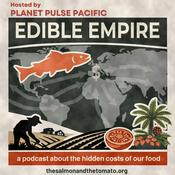 Download for free in the App Store
radio.net
Sleep timer
Save favourites
172 episodes
Dr Mike Joy and Dr Milena Bojovic - New Zealand dairy and Western Sahara phosphate
29/09/2026 | 56 mins.This episode is a supplementary full interview with Dr Mike Joy and Dr Milena Bojovic from Episode 5 of the Edible Empire podcast series. Here, we explore how New Zealand’s dairy industry links local landscapes to global extraction, ecological harm, and the wider machinery of food imperialism.
New Zealand’s image of clean, green pastures hides one of the world’s most intensive dairy industries. Behind each glass of milk there is a hidden web of global extraction: phosphate mined from occupied Western Sahara, palm kernel imported from deforested Southeast Asia, and polluted rivers flowing through Māori ancestral lands. This episode traces how New Zealand’s dairy boom reshapes both local ecosystems and distant economies, from illegally occupied territories in West Africa to political power in New Zealand. Through the story of “white gold”, we uncover how even the purest landscapes are bound into the machinery of food imperialism.
We discuss the environmentally destructive and geopolitically fraught supply chains connecting intensive dairy production in Aotearoa New Zealand with phosphate mining in the illegally occupied territory of Western Sahara as well as palm kernel from South-East Asia in cattle feed. Freshwater ecologist Dr Mike Joy and Geographer Dr Milena Bojovic detail how New Zealand’s export-driven commodity model creates intense global market pressures for corporate profit and high-yield volume. Mike exposes the catastrophic local consequences of this system, explaining how excessive synthetic nitrogen and fertiliser inputs poison rivers, disrupt aquatic ecosystems, and contaminate drinking water. Milena, meanwhile, unpacks the structural traps that force farmers into continual intensification, which in turn fuels dependence on rare, internationally contested mineral resources.
Resources from this interview:
https://ojs.victoria.ac.nz/pq/article/view/9629/8507
https://people.wgtn.ac.nz/mike.joy
To view all the links to the websites and documents, visit the show notes on our website.
Please support our work and enable us to deliver more content by buying us a coffee or becoming a member of Athletes for Nature.
Follow us on Instagram and Facebook, subscribe to this podcast, and share this episode with your friends and family.María Alonso Martínez - The Salmon and the Tomato
27/09/2026 | 35 mins.This episode is a supplementary full interview with María Alonso Martínez from Episode 4 of the Edible Empire podcast series. Here, we explore the human and environmental costs of the fishmeal and fish oil industry that has decimated fisheries in West Africa in the name of supplying aquaculture feed and cheap, year-round fish.
What connects salmon farming in northern Europe with tomato farming in southern Spain? These two, seemingly distinct food supply chains ensure that our supermarket shelves are stocked with cheap, year-round food. What we don’t see, however, are the hidden links - the overfishing along the coast of West Africa that destroys local communities’ livelihoods and drives migration to Europe; the dangerous journeys by small boat where 1 in 5 people die; the entrapment of migrants arriving in exploitative agricultural labour in Spain’s intensive greenhouses. This interview examines the story of salmon farming - and highlights the hidden costs of this highly commodified food.
Researcher María Alonso Martínez reveals the environmental and social costs of the vast plastic-covered greenhouses in south-east Spain that produce much of Europe’s winter veg. She discusses the exploitation of a vast labour force of migrants who make the perilous journeys from West and North Africa, often dangerous, multi-day trips by small boat. On arrival, many of them work as undocumented migrant labourers, toiling under inhumane conditions within Almería’s vast "Sea of Plastic" to harvest the cheap winter vegetables that stock European supermarket shelves.
To view all the links to the websites and documents, visit the show notes on our website.
Please support our work and enable us to deliver more content by buying us a coffee or becoming a member of Athletes for Nature.
Follow us on Instagram and Facebook, subscribe to this podcast, and share this episode with your friends and family.Dr Aliou Ba - The Salmon and the Tomato
22/09/2026 | 29 mins.This episode is a supplementary full interview with Dr Aliou Ba from Episode 4 of the Edible Empire podcast series. Here, we explore the human and environmental costs of the fishmeal and fish oil industry that has decimated fisheries in West Africa in the name of supplying aquaculture feed and cheap, year-round fish.
What connects salmon farming in northern Europe with tomato farming in southern Spain? These two, seemingly distinct food supply chains ensure that our supermarket shelves are stocked with cheap, year-round food. What we don’t see, however, are the hidden links - the overfishing along the coast of West Africa that destroys local communities’ livelihoods and drives migration to Europe; the dangerous journeys by small boat where 1 in 5 people die; the entrapment of migrants arriving in exploitative agricultural labour in Spain’s intensive greenhouses. This interview examines the story of salmon farming - and highlights the hidden costs of this highly commodified food.
Dr Aliou Ba of Greenpeace Africa details how this industrial plundering has collapsed local artisanal fisheries and triggered a profound food security crisis in Senegal. This environmental degradation ultimately forces thousands of displaced West Africans to undertake a perilous sea voyage to Spain.
To view all the links to the websites and documents, visit the show notes on our website.
Please support our work and enable us to deliver more content by buying us a coffee or becoming a member of Athletes for Nature.
Follow us on Instagram and Facebook, subscribe to this podcast, and share this episode with your friends and family.Hazel Healy and Brigitte Wear - The Salmon and the Tomato
20/09/2026 | 40 mins.This episode is a supplementary full interview with Hazel Healy and Brigitte Wear from Episode 4 of the Edible Empire podcast series. Here, we explore the human and environmental costs of the fishmeal and fish oil industry that has decimated fisheries in West Africa in the name of supplying aquaculture feed and cheap, year-round fish.
What connects salmon farming in northern Europe with tomato farming in southern Spain? These two, seemingly distinct food supply chains ensure that our supermarket shelves are stocked with cheap, year-round food. What we don’t see, however, are the hidden links - the overfishing along the coast of West Africa that destroys local communities’ livelihoods and drives migration to Europe; the dangerous journeys by small boat where 1 in 5 people die; the entrapment of migrants arriving in exploitative agricultural labour in Spain’s intensive greenhouses. This interview examines the story of salmon farming - and highlights the hidden costs of this highly commodified food.
Hazel and Brigitte expose the ecological crises, corporate opacity, and false sustainability narratives surrounding aquaculture and the challenges that face journalists investigating supply chain transparency.
To view all the links to the websites and documents, visit the show notes on our website.
Please support our work and enable us to deliver more content by buying us a coffee or becoming a member of Athletes for Nature.
Follow us on Instagram and Facebook, subscribe to this podcast, and share this episode with your friends and family.Simen Sætre - The Salmon and the Tomato
15/09/2026 | 32 mins.This episode is a supplementary full interview with Simen Sætre from Episode 4 of the Edible Empire podcast series. Here, we explore the hidden impacts of salmon farming in northern Europe, revealing the human and environmental costs behind cheap, year-round food.
What connects salmon farming in northern Europe with tomato farming in southern Spain? These two, seemingly distinct food supply chains ensure that our supermarket shelves are stocked with cheap, year-round food. What we don’t see, however, are the hidden links - the overfishing along the coast of West Africa that destroys local communities’ livelihoods and drives migration to Europe; the dangerous journeys by small boat where 1 in 5 people die; the entrapment of migrants arriving in exploitative agricultural labour in Spain’s intensive greenhouses. This interview examines the story of salmon farming - and highlights the hidden costs of this highly commodified food.
Simen uncovers the destructive, interconnected global supply chains linking northern European salmon aquaculture to the overexploitation of West African artisanal fisheries. He traces how the booming Norwegian salmon farming industry relies heavily on wild-caught ocean feed extracted from West Africa, exposing the ecological crises, corporate opacity, and false sustainability narratives surrounding salmon aquaculture.
Resources from this interview:
https://norla.no/en/books/1286-the-new-fish-the-global-history-of-salmon-farming
https://www.penguinrandomhouse.com/books/735421/the-new-fish-by-simen-saetre-and-kjetil-ostli/
To view all the links to the websites and documents, visit the show notes on our website.
Please support our work and enable us to deliver more content by buying us a coffee or becoming a member of Athletes for Nature.
Follow us on Instagram and Facebook, subscribe to this podcast, and share this episode with your friends and family.
More Earth Sciences podcasts
 Meet the FarmersArts, Business, Careers, Earth Sciences, Entrepreneurship, Food, Personal Journals, Science, Society & Culture
 DrilledEarth Sciences, Science, Social Sciences, True Crime
 Rare EarthEarth Sciences, Science
 The Great Simplification with Nate HagensEarth Sciences, Natural Sciences, Science
 PlanetGeo: The Geology PodcastEarth Sciences, Education, Natural Sciences, Science
 Bedrock: Earth's Earliest HistoryEarth Sciences, Life Sciences, Science
 Planet PossibleBusiness, Earth Sciences, Natural Sciences, Nature, Non-Profit, Science
 Geology BitesEarth Sciences, Science
 Regenerative Agriculture PodcastEarth Sciences, Natural Sciences, Science
Trending Earth Sciences podcasts
About Edible Empire
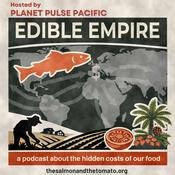
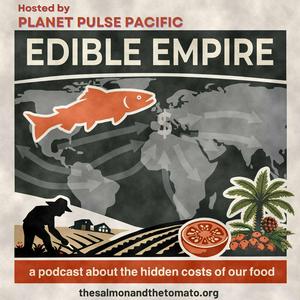
Planet Pulse Pacific—your go-to podcast for conversations about people and planet—is proud to host a special series: Edible Empire. As the climate and global health crises intensify, the need for meaningful change has never been more urgent. This six-episode series brings together leading voices from around the world to explore the concept of food imperialism, uncover the hidden social and environmental costs of what we eat, and examine how we can build a more just and sustainable food system. Join your hosts, Ben Eitelberg and Emma Strutt, alongside special series co-host Dr Neal Haddaway, as they dive into the complex and often unseen world of food—how it is produced, traded, and consumed across the globe. Kelly Allum edits the series.
Podcast websiteListen to Edible Empire, Meet the Farmers and many other podcasts from around the world with the radio.net app
Get the free radio.net app
- Stations and podcasts to bookmark
- Stream via Wi-Fi or Bluetooth
- Supports Carplay & Android Auto
- Many other app features
Get the free radio.net app
- Stations and podcasts to bookmark
- Stream via Wi-Fi or Bluetooth
- Supports Carplay & Android Auto
- Many other app features

Edible Empire
Scan code,
download the app,
start listening.
download the app,
start listening.
 UK
UK