

Listen to this podcast in the app for free: Download for free in the App Store
radio.net
Sleep timer
Save favourites
38 episodes
We've cut the workweek before – what history says about 4-day week
14/01/2026 | 39 mins.Juliet Schor, professor at Boston College, bestselling author and global advocate for worktime redesign, returns to the podcast following the 2023 episode. She now brings new insights from expanded large-scale trials in reducing the workweek from five to four days, with no pay cuts. Since we last spoke, these trials have grown significantly in both scale and scope, covering more than 245 organisations across 11 countries. The findings show remarkable consistency: around 90% of participating companies remain on the four-day week after one year, with employees reporting improvements across 20 well-being indicators and employers seeing no loss in productivity. While the four-day workweek may feel novel, it is not the first time working hours have been reduced. The shift from six to five days in the 1920s offers a clear historical precedent and important lessons for today. The four-day movement is now attracting a broad coalition, from governments and unions to environmental organisations, women’s groups and disability advocates, each seeing tangible benefits in shorter workweeks. Yet the at-scale adoption of the four-day week is bound to have ripple effects across other sectors, including education, the care economy, social protection and the environment – effects that remain to be fully understood. Are we ready for those? Find out more in her conversation with UNESCO’s Iulia Sevciuc.
The facts, ideas and opinions expressed in these podcasts are those of the authors; they are not necessarily those of UNESCO or any of its partners and stakeholders and do not commit nor imply any responsibility thereof. The designations employed and the presentation of material throughout these episodes do not imply the expression of any opinion whatsoever on the part of UNESCO concerning the legal status of any country, territory, city or area or of its authorities, or concerning the delimitation of its frontiers or boundaries.
Hosted on Ausha. See ausha.co/privacy-policy for more information.Institutions fuel prosperity, make them inclusive and capable
16/10/2024 | 30 mins.Daron Acemoglu, the newly minted Nobel prize laureate in Economics and distinguished Institute Professor at the Massachusetts Institute of Technology (MIT), debunks for us some long-standing assumptions about technology, productivity, and shared prosperity. Benefits do not automatically tickle down from industry to workers. Distributive gains take inclusive institutions and a calibrated approach that creates greater competition, changes the norms in the industry, and deals specifically with market failures via a host of incentives, subsidies, taxes, and regulations. In the case of the tech industry, that starts with a vision that is pro-worker and pro-democratic – the opposite of what Acemoglu characterizes as the current Silicon Valley equilibrium. Finally, we are asked to think very critically about some of the trending policy solutions. Universal basic income is not the silver bullet some see it to be. Data value and its distribution, on the other hand, deserve great attention. Data is going to be as important as land is to production. How do we treat it as such? Find answers in his discussion with Gabriela Ramos, UNESCO’s Assistant Director-General for Social and Human Sciences.
Hosted on Ausha. See ausha.co/privacy-policy for more information.Social media and trust in science – “it’s complicated”
13/10/2024 | 38 mins.Much guilt for the erosion of public trust in science is laid at the feet of social media. Does data support such fears? Homero Gil de Zuñiga Navajas and Brigitte Huber conducted a 20-country study that looked into this relationship and they say… “it’s complicated”. Social media news use is positively related to trust in science, yet worries about echo chambers and polarization are real. They also say that there is little fake news on social media, but it’s the concentration and effects that are concerning. The majority of fake news hits a small group of people, who are dragged into rabbit holes by algorithms and their own curation of content. But look on the bright side. There is room for everything on social media. Scientists and policy makers need to discern paths to positive outcomes. From using micro-targeting, to banking on users' need for cognition, to tailoring campaigns to personality traits – social media has “tricks”. Are we ready to employ them? Find out in their discussion with UNESCO’s Iulia Sevciuc .
Hosted on Ausha. See ausha.co/privacy-policy for more information.Infantilized and unequal – the public sector is struggling when it’s needed the most
13/08/2024 | 24 mins.Charles Landry, author and president of the Creative Bureaucracy Festival, talks to us about how the public sector has been weakened from within through consistent reduction in its capacities and expertise. Cuts in analytical, foresight and strategic entities have not gone unfelt in crises. Under pressure to deliver, the public sector has been increasingly reaching to the market and outsourcing work. Spending and over-reliance on external consultants have, expectedly, mounted. Equally important is that such a trend has infantalized the public sector and put it on an unequal footing – through imbalanced access to intellectual resources and investments – with external consultants. Are there ways out ? Find out in his discussion with UNESCO 's Iulia Sevciuc.
Hosted on Ausha. See ausha.co/privacy-policy for more information.Too risk averse, too path dependent – redesign governance systems to face shocks
08/08/2024 | 42 mins.Mark Esposito, Professor at Hult International Business School and Adjunct Professor of Public Policy at Georgetown University, joins us today to discuss crisis and resilience. He dissects the concrete markers of a resilient system and discusses what helps it withstand (and possibly thrive in) turmoil. The number of shocks will only increase, hence it is high time to in-build agility and implicit fragility into our systems. When it comes to governance and decision-making, there is a lot of destigmatization that needs to be done on the concept of failure. In crisis, the speed of response and pivoting may be more critical than accuracy. Yet we’re bound by institutional legacies that have not been stress-tested for the mega challenges of today and operate under the assumption that decision-making must be successful 100 percent. How to regroup? Follow his discussion with UNESCO's Iulia Sevciuc for solutions.
Hosted on Ausha. See ausha.co/privacy-policy for more information.
More Government podcasts
 Global Security BriefingGovernment, News, Politics
 The DSR NetworkGovernment
 American PotentialEducation, Government, News, Personal Journals, Politics, Self-Improvement, Society & Culture
 LondongradDocumentary, Government, News, Society & Culture
 5-4Government, News, News Commentary
 Political Thinking with Nick RobinsonGovernment, News, Politics
 Inside Briefing with the Institute for GovernmentGovernment, News, Politics
 Strict ScrutinyGovernment, News, Philosophy, Society & Culture
 The InterviewGovernment, News, Politics
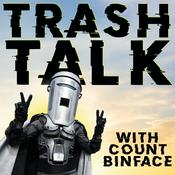 Trash Talk... with Count BinfaceComedy, Comedy Interviews, Government, News, Politics
Trending Government podcasts
 Cato PodcastGovernment, News, News Commentary, Politics
 The Oath and The OfficeGovernment, News, Politics
 Southeast Asia RadioGovernment
 Centre for CitiesGovernment, History, News, Politics
 This Means WarGovernment
 The Local Authority PodcastGovernment, News, Politics, Society & Culture
 Reform Party PodcastGovernment, News, Politics
 RNIB ConnectBusiness, Government, Non-Profit
 House of Lords Podcast: Lord Speaker's CornerGovernment, News, Politics
 The Find Out PodcastGovernment, News, News Commentary, Politics
 Defence & Security Podcast NetworkBusiness, Government
 NatSec MattersGovernment, News
 NSPCC Learning PodcastBusiness, Education, Government, Non-Profit
 Congressional DishGovernment, News, Politics
 New Books in European PoliticsArts, Books, Government, News, Politics
 Democracy ParadoxGovernment, News, Politics, Science, Social Sciences
 Irregular Warfare PodcastGovernment
 Law and ChaosGovernment, News, Politics
 Columnistas Página 13Government, Leisure, News, TV & Film
 The Civil Service World PodcastGovernment
 Scaling LawsGovernment, News, Politics, Tech News
 The Week in WestminsterGovernment
About The Policy Nerd, by UNESCO
Welcome to the Policy Nerd podcast by the UNESCO Inclusive Policy Lab. This is the place where top thinkers come to talk concrete data and debate policy solutions that would reset us along a more equitable and smarter path.
...
The facts, ideas and opinions expressed in these podcasts are those of the authors; they are not necessarily those of UNESCO or any of its partners and stakeholders and do not commit nor imply any responsibility thereof. The designations employed and the presentation of material throughout these episodes do not imply the expression of any opinion whatsoever on the part of UNESCO concerning the legal status of any country, territory, city or area or of its authorities, or concerning the delimitation of its frontiers or boundaries.
Hosted on Ausha. See ausha.co/privacy-policy for more information.
Podcast websiteListen to The Policy Nerd, by UNESCO, Global Security Briefing and many other podcasts from around the world with the radio.net app

Get the free radio.net app
- Stations and podcasts to bookmark
- Stream via Wi-Fi or Bluetooth
- Supports Carplay & Android Auto
- Many other app features
Get the free radio.net app
- Stations and podcasts to bookmark
- Stream via Wi-Fi or Bluetooth
- Supports Carplay & Android Auto
- Many other app features

The Policy Nerd, by UNESCO
Scan code,
download the app,
start listening.
download the app,
start listening.
The Policy Nerd, by UNESCO: Podcasts in Family
 UK
UK