
Listen to this podcast in the app for free: Download for free in the App Store
radio.net
Sleep timer
Save favourites
8 episodes
Not Tonight Pauline! The (Mis)Adventures Of Napoleon’s Scandalous Sister (with Dr Laura O'Brien)
25/11/2026 | 1h 6 mins.What if Napoleon was brat? This week, special guest Dr Laura O’Brien tells Gillian and Emma all about the scandalous lives and loves of Pauline Bonaparte, Napoleon’s unruly, sexy, but very loyal younger sister. The trio discuss the momentous events she lived through or participated in, from the French and Haitian Revolutions to her brother’s imperial rise, all the way to Waterloo and his dramatic fall. But mostly they focus on Pauline herself: her two marriages, her numerous affairs, her chronic health issues, and the glamorous and feminine self image she worked to cultivate. How close were Pauline and her famous older brother? What role did she play in his rise and fall? And how did she come to be depicted in sculpture as a very sexy Venus?
Unruly History is the podcast that blows apart the historical canon. This episode was hosted by Dr Gillian Kenny and Dr Emma Nagouse, and produced by Dr Emmie Rose Price-Goodfellow. We are a completely independent production, so please consider subscribing at patreon.com/unrulyhistory for all kinds of exciting bonus content.
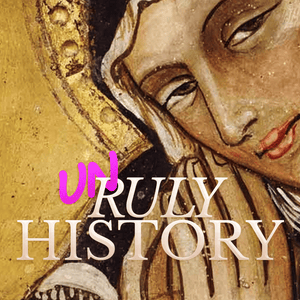
Our cover art is by the supremely talented Aaron Kite, https://itsakite.com/
Sources:
Flora Fraser, Venus of Empire: The Life of Pauline Bonaparte (2009)
Mark Braude, The Invisible Emperor: Napoleon on Elba from Exile to Escape (2018)
Pierre Branda, La saga des Bonaparte: du XVIIIe siècle à nos jours (2018)
Laurent Dubois, Avengers of the New World: the story of the Haitian Revolution (2004)
Christopher Johns, Antonio Canova and the Politics of Patronage in Revolutionary and Napoleonic Europe (1998)
Michael Broers, Napoleon: Soldier of Destiny (2014)
Tim Clayton, This Dark Business: The Secret War Against Napoleon (2018)The Medieval Peasants' Revolt That Wasn't: Part II
18/11/2026 | 51 mins.When Adam delved and Eve span, who then was the gentleman? (something I'm always asking myself). This week, Gillian finishes telling Emma about the 1381 uprising against the poll tax, their banger of a biblical slogan, and what happens when English people stop tutting and start rebelling. They explore what happened when the revolt reached London and came face to face with the boy king Richard II himself, and ask how violent the rebels really were – and how it compared to the government's crackdown. What fate befell the Archbishop of Canterbury when the rebels found him? Was there any way for the medieval populace to communicate their critiques of the government without facing violent repression? And were any women involved, or was it all lads?
Unruly History is the podcast that blows apart the historical canon. This episode was hosted by Dr Gillian Kenny and Dr Emma Nagouse, and produced by Dr Emmie Rose Price-Goodfellow. We are a completely independent production, so please consider subscribing at patreon.com/unrulyhistory for all kinds of exciting bonus content.
Our cover art is by the supremely talented Aaron Kite, https://itsakite.com/
Sources:
Bailey, Mark. After the Black Death: Economy, Society, and the Law in Fourteenth-Century England. Oxford: Oxford University Press, 2021.
Bailey, Mark. The Decline of Serfdom in Late Medieval England: From Bondage to Freedom. Woodbridge: Boydell Press, 2014.
Barker, Juliet. England, Arise: The People, the King and the Great Revolt of 1381. London: Little, Brown, 2014.
Bell, Adrian R., Andrew Prescott, Helen Killick and Jason Sadler. “Who Were the ‘Peasants’ of the 1381 Peasants’ Revolt? New Database Has Answers.” The Conversation, March 2026.
Dobson, R. B. The Peasants’ Revolt of 1381. 2nd ed. London: Macmillan, 1983.
Eiden, Herbert. “Norfolk, 1382: A Sequel to the Peasants’ Revolt.” English Historical Review 114, no. 456 (1999): 370–77.
Federico, Sylvia. “The Imaginary Society: Women in 1381.” Journal of British Studies 40, no. 2 (2001): 159–83.
Hatcher, John. “England in the Aftermath of the Black Death.” Past & Present 144 (1994): 3–35.
Justice, Steven. Writing and Rebellion: England in 1381. Berkeley: University of California Press, 1994.
Lacey, Helen. “‘Grace for the Rebels’: The Role of the Royal Pardon in the Peasants’ Revolt of 1381.” Journal of Medieval History 34 (2008): 36–63.
Ormrod, W. M. Political Life in Medieval England, 1300–1450. Basingstoke: Macmillan, 1995.
Prescott, Andrew. “The Anonimalle Chronicle Narrative of the Peasants’ Revolt of 1381.” In Fourteenth Century England XIII, edited by Gwilym Dodd and Helen Lacey, 131–60. Woodbridge: Boydell Press, 2025.
Schoon, Paul. “The Role of News and Rumour during the Peasants’ Revolt, 1381.” Historical Research 97, no. 278 (2024): 458–75.
Xu, Mingjie. “Analysing the Actions of the Rebels in the English Revolt of 1381: The Case of Cambridgeshire.” Economic History Review 75, no. 3 (2022): 881–902.
The People of 1381. https://www.1381.online/.The Medieval Peasants' Revolt That Wasn't: Part I
11/11/2026 | 47 mins.Exactly how revolting were medieval peasants? This week, Gillian tells Emma all about the origins of the mass 1381 uprising against the poll tax that culminated in an army of ordinary people marching on London. They discuss the impact of the Black Death on the supply of labour and elite attempts to crush demands for higher wages, the Hundred Years' War against France that drained England's coffers, and the activism of serfs bound to the land, and try to pinpoint the spark that lit the fuse of rebellion. What role did the king's uncle John of Gaunt play in the creation of anti-government sentiment? Who were Wat Tyler and John Ball – and does Andrew Garfield play either of them in The Uprising?! And why should we stop calling it a peasants' revolt?
Unruly History is the podcast that blows apart the historical canon. This episode was hosted by Dr Gillian Kenny and Dr Emma Nagouse, and produced by Dr Emmie Rose Price-Goodfellow. We are a completely independent production, so please consider subscribing at patreon.com/unrulyhistory for all kinds of exciting bonus content.
Our cover art is by the supremely talented Aaron Kite, https://itsakite.com/
Sources:
Bailey, Mark. After the Black Death: Economy, Society, and the Law in Fourteenth-Century England. Oxford: Oxford University Press, 2021.
Bailey, Mark. The Decline of Serfdom in Late Medieval England: From Bondage to Freedom. Woodbridge: Boydell Press, 2014.
Barker, Juliet. England, Arise: The People, the King and the Great Revolt of 1381. London: Little, Brown, 2014.
Bell, Adrian R., Andrew Prescott, Helen Killick and Jason Sadler. “Who Were the ‘Peasants’ of the 1381 Peasants’ Revolt? New Database Has Answers.” The Conversation, March 2026.
Dobson, R. B. The Peasants’ Revolt of 1381. 2nd ed. London: Macmillan, 1983.
Eiden, Herbert. “Norfolk, 1382: A Sequel to the Peasants’ Revolt.” English Historical Review 114, no. 456 (1999): 370–77.
Federico, Sylvia. “The Imaginary Society: Women in 1381.” Journal of British Studies 40, no. 2 (2001): 159–83.
Hatcher, John. “England in the Aftermath of the Black Death.” Past & Present 144 (1994): 3–35.
Justice, Steven. Writing and Rebellion: England in 1381. Berkeley: University of California Press, 1994.
Lacey, Helen. “‘Grace for the Rebels’: The Role of the Royal Pardon in the Peasants’ Revolt of 1381.” Journal of Medieval History 34 (2008): 36–63.
Ormrod, W. M. Political Life in Medieval England, 1300–1450. Basingstoke: Macmillan, 1995.
Prescott, Andrew. “The Anonimalle Chronicle Narrative of the Peasants’ Revolt of 1381.” In Fourteenth Century England XIII, edited by Gwilym Dodd and Helen Lacey, 131–60. Woodbridge: Boydell Press, 2025.
Schoon, Paul. “The Role of News and Rumour during the Peasants’ Revolt, 1381.” Historical Research 97, no. 278 (2024): 458–75.
Xu, Mingjie. “Analysing the Actions of the Rebels in the English Revolt of 1381: The Case of Cambridgeshire.” Economic History Review 75, no. 3 (2022): 881–902.
The People of 1381. https://www.1381.online/.Tick, Tick… No Boom! Guy Fawkes And The Gunpowder Plot
04/11/2026 | 1h 8 mins.What should we remember about the 5th of November? This Bonfire Night, Emma tells Gillian all about the religious revolutions that gripped England in the sixteenth and seventeenth centuries, and the failed Catholic plot to blow up the Houses of Parliament. They talk about the decades of anti-Catholic repression that forced many into radicalism and treason, the lengths some Catholics went to in the name of their faith, and which English monarch was really the bloodiest. They also explore how social class played into the Gunpowder Plot, the exact role of Guy Fawkes, and why the plan unravelled so spectacularly. So what exactly were the plotters trying to achieve with this act of terrorism? Why was the English state so afraid of Catholics? And who exactly mandated that we remember the 5th of November – and why?
Unruly History is the podcast that blows apart the historical canon. This episode was hosted by Dr Gillian Kenny and Dr Emma Nagouse, and produced by Dr Emmie Rose Price-Goodfellow. We are a completely independent production, so please consider subscribing at patreon.com/unrulyhistory for all kinds of exciting bonus content.
Our cover art is by the supremely talented Aaron Kite, https://itsakite.com/
Sources:
Leticia Alvarez Recio, Fighting the Antichrist: A Cultural History of Anti-Catholicism in Tudor England (Sussez Academic Press, 2011)
Alexandra Walsham, Catholic Reformation in Protestant Britain (Taylor & Francis, 2016)
Eamon Duffy, The Stripping of the Altars: Traditional Religion in England, 1400-1580 (Yale University Press, 1992)
Peter Marshall, Heretics and Believers: A History of the English Reformation (Yale University Press, 2018)
Jessie Childs, God's Traitors: Terror and Faith in Elizabethan England (Vintage Publishing, 2015)How The Werewolf Changed Its Shape
28/10/2026 | 1h 8 mins.Are you hungry like the wolf? In the last of our Halloween triple bill, Gillian tells Emma all about the centuries long history of the werewolf, tracing the development of this supernatural creature from ancient origins to the silver screen. They discuss the various ways that werewolves have been thought to change their shape (curses, spells, magic belts, the moon), the werewolf trials of the early modern period, whether all werewolves are bad, and where tropes like the silver bullet come from. And they consider whether werewolves reflect our fear of the other – or of ourselves. So what was the twelfth-century werewolf Renaissance? Did Twilight and Buffy get anything right about these creatures? And how do werewolf myths relate to the real-life wolves that used to roam Europe?
Unruly History is the podcast that blows apart the historical canon. This episode was hosted by Dr Gillian Kenny and Dr Emma Nagouse, and produced by Dr Emmie Rose Price-Goodfellow. We are a completely independent production, so please consider subscribing at patreon.com/unrulyhistory for all kinds of exciting bonus content.
Our cover art is by the supremely talented Aaron Kite, https://itsakite.com/
Sources:
Daniel Ogden, The Werewolf in the Ancient World (Oxford: Oxford University Press, 2021).
Roger Bartra, The Myth of the Werewolf (Springer Nature Switzerland, 2024).
Renée Ward, The Werewolf in Medieval Romance (Palgrave Macmillan, 2025).
Fergus Kelly, A Guide to Early Irish Law (Dublin: Dublin Institute for Advanced Studies, 1988).
More History podcasts



Trending History podcasts













About Unruly History
A podcast blowing apart the historical canon, and delving into the stories, lives and beliefs the past tried to tidy away. Hosted by Dr Emma Nagouse (You’re Dead to Me, Homeschool History and MUSES with grammy-nominated Bastille) and medieval historian Dr Gillian Kenny (University College Dublin and Trinity College Dublin)History is full of people, moments, and ideas that have been quietly filed away, as too inconvenient, too strange, or simply too ordinary to make the official version. Unruly History opens those files. This is a brand new weekly podcast in which two historians make the case that what gets left out of the story is as revealing as what gets left in. And have a hell of a laugh along the way."funny, irreverent, astounding... yet learned and deeply respectful" – Clodagh Finn, the Irish Examiner
Podcast websiteListen to Unruly History, The Rest Is History and many other podcasts from around the world with the radio.net app
Get the free radio.net app
- Stations and podcasts to bookmark
- Stream via Wi-Fi or Bluetooth
- Supports Carplay & Android Auto
- Many other app features

 UK