
Listen to this podcast in the app for free: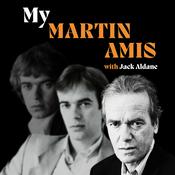 Download for free in the App Store
radio.net
Sleep timer
Save favourites
25 episodes
"Are there any ugly women that Amis affords full humanity? I'm not convinced." Leon Craig
26/06/2026 | 52 mins.Leon Craig's debut novel The Decadence was published in September of 2025, with the paperback due to be published in August 2026.
She speaks to Jack Aldane about Amis's 2010 novel The Pregnant Widow, a complex synthesis of comedy of manners, roman à clef, and historical revision that examines the language and practices of the sexual revolution through a set of characters ostensibly holidaying for a summer in Campania in Italy circa 1970.
Together, they discuss the characters' parts in advancing the discourse Amis wants us to entertain about what the sexual revolution stood for, as well as those it served, those it cheated, and what we still find decades later in its aftermath. Also featured in this episodes are nods to Experience and Dead Babies, the latter a particular influence on The Decadence.
Leon also describes what it feels like to be a hereditary novelist in 2026, and what writers like herself owe Amis for having pressed on with his career despite living in Kingsley's shadow, and why no writer, however well-connected, gets to avoid the unglamourous side of the job.
FOLLOW US ON X: @mymartinamis
YOUTUBE: @mymartinamispod
Hosted on Acast. See acast.com/privacy for more information."When you don't win The Booker, you know it's alright, because Amis didn't either." Kevin Power
06/05/2026 | 55 mins.Many a male Amis reader owes his smoking habit to the author.
The novelist Kevin Power is one who thought he'd quit for good, until he spotted Amis and Isabel Fonseca walking on the grounds of Ireland's prestigious Borris House Festival of Writing and Ideas.
Peeling off from his friends, Power sidled up and asked Amis for a lighter. Amis obliged and handed Power a thumb-sized Bic, shortly after which Power became aware that the success of this move had emboldened his cohort to form a crowd around a once discreet scene.
The opportunity to speak to Amis one-on-one came again later that weekend, but as Kevin explains on the episode, he has always thought of Amis both as "a prose presence" and "a friend" to the reader, and as such, there is little more one can hope to gain from having met Amis than is permenantly there for them in his writing.
Amis is unique among novelists in this sense. Even when you listen to his interviews, what you often hear are lines Amis had committed to print somewhere for posterity. Everything he ever wanted to tell us, he told us.
This episode deals with Power's chosen novel, Time's Arrow, which was short-listed for the 1991 Booker Prize, and which Power says uses Amis's "full suite of talents" to portray the atrocities of Auschwitz in reverse, both to darkly comic and deeply moving effect. Frequently overlooked in favour of Amis's trifecta of thick London novels, the slender Time's Arrow is nonetheless one of Amis's most mysterious and morally complex achievements.
FOLLOW US ON X: @mymartinamis
YOUTUBE: @mymartinamispod
Hosted on Acast. See acast.com/privacy for more information."I wish Amis's Substack was landing in my inbox today." George Monaghan and Nicholas Harris
14/03/2026 | 36 mins.For this episode of My Martin Amis, we're plugging into the London recording studio of the New Statesman magazine.
From the intro: "Founded by economists and social reformers Sidney and Beatrice Webb and the Irish playwright George Bernard Shaw in 1913, the New Statesman has enjoyed a long history of finding and fostering journalistic and literary talent.
In the early Seventies, the paper went through a succession of editors, during which time its circulation hit a low ebb. Among its staff then were two bright talents who became close friends through their employer.
They sported flared trousers, yellowed fingertips and hair of thickness and length relatively similar to my guests. Their names were Christopher Hitchens and Martin Amis.
Half a century later, minus the flares and barely disguised homoerotic tension (although who knows what we’ll learn on this episode), a new duo stalks the newsroom."
Jack's guests on this episode are George Monaghan, the New Statesman’s junior commissioning editor, and Nick Harris, its ideas editor. At 27, they are both in the prime of their youth, yet have chosen to speak about what Amis taught them in Experience on the eternally fertile subjects of love, life, and literature.
FOLLOW US ON X: @mymartinamis
YOUTUBE: @mymartinamispod
Hosted on Acast. See acast.com/privacy for more information."Amis's talent was to put words to things in ways both unobvious and inevitable." David Szalay
12/02/2026 | 44 mins.David Szalay won the Booker Prize for his sixth novel Flesh in 2025. In this tense, spare, frictionless work of fiction, he drip feeds us the story of the laconic male protagonist Istvan, who spends his youth in a juvenile facility in Hungary before eventually finding his way into a fractured family situated among the upper echelons of London's wealthiest elites, where his fortunes soon unravel.
Flesh was celebrated as a return of the male gaze to modern literature, and to masculinity as a subject worthy of more sympathetic and complex consideration than the last decade arguably would suggest.
For this episode, David chose to speak to Jack about The Information, a titanic Amis work in which a literary rivalry between the main characters Richard Tull and Gwyn Barry ripples out to the peripheries of middle class London life and conscripts the city's criminal fringes to help settle the score.
David tells Jack why, especially after winning the Booker, he considers The Information literature's greatest tonic for writerly vanity. He recounts his discovery of Amis's work as a young man, and explains why Tull and Barry, though both excruciating to witness in their insecurities for the reader, are nevertheless relatable to writers who know the misery that ultimately binds them together.
FOLLOW US ON TWITTER/ X: @mymartinamis
FIND US ON YOUTUBE
Hosted on Acast. See acast.com/privacy for more information."Every page of London Fields has a sense of an author in absolute command." Rob Doyle
23/01/2026 | 51 mins.In the basement room of an East London flat one rainy January morning, Jack sat down with the Irish writer Rob Doyle to discuss the publication of his third novel, Cameo, and delve into his long and complex love for the work of Martin Amis.
Rob chose to talk about London Fields, the novel we first encounter on this series through the Financial Times columnist, Janan Ganesh. But whereas Ganesh grew up in Croydon in the late Eighties, with the London Amis depicts in the novel practically on his doorstep, Doyle had never been to England's capital when the cover of London Fields first caught his eye, aged 23, from the shelves of a book exchange at a backpacker's hostel in South East Asia.
On a long bus journey in this far-flung part of the world, Doyle recounts coming to terms with the alchemic mastery of Amis's prose in this 1989 masterpiece. London Fields, he says, blended seamlessly the very highest ideas with the very lowest, all to great comic effect. Writing about London, Amis was engaged in an act of philosophy, dredged up from the deepest pits of urban and human decay.
Rob and Jack go on to discuss that force of nature that is of course Keith Talent. Talent is for Doyle, as he is for Ganesh, not just one of Amis's greatest characters, but one of the greatest characters ever to cast a shadow on the history of English literature. Of all Amis's beleaguered and benighted male creations, Talent is also arguably the happiest, since apart from anything else, he would be the least bothered by Amis's contempt for him.
Later on, Rob and Jack talk about the world Amis so often condemns his male characters to live in. Whether we look to John Self (a man consumed by his own oniomania), the bleak rivalry that sets Keith Talent and Guy Clinch on their fateful course with Nicola Six, or indeed that which Richard Tull and Gwyn Barry must see through a novel later in The Information, Amis's men are rarely sanguine creatures.
Male conflict and humiliation were two of Amis's greatest subjects, but while Doyle still regards Amis as one of the best writers ever to interrogate them in their art, he is less convinced by Amis's opposition outlook on male relationships now, in his forties, than he was as a younger man.
Happy New Year to you, dear listener. 2026 has begun.
FOLLOW US ON TWITTER/ X: @mymartinamis
FIND US ON YOUTUBE
Hosted on Acast. See acast.com/privacy for more information.
More Arts podcasts








Trending Arts podcasts


















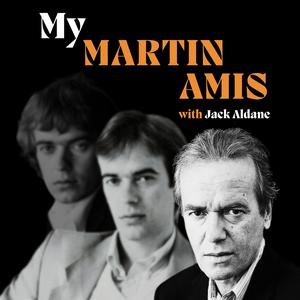
About My Martin Amis
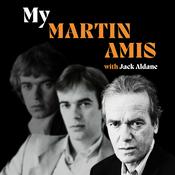
Personal stories from writers, critics and publicists about the life and legacy of late English novelist Martin Amis (1949-2023). Host and producer: Jack AldaneMusic: 'June' by Nigel MartinTwitter: @mymartinamis Hosted on Acast. See acast.com/privacy for more information.
Podcast websiteListen to My Martin Amis, 99% Invisible and many other podcasts from around the world with the radio.net app
Get the free radio.net app
- Stations and podcasts to bookmark
- Stream via Wi-Fi or Bluetooth
- Supports Carplay & Android Auto
- Many other app features
Get the free radio.net app
- Stations and podcasts to bookmark
- Stream via Wi-Fi or Bluetooth
- Supports Carplay & Android Auto
- Many other app features
My Martin Amis
Scan code,
download the app,
start listening.
download the app,
start listening.
My Martin Amis: Podcasts in Family

 UK
UK