
Listen to this podcast in the app for free: Download for free in the App Store
radio.net
Sleep timer
Save favourites
131 episodes
Anti-vaxxers – Herd impunity – Origin Story Revisited
21/10/2026 | 1h 24 mins.Hello Origin Story listeners. We’re launching season 10 in the second half of October and to mark that milestone we thought it would be fun to revisit some of our old episodes under the name Origin Story Revisted. Somehow we’ve recorded over 150 episodes so we’ve chosen four of our favourites to reissue with new introductions where we discuss making them and reflect on how subsequent events have changed how we think about these stories.
For our final Revisited before Season 10 begins, we look again at anti-vaxxers. Vaccine resistance is as old as vaccines themselves but not until the 2000s did a toxic compound of junk science and media credulity give rise to a serious anti-vax movement. Since we made this episode in June 2024, that movement has gained power in the US with an anti-vaxxer President (Trump) and Health Secretary (Robert F Kennedy Jr). The dreadful result is not just an immediate spike in measles cases but the stifling of preparations for the next pandemic. Here’s the story of how crank paranoia and industrialised ignorance came to jeopardise one of the greatest achievements in the history of public health.
• Support Origin Story on Patreon
Written and presented by Ian Dunt and Dorian Lynskey. Producer: Simon Williams. Music by Jade Bailey. Art by Jim Parrett. Logo by Mischa Welsh. Group Editor: Andrew Harrison. Origin Story is a Podmasters production
www.podmasters.co.uk
Learn more about your ad choices. Visit podcastchoices.com/adchoicesRussell Brand – Confidence man – Origin Story Revisited
14/10/2026 | 1h 28 mins.Hello Origin Story listeners. We’re launching season 10 in the second half of October and to mark that milestone we thought it would be fun to revisit some of our old episodes under the name Origin Story Revisted. Somehow we’ve recorded over 150 episodes so we’ve chosen four of our favourites to reissue with new introductions where we discuss making them and reflect on how subsequent events have changed how we think about these stories.
This week we’re returning to our October 2024 episode about Russell Brand, who is back in the news this week because jury selection has begun in his trial on multiple sexual-offence charges. Obviously we can’t discuss legal proceedings but we can talk about how his rise and fall represents a very modern narrative of radicalisation and/or opportunism. From ubiquitous celebrity to left-wing hero to right-wing conspiracy theorist, Brand is a creature of 21st century media and a warning to the gullible.
• Support Origin Story on Patreon
Written and presented by Ian Dunt and Dorian Lynskey. Producer: Simon Williams. Music by Jade Bailey. Art by Jim Parrett. Logo by Mischa Welsh. Group Editor: Andrew Harrison. Origin Story is a Podmasters production
www.podmasters.co.uk
Learn more about your ad choices. Visit podcastchoices.com/adchoicesAyn Rand: The ego has landed – Origin Story Revisited
07/10/2026 | 1h 21 mins.This week, while we research a two-parter on the history of libertarianism, we're revisiting the story of the political novelist Ayn Rand. In this episode from 2022 — the first time we chose to focus on an individual rather than an abstract idea — we explore how Rand's extreme views on the self versus the society inspired a whole school of thought but somewhat ruined her life. And we read some very long novels. Enjoy
• Support Origin Story on Patreon
Written and presented by Dorian Lynskey and Ian Dunt. Audio production and music by Jade Bailey. Logo art by Mischa Welsh. Group Editor: Andrew Harrison. Origin Story is a Podmasters production
www.podmasters.co.uk
Learn more about your ad choices. Visit podcastchoices.com/adchoicesThe Battle of Cable Street – Origin Story Revisited
30/09/2026 | 45 mins.Hello Origin Story listeners. We’re launching season 10 in the second half of October and to mark that milestone we thought it would be fun to revisit some of our old episodes under the name Origin Story Revisited. Somehow we’ve recorded over 150 episodes so we’ve chosen four of our favourites to reissue with new introductions where we discuss making them and reflect on how subsequent events have changed how we think about these stories.
Our first Revisited episode is The Battle of Cable Street from August 2024. It’s not just because the 80th anniversary of that event falls on 4 October. In light of the emergence of Patriot Platform and other forms of far-right intimidation, it’s a good time to look again at the day a vast anti-fascist alliance stood up to Oswald Mosley’s British Union of Fascists in the East End, and at how popular resistance can spur state action. Hope you enjoy it.
• Support Origin Story on Patreon
Written and presented by Ian Dunt and Dorian Lynskey. Producer: Simon Williams. Music by Jade Bailey. Art by Jim Parrett. Logo by Mischa Welsh. Group Editor: Andrew Harrison. Origin Story is a Podmasters production
www.podmasters.co.uk
Learn more about your ad choices. Visit podcastchoices.com/adchoicesJohn Rawls – Philosopher king of the 20th Century
23/09/2026 | 1h 4 mins.This week we dive into the life and ideas of John Rawls, the most celebrated liberal philosopher of the post-war period. Even in his own lifetime he was compared to Plato and Hobbes, becoming the only figure of our era to enter the canon of Western thought alongside the greatest figures in the philosophical tradition.
Rawls' work was a deadly surgical attack on neoliberalism and a rigorous defence of a more progressive form of liberalism, grounded in equality, rights and social justice. His notion of the veil of ignorance is perhaps the single most influential philosophical idea of the 20th Century and one of the most beautiful concepts in political theory. He provided a systematic justification for a centre-left worldview and policy programme, with a firm moral grounding and extremely radical repercussions.
We trace his life story, from early childhood tragedy, through the battlefields of the Second World War, to a long and distinguished career in Harvard. We find a quiet, shy, unassuming man, uncomfortable in large groups and immune to self-importance, who nevertheless shook the philosophical world to its foundation. As his libertarian opponent Robert Nozick admitted: "Political philosophers must either work within Rawls' theory or explain why not."
We then delve into Rawls' political philosophy, providing a concise explanation of a foundational idea in the history of progressive thought. If you've ever wondered what the limit of the market should be, or how much inequality we should allow, or why people should be entitled to rights, Rawls will provide the explanation. Join us for an inspiring story of a world-changing idea.
• Support Origin Story on Patreon
Reading list
• Daniel Chandler - Free and Equal: What Would a Fair Society Look Like? (Penguin, 2024)
• Thomas Pogge - John Rawls: His Life and Theory of Justice (Oxford University Press, 2007)
• John Rawls - Political Liberalism (Columbia University Press, 2005)
• John Rawls - Theory of Justice (Harvard University Press, 1999)
Written and presented by Ian Dunt and Dorian Lynskey. Producer: Simon Williams. Music by Jade Bailey. Art by Jim Parrett. Logo by Mischa Welsh. Group Editor: Andrew Harrison. Origin Story is a Podmasters production
www.podmasters.co.uk
Learn more about your ad choices. Visit podcastchoices.com/adchoices
More History podcasts
Trending History podcasts





About Origin Story
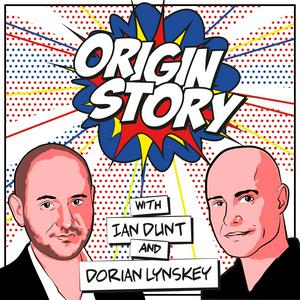
What are the real stories behind the most misunderstood and abused ideas in politics? From Conspiracy Theory to Woke to Centrism and beyond, Ian Dunt and Dorian Lynskey dig into the astonishing secret histories of concepts you thought you knew.
Want to support us in making future seasons? There are now two ways you can help out:
• Patreon – Get early episodes, live Zooms, merchandise and more from just £5 per month.
• Apple Podcasts – Want everything in one place with one easy payment? Subscribe to our premium feed on Apple Podcasts for ad-free shows early and bonus editions too.
From Podmasters, the makers of Oh God, What Now?, American Friction and The Bunker.
Listen to Origin Story, After Dark: Myths, Misdeeds & the Paranormal and many other podcasts from around the world with the radio.net app
Get the free radio.net app
- Stations and podcasts to bookmark
- Stream via Wi-Fi or Bluetooth
- Supports Carplay & Android Auto
- Many other app features
Get the free radio.net app
- Stations and podcasts to bookmark
- Stream via Wi-Fi or Bluetooth
- Supports Carplay & Android Auto
- Many other app features
Origin Story
Scan code,
download the app,
start listening.
download the app,
start listening.
Origin Story: Podcasts in Family

 UK
UK