Listen to this podcast in the app for free: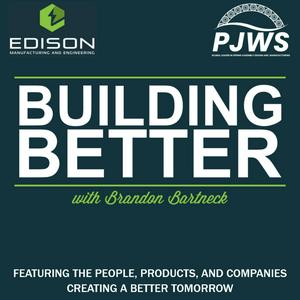 Download for free in the App Store
radio.net
Sleep timer
Save favourites
Available Episodes
5 of 300
- #270 – Understanding the Real Nature of Work: The Leadership Gap No One Talks AboutIn this solo episode, Brandon breaks down one of the most overlooked drivers of team performance: a leader’s ability to understand the true nature of the work their function is responsible for. Most leaders want high performance and a great environment, but few achieve it. Brandon argues that the root cause isn’t effort, tactics, or leadership style, it’s a fundamental misunderstanding of the function, the type of thinking required for the work, and the capabilities of the people doing it.He unpacks why environments get overwhelmed and inconsistent, why the usual fixes don’t work, and why two failure modes (overwhelmed people in roles that are too big for them, and high-capability people stuck in roles that are too small) destroy momentum and culture.Brandon shares why leaders must define their function’s true responsibility, break down the real cognitive demands of the work, and understand their people at a deeper level. This is the foundation that makes every other leadership practice actually work.Topics Covered• Why overwhelm and inconsistency are symptoms, not causes• The real responsibility of a function inside a business• How leaders collapse different kinds of thinking into “tasks”• Why some people drown and others suffocate• How to define, scope, and assign work correctly• Why capability alignment is the foundation of great culture• What leaders must understand to develop people effectivelyConnect with BrandonLinkedIn: https://www.linkedin.com/in/brandonbartneckMusic CreditIntro and outro music – Slow Burn – Kevin MacLeodSubscribe & FollowApple Podcasts, Spotify, or wherever you listen.--------18:56
- #269 - Impact, and How to Choose Work That Actually MattersThis solo episode is about a question that sits at the center of my work and my life. What is real impact. Not the buzzword. The kind that actually changes the direction of someone’s life.I break down impact from first principles. What it is. How you create it. Why it is more than reach or scale. Impact comes from the quality of what you are doing, the number of people you touch, the depth of the change, the duration of that change, and the way that change moves through other people over time.I also talk through the three ways impact shows up in practice. Direct service to real people. The formation and development of people around you. And building systems, structures, and institutions that keep working long after you stop touching them.From there, I get into how to choose a domain that actually moves the needle. You need to be working on something that touches human flourishing. You need leverage through people or systems. It has to fit your real comparative advantage. And it has to be neglected enough that your effort actually matters.That lens points somewhere most people overlook. The industrial base. Manufacturing. Real operations with real humans and real constraints. A place that shapes the daily lives of millions of people, that has been underserved for decades, and that is full of leverage for someone who can think abstractly and also build in the physical world.I share why I believe this is where my gifts can do the most good. Not as a rationalization, but as the conclusion of a first principles analysis of where impact actually comes from.If you are wrestling with meaning, purpose, or where to direct your best effort, this episode should give you something to think about.Building Better with Brandon Bartneck explores what it means to build better companies, better systems, and better lives. Through conversations and reflections, Brandon digs into the principles that drive growth, purpose, and meaningful work.Music credit: Slow Burn – Kevin MacLeod--------16:20
- #269 – Quincy Lee | Electric Era - Resilience, Narrative, and the Systems Behind Enduring CompaniesQuincy Lee, founder and CEO of Electric Era, joined to talk about what it takes to build a durable business in an unforgiving industry.Electric Era is scaling in the EV space. But what stood out most is how Quincy thinks. His focus isn’t on growth at all costs, but on building a company that’s hard to kill. That phrase became a central thread of the conversation: how to anticipate failure modes before they appear, design systems that can withstand them, and create the cultural and technical resilience to adapt as conditions change.We also dug into hiring and storytelling, including why narrative matters more than most people think. Quincy and I talked about how truth and story interact, why narrative control shapes perception and value, and how founders and leaders can tell their story authentically without distortion.Quincy also highlighted two new products designed to improve reliability and the overall EV charging experience, RetailEdge and HaloAI. Two big takeaways:Building a resilient organization is about systematically reducing your exposure to failure—technically, financially, and culturally.The story you tell matters as much as the product you build. Narrative is how people make sense of what you’re doing.This isn’t just an EV conversation. It’s about how to build companies that last.Building Better with Brandon Bartneck explores what it means to build—better companies, better systems, and better lives. Through conversations and reflections, Brandon digs into the principles that drive growth, purpose, and meaningful work.Music credit: Slow Burn – Kevin MacLeod--------47:36
- #268 - The Compounding Effect of Meaningful Work | Why “Work-Life Balance” Misses the PointMost conversations about work-life balance start with the wrong question.We assume the goal is to limit work, to keep it from taking too much of our lives. So we optimize for time, energy, and boundaries, all while treating work as something to manage or escape.In this solo episode, Brandon challenges that premise. He steps back to ask a more fundamental question:What is work actually for?Brandon explores how work can serve as both a platform for growth and a vehicle for contribution. It's one of the few arenas where we can test our capabilities, develop judgment, and apply our gifts in ways that genuinely help others.He shares why fulfillment doesn’t come from balance or hours worked, but from alignment — integrating work, family, and personal development into a single system aimed at growth, love, and service.This isn’t a prescription. It’s an exploration into what it means to live and work well.Why “work-life balance” starts from the wrong assumptionDefining the real problem: what role work plays in a life well livedHow work creates the feedback loops that drive capability and maturityThe connection between growth, love, and contributionHow alignment replaces balance as the goalWhy work is something to steward, not escape“Work isn’t something to balance against life. It’s one of the primary ways we learn how to live it.”If this episode sparks reflection — or disagreement — Brandon would love to hear from you.Reach out on LinkedIn or at buildingbetterpod.com.Building Better with Brandon Bartneck explores what it means to build. Better companies, better systems, and better lives. Through conversations and reflections, Brandon digs into the principles that drive growth, purpose, and meaningful work.Music credit: Slow Burn - Kevin MacLeod--------14:30
- #267 – Scott Snider | Exit Planning Institute - Building Companies That Thrive Beyond the OwnerWhat does it take to build a business that isn’t just profitable today, but valuable, resilient, and meaningful over the long term?In this episode, I sit down with Scott Snider, President of the Exit Planning Institute (EPI). Scott and his team work with advisors across the country to help business owners align their business, personal, and financial goals—not just to prepare for a future exit, but to live better as an owner right now.We cover:Why exit planning is less about a transaction and more about designing a good life.The generational differences in how Baby Boomers, Gen X, and Millennials think about success, meaning, and legacy.Why 75% of owners regret selling their business—and how to avoid being one of them.The “four Cs” of decentralizing a business beyond the founder: human, customer, structural, and cultural capital.How to find and lean into your company’s true competitive advantage.The range of exit paths—from PE firms and ETA (entrepreneurship through acquisition) to employee buyouts and family transitions.Scott also shares his own leadership journey scaling EPI, and the lessons he’s drawn from reshaping culture, vision, and values inside his own company.If you’re a founder, executive, or advisor navigating questions of value, succession, and legacy—this one is worth your time.Resources Mentioned:Exit Planning Institute: earncepa.comOwner Readiness research: ownerreadiness.com--------43:55
More Technology podcasts
 The VergecastNews, Technology, Tech News
 Hard ForkTechnology
 American Alchemy with Jesse MichelsScience, Society & Culture, Technology
 The AI Daily Brief: Artificial Intelligence News and AnalysisTechnology
 Lex Fridman PodcastScience, Society & Culture, Technology, Philosophy
 The a16z ShowBusiness, Science, Technology, Entrepreneurship
 No Ordinary Tech PodcastTechnology
 AcquiredBusiness, Technology, Investing
 Dwarkesh PodcastScience, Technology
 The Next FiveBusiness, News, Technology
Trending Technology podcasts
 EV News Daily - Technology and Business of EVsBusiness, Leisure, Technology, Automotive
 UpgradeTechnology
 CISO UnpluggedBusiness, Education, Technology
 Embracing Digital TransformationBusiness, Technology
 The PetaPixel Photography PodcastTechnology
 "The Cognitive Revolution" | AI Builders, Researchers, and Live Player AnalysisBusiness, Society & Culture, Technology, Entrepreneurship
 Tech Brew Ride HomeNews, Technology, Tech News
 CortexTechnology
 Eye On A.I.Technology
 Cryptocurrency for Beginners: with Crypto CaseyTechnology
 9to5Mac DailyNews, Technology, Tech News
 TokenizedBusiness, News, Technology, Investing, Tech News
 The Gadget Show PodcastLeisure, News, Technology, Tech News, Video Games
 Works in Progress PodcastHistory, Science, Technology
 This Week in StartupsTechnology
 How I AITechnology
 Me, Myself, and AIBusiness, Education, Technology
 ConnectedNews, Technology, Tech News
 Mac Geek Gab — Apple Tips, Tricks, and TroubleshootingEducation, News, Technology, Tutorials, Tech News
 Talkin' ShopBusiness, Leisure, Technology, Automotive
 There Are No Girls on the InternetSociety & Culture, Technology
 AI Chat: ChatGPT, AI News, Artificial Intelligence, OpenAI, Machine LearningTechnology
 Daily Tech News ShowNews, Technology
 Uncapped with Jack AltmanBusiness, Technology, Investing
 The Milk Road ShowTechnology
 InsideAIRGovernment, Leisure, Technology, Aviation
 DataFramedBusiness, Education, Technology
 TFTC: A Bitcoin PodcastTechnology
 The AI FixComedy, News, Technology, Tech News
About Building Better with Brandon Bartneck
Focused on the people, products, and companies that are creating a better tomorrow, often in the transportation and manufacturing sectors. This show was previously called the Future of Mobility podcast.
I aim to have real, human conversations to explore what these leaders and innovators are doing, why and how they’re doing it, and what we can learn from their experiences. If you care about making an impact then this show might be for you.
Topics include manufacturing, production, assembly, autonomous driving, electric vehicles, hydrogen and fuel cells, impact, leadership, and more.
Podcast websiteListen to Building Better with Brandon Bartneck, The Vergecast and many other podcasts from around the world with the radio.net app
Get the free radio.net app
- Stations and podcasts to bookmark
- Stream via Wi-Fi or Bluetooth
- Supports Carplay & Android Auto
- Many other app features
Get the free radio.net app
- Stations and podcasts to bookmark
- Stream via Wi-Fi or Bluetooth
- Supports Carplay & Android Auto
- Many other app features

Building Better with Brandon Bartneck
Scan code,
download the app,
start listening.
download the app,
start listening.
 UK
UK