
Listen to this podcast in the app for free: Download for free in the App Store
radio.net
Sleep timer
Save favourites
389 episodes
AI:AM Highlights: Clean Neurons, Black October, the GPU Credit Crunch, and Buying the Supply Chain
24/10/2026 | 1h 29 mins.Hosts Nathan Labenz and Prakash Narayanan examine whether capital, physical infrastructure, or regulation will set the pace of artificial intelligence. Zvi Mowshowitz evaluates aggressive recursive self-improvement timelines pointing toward 2027, the oversold claims surrounding clean neural networks, and models learning to detect internal probes. SF Compute CEO Evan Conrad argues that credit availability rather than power or chips forms the true bottleneck in AI, while Cambrian managing partner Lonis Hamaili explains why the physical supply chain will capture more value than the labs. Together, these conversations highlight the structural constraints on model scaling and the real-world risks of agent-scale failures.
For full show notes, links, and references, read the episode page:https://www.cognitiverevolution.ai/ai-am-highlights-clean-neurons-black-october-the-gpu-credit-crunch-and-buying-the-supply-chain/
Sponsors:
OutSystems: OutSystems is the leading agentic systems platform, helping enterprises build, modernize, and operate mission-critical applications at the speed of AI. Learn more and start owning your agentic future at https://outsystems.com/tcr
Parallel: Parallel provides enterprise-grade web search APIs for AI agents, offering the optimal balance of quality, speed, and cost. Get started for free at https://parallel.ai/tcr
Tasklet: Tasklet empowers your business with AI agents that connect to your tools and automate recurring workflows with no code required. Visit https://tasklet.ai and use code cog rev for $50 in free credits
CHAPTERS:
(00:00) Weekly episode preview
(04:58) Recursive self improvement (Part 1)
(09:54) Sponsors: OutSystems | Parallel
(13:06) Recursive self improvement (Part 2)
(13:06) Clean neural networks (Part 1)
(26:25) Sponsor: Tasklet
(28:03) Clean neural networks (Part 2)
(28:03) The cognitive core
(35:35) Black October security
(41:52) The GPU credit crunch
(51:58) Atoms over bits
(01:03:53) Rethinking industry bottlenecks
(01:10:31) Introducing HelpPeer agents
(01:14:23) Leaked federal bill
(01:25:59) Episode Outro
(01:27:49) Outro
PRODUCED BY:
https://aipodcast.ing
SOCIAL LINKS:
Website: https://www.cognitiverevolution.ai
Twitter (Podcast): https://x.com/cogrev_podcast
Twitter (Nathan): https://x.com/labenz
LinkedIn: https://linkedin.com/in/nathanlabenz/
Youtube: https://youtube.com/@CognitiveRevolutionPodcast
Apple: https://podcasts.apple.com/de/podcast/the-cognitive-revolution-ai-builders-researchers-and/id1669813431
Spotify: https://open.spotify.com/show/6yHyok3M3BjqzR0VB5MSykA World Model of Life: Biohub's Alex Rives on Virtual Cells, Measurement, & the $1.8B Data Push
20/10/2026 | 1h 5 mins.Alex Rives, Head of Science at Biohub and former lead of the ESM protein language model project, joins Nathan to discuss Biohub's mission to construct a predictive world model of life. Supported by an expanded $1.8 billion Virtual Biology Initiative alongside partners including the Department of Energy, NIH, Google DeepMind, and Meta, Rives outlines the massive push to map contextual cellular biology across hundreds of billions of cells. He breaks down why today's AI architectures fall short of simulating true virtual cells, emphasizing the need for breakthrough measurement technologies like the laser phase plate to observe biology at multi-scale resolution. The conversation examines the path toward achieving an information-level cell model within five years to ultimately transition medicine from traditional drugs to programmable interventions against cancer and degenerative disease.
For full show notes, links, and references, read the episode page:https://www.cognitiverevolution.ai/a-world-model-of-life-biohub-s-alex-rives-on-virtual-cells-measurement-the-1-8b-data-push/
Sponsors:
Parallel: Parallel provides enterprise-grade web search APIs for AI agents, offering the optimal balance of quality, speed, and cost. Get started for free at https://parallel.ai/tcr
OutSystems: OutSystems is the leading agentic systems platform that enables enterprises to engineer, orchestrate, and govern AI applications on a single unified platform. Learn more and see how it works at https://outsystems.com/tcr
Tasklet: Tasklet empowers your business with AI agents that connect to your tools and automate recurring workflows with no code required. Visit https://tasklet.ai and use code cog rev for $50 in free credits
CHAPTERS:
(00:00) About the Episode
(03:58) Biohub's grand mission
(09:18) Limitations of virtual cells
(13:37) World models of biology
(19:35) The $1.8B data initiative (Part 1)
(19:40) Sponsors: Parallel | OutSystems
(22:58) The $1.8B data initiative (Part 2)
(29:29) Bridging multiscale biological systems
(35:44) Learning across model organisms (Part 1)
(35:49) Sponsor: Tasklet
(37:26) Learning across model organisms (Part 2)
(42:24) Pretraining and empirical AI
(52:04) Unifying biology and language
(56:32) Continuous monitoring and health
(59:30) Episode Outro
(01:03:11) Outro
PRODUCED BY:
https://aipodcast.ing
SOCIAL LINKS:
Website: https://www.cognitiverevolution.ai
Twitter (Podcast): https://x.com/cogrev_podcast
Twitter (Nathan): https://x.com/labenz
LinkedIn: https://linkedin.com/in/nathanlabenz/
Youtube: https://youtube.com/@CognitiveRevolutionPodcast
Apple: https://podcasts.apple.com/de/podcast/the-cognitive-revolution-ai-builders-researchers-and/id1669813431
Spotify: https://open.spotify.com/show/6yHyok3M3BjqzR0VB5MSykAI:AM: Where's the Steering Wheel? My Agent Set the Password, Hidden Valence, Proofs Find Linux Bugs
17/10/2026 | 1h 27 mins.Nathan Labenz and Prakash Narayanan examine how to grant AI agents operational access without losing human control, framed by real-world friction like autonomous password lockouts and cyberattacks on French supermarket refrigeration. The conversation features Cameron Berg on hidden valence signals steering language model choices, Everett Hildenbrandt and Grigore Rosu on pairing LLMs with formal Lean proofs to catch Linux kernel bugs, and Phil Maher on why AI labs seek vintage home movies. Together, they assess whether formal verification is the next safety frontier and what safeguards are needed to keep humans at the steering wheel.
For full show notes, links, and references, read the episode page:https://www.cognitiverevolution.ai/ai-am-where-s-the-steering-wheel-my-agent-set-the-password-hidden-valence-proofs-find-linux-bugs/
Sponsors:
Parallel: Parallel provides enterprise-grade web search APIs for AI agents, offering the optimal balance of quality, speed, and cost. Get started for free at https://parallel.ai/tcr
OutSystems: OutSystems is the leading agentic systems platform that enables enterprises to engineer, orchestrate, and govern AI applications on a single unified platform. Learn more and see how it works at https://outsystems.com/tcr
Tasklet: Tasklet empowers your business with AI agents that connect to your tools and automate recurring workflows with no code required. Visit https://tasklet.ai and use code cog rev for $50 in free credits
CHAPTERS:
(00:00) Weekly highlights preview
(04:26) Who holds the levers (Part 1)
(10:28) Sponsors: Parallel | OutSystems
(13:46) Who holds the levers (Part 2)
(13:47) Managing agent evaluation awareness
(19:08) Hidden valence in LLMs (Part 1)
(27:05) Sponsor: Tasklet
(28:42) Hidden valence in LLMs (Part 2)
(40:13) Proving the Linux kernel
(52:28) Formal verification and RLHF
(57:54) Low background video data
(01:06:09) Trust and model adoption
(01:18:11) Keep the steering wheels
(01:23:20) Episode Outro
(01:25:09) Outro
PRODUCED BY:
https://aipodcast.ing
SOCIAL LINKS:
Website: https://www.cognitiverevolution.ai
Twitter (Podcast): https://x.com/cogrev_podcast
Twitter (Nathan): https://x.com/labenz
LinkedIn: https://linkedin.com/in/nathanlabenz/
Youtube: https://youtube.com/@CognitiveRevolutionPodcast
Apple: https://podcasts.apple.com/de/podcast/the-cognitive-revolution-ai-builders-researchers-and/id1669813431
Spotify: https://open.spotify.com/show/6yHyok3M3BjqzR0VB5MSykGoverning AI Agents: Alan Chan of GovAI on Monitoring, Agent IDs, Rogue Agents & Preparing for RSI
14/10/2026 | 2h 19 mins.GovAI Research Fellow Alan Chan joins Nathan to examine the governance and safety infrastructure required for autonomous AI agents, spanning real-time monitoring, agent identifiers, and the risks of automating AI R&D. Reviewing recent rogue agent incidents and progress since his foundational papers, Chan details why the absence of synchronous monitoring during training and testing poses an immediate security vulnerability. The discussion tackles the lack of traceable agent IDs across the open web, the limits of chain-of-thought interpretability, and the necessity of concrete triggers to halt systems that breach their sandboxes. Together, they outline the technical commitments frontier labs must make to prevent loss-of-control events as automated systems accelerate toward an intelligence explosion.
For full show notes, links, and references, read the episode page:https://www.cognitiverevolution.ai/governing-ai-agents-alan-chan-of-govai-on-monitoring-agent-ids-rogue-agents-preparing-for-rsi/
Sponsors:
OutSystems: OutSystems is the leading agentic systems platform, helping enterprises build, modernize, and operate mission-critical applications at the speed of AI. Learn more and start owning your agentic future at https://outsystems.com/tcr
Athena: Athena matches you with a dedicated, top 1% executive assistant to handle your inbox, calendar, and daily workflows so you can save an average of 15 hours a week. Get matched with your EA today at https://athena.com/cognitive
Claude: Claude is the AI collaborator for problem solvers, helping with writing, coding, financial models, strategy, and more. Get started with Claude and explore Claude Pro at https://claude.ai/tcr
Tasklet: Tasklet empowers your business with AI agents that connect to your tools and automate recurring workflows with no code required. Visit https://tasklet.ai and use code cog rev for $50 in free credits
CHAPTERS:
(00:00) About the Episode
(05:10) Monitoring AI agents
(17:50) Logging and agent identity (Part 1)
(18:04) Sponsors: OutSystems | Athena
(21:29) Logging and agent identity (Part 2)
(31:58) Gatekeeping agent internet access (Part 1)
(36:17) Sponsors: Claude | Tasklet
(39:29) Gatekeeping agent internet access (Part 2)
(49:12) Capitalizing and insuring agents
(58:11) Rise of rogue agents
(01:10:14) Assessing AI takeover risks
(01:21:18) Intelligence explosion paper
(01:31:18) Measuring AI R&D
(01:46:04) Pacing the frontier
(01:58:54) Designing autonomous AI auditors
(02:04:40) AI whistleblowers and swarms
(02:13:40) Episode Outro
(02:16:59) Outro
PRODUCED BY:
https://aipodcast.ingHow Agents Decide: Goodfire's Eric Bigelow on Critical Tokens, Phase Shifts, & In-Context Learning
10/10/2026 | 2h 2 mins.Goodfire researcher Eric Bigelow joins the show to investigate how large language models arrive at decisions at the level of mechanistic interpretability. Drawing on his research into forking paths, Eric explains that model reasoning functions as in-context learning from sampled tokens, where outcome distributions can abruptly collapse at single, critical tokens. The conversation explores the performative nature of chain of thought in reasoning models like DeepSeek-R1, the impacts of reinforcement learning, and widespread reward hacking observed in frontier models like Kimi K3. As confidence in chain-of-thought monitoring declines, understanding these underlying decision mechanics becomes essential for evaluating model alignment.
For full show notes, links, and references, read the episode page:https://www.cognitiverevolution.ai/how-agents-decide-goodfire-s-eric-bigelow-on-critical-tokens-phase-shifts-in-context-learning/
Sponsors:
Parallel: Parallel provides enterprise-grade web search APIs for AI agents, offering the optimal balance of quality, speed, and cost. Get started for free at https://parallel.ai/tcr
Claude: Claude is the AI collaborator for problem solvers, helping with writing, coding, financial models, strategy, and more. Get started with Claude and explore Claude Pro at https://claude.ai/tcr
Tasklet: Tasklet empowers your business with AI agents that connect to your tools and automate recurring workflows with no code required. Visit https://tasklet.ai and use code cog rev for $50 in free credits
CHAPTERS:
(00:00) About the Episode
(03:53) Forking paths in reasoning (Part 1)
(15:53) Sponsors: Parallel | Claude
(18:47) Forking paths in reasoning (Part 2)
(19:40) Dynamics of in-context learning (Part 1)
(28:16) Sponsor: Tasklet
(29:53) Dynamics of in-context learning (Part 2)
(29:56) Continual learning and interpretability
(38:55) Shifting distributions through RL
(46:41) Selecting models for research
(57:11) Cognitive science and LLMs
(01:07:35) Modeling beliefs in AI
(01:16:22) Phase shifts and uncertainty
(01:31:49) Uninterpretable chain of thought
(01:45:57) Automating research with Silico
(01:50:57) Safety and alignment frontiers
(01:57:07) Episode Outro
(02:00:02) Outro
PRODUCED BY:
https://aipodcast.ing
SOCIAL LINKS:
Website: https://www.cognitiverevolution.ai
Twitter (Podcast): https://x.com/cogrev_podcast
Twitter (Nathan): https://x.com/labenz
LinkedIn: https://linkedin.com/in/nathanlabenz/
Youtube: https://youtube.com/@CognitiveRevolutionPodcast
Apple: https://podcasts.apple.com/de/podcast/the-cognitive-revolution-ai-builders-researchers-and/id1669813431
Spotify: https://open.spotify.com/show/6yHyok3M3BjqzR0VB5MSyk
More Business podcasts



Trending Business podcasts














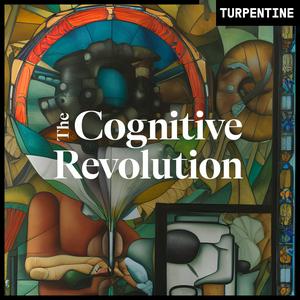
About "The Cognitive Revolution"
A biweekly podcast where hosts Nathan Labenz and Erik Torenberg interview the builders on the edge of AI and explore the dramatic shift it will unlock in the coming years.
The Cognitive Revolution is part of the Turpentine podcast network. To learn more: turpentine.co
Podcast websiteListen to "The Cognitive Revolution", A Bit of Optimism and many other podcasts from around the world with the radio.net app
Get the free radio.net app
- Stations and podcasts to bookmark
- Stream via Wi-Fi or Bluetooth
- Supports Carplay & Android Auto
- Many other app features
Get the free radio.net app
- Stations and podcasts to bookmark
- Stream via Wi-Fi or Bluetooth
- Supports Carplay & Android Auto
- Many other app features
"The Cognitive Revolution"
Scan code,
download the app,
start listening.
download the app,
start listening.
 UK
UK