
Listen to this podcast in the app for free: Download for free in the App Store
radio.net
Sleep timer
Save favourites
289 episodes
In Moscow's Shadows 267: Once Upon A Time In... Chelyabinsk?
18/10/2026 | 49 mins.A mid-sized gang in Chelyabinsk should not be front page news, and that is exactly why it is so useful. When the Artakovsky criminal group is rolled up, the details point to bigger trends in the Russian underworld: how gangs recruit, Chechen criminal 'franchising,' the AUE threat, how they govern themselves, and how the state is learning to prosecute them with sharper tools.
The podcast's corporate partner and sponsor is Conducttr, which provides software for innovative and immersive crisis exercises in hybrid warfare, counter-terrorism, civil affairs and similar situations.
You can also follow my blog, In Moscow's Shadows, and become one of the podcast's supporting Patrons and gain question-asking rights and access to exclusive extra materials including the (almost-) weekly Govorit Moskva news briefing right here.
Support the showIn Moscow's Shadows 266: Diesel and Delusion
11/10/2026 | 44 mins.Donald Trump's diesel deal is, of course, in effect a birthday present for Putin, explained by The Donald’s transactional self-interest and hunger for a headline before the midterms, not baroque theories about hidden loyalties. Even if not a single barrel of diesel ever ships, though, this is undoubtedly good for Moscow. Maybe some revenue (if need be, Putin can starve domestic markets to export), but above all a political gain. Washington is again at odds with an angry Kyiv, while Europe is again left looking clueless and weak.
In part, Europe may have been wrong-footed by its failure to consider brutal questions of national interest. Why does it depend so much on comfort-blanket mantras about the Russia-Ukraine war? To a degree, it is the power of groupthink, and this brings me to the Leonid Ragozin case in Latvia and my wider worry about democracies sliding towards silencing dissent instead of winning arguments.
The podcast's corporate partner and sponsor is Conducttr, which provides software for innovative and immersive crisis exercises in hybrid warfare, counter-terrorism, civil affairs and similar situations.
You can also follow my blog, In Moscow's Shadows, and become one of the podcast's supporting Patrons and gain question-asking rights and access to exclusive extra materials including the (almost-) weekly Govorit Moskva news briefing right here.
Support the showIn Moscow's Shadows 265: Valdai and Putin on Peace
04/10/2026 | 49 mins.The annual shindig of the Valdai Discussion Club is one of those Kremlin set pieces that invites two equally lazy reactions: treat it as sacred insight into Vladimir Putin’s mind, or wave it away as pure Russian propaganda. It's a bit of both, but does give an insight into Russia's changing foreign policy priorities, as much from who is invited as what is said.
(And a side-note on the questioning of Ian Proud, host of the Peacemonger podcast, on his return to the UK.)
Of course, the keynote is Putin's address and the Q&A hosted by Fyodor Lukyanov, and while much of this year's was familiar and formulaic, there were some points that made listening to this lengthy monologue of value, from how hinting at strikes on Western defence enterprises may be a new information weapon to his signals on ending the war in Ukraine: Putin’s narrowing focus on the remaining slice of Donbas, talk of neutrality, hints about cultural and language rights, and the bid to frame any settlement inside a wider European security architecture.
The podcast's corporate partner and sponsor is Conducttr, which provides software for innovative and immersive crisis exercises in hybrid warfare, counter-terrorism, civil affairs and similar situations.
You can also follow my blog, In Moscow's Shadows, and become one of the podcast's supporting Patrons and gain question-asking rights and access to exclusive extra materials including the (almost-) weekly Govorit Moskva news briefing right here.
Support the showIn Moscow's Shadows 264: Russia’s Bear(s) On The March
27/09/2026 | 50 mins.A fat, smug bear sits at the heart of Russia’s politics right now and it is not just a party logo. The State Duma election has handed United Russia - whose logo is the bear - its biggest ever share of seats. Of course, the vote was rigged, but what does Putin do with this mandate now? A quick look at the state of the Ukraine war (where it's heading to be a nasty winter) then leads to a few words about the threat the Russian bear poses Europe: not a direct military one, but increased and potentially risky hybrid war operations.
Then in the second half, a detour into Russia’s surge in sometimes fatal bear encounters. Is this thanks to climate change and shrinking habitats, or - and here I may be indulging my own whimsies here - considering the powerful role of the bear in Russian folklore, a Sign?
The podcast's corporate partner and sponsor is Conducttr, which provides software for innovative and immersive crisis exercises in hybrid warfare, counter-terrorism, civil affairs and similar situations.
You can also follow my blog, In Moscow's Shadows, and become one of the podcast's supporting Patrons and gain question-asking rights and access to exclusive extra materials including the (almost-) weekly Govorit Moskva news briefing right here.
Support the showIn Moscow's Shadows 263: Voting for War Putinism
20/09/2026 | 46 mins.In Russia’s elections, the ballot box is no longer a measure of consent but rather a tool for manufacturing it. It's only two days into the three days of elections to the State Duma, but I catch up on the latest and consider what to look for, before addressing the growing concern/hysteria about the Russian threat to the West (no, Putin didn't try to kill Boris Johnson), mobilisation and the BRICS summit.
In the second half, I use Dmitry Medvedev’s striking line that Russia is “either a great power or nothing at all” to unpack how status, insecurity and strategic autonomy shape Russian foreign policy, alongside insights from Hanna Notte’s excellent book We Shall Outlast Them (Norton, 2026). Russia is changing, and "War Putinism" is building something that is often ugly and hardly always efficient, but in some ways is closer to the Putin/Medvedev vision of a "great power."
Some links:
Russian Election Monitor is here.
The Reading Russia Right event is here
Medvedev's interview in Vedomosti is here.
The podcast's corporate partner and sponsor is Conducttr, which provides software for innovative and immersive crisis exercises in hybrid warfare, counter-terrorism, civil affairs and similar situations.
You can also follow my blog, In Moscow's Shadows, and become one of the podcast's supporting Patrons and gain question-asking rights and access to exclusive extra materials including the (almost-) weekly Govorit Moskva news briefing right here.
Support the show
More Government podcasts




Trending Government podcasts














About In Moscow's Shadows
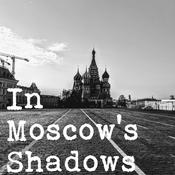
Russia, behind the headlines as well as in the shadows. This podcast is the audio counterpart to Mark Galeotti's blog of the same name, a place where "one of the most informed and provocative voices on modern Russia", can talk about Russia historical and (more often) contemporary, discuss new books and research, and sometimes talk to other Russia-watchers. If you'd like to keep the podcast coming and generally support my work, or want to ask questions or suggest topics for me to cover, do please contribute to my Patreon at https://www.patreon.com/InMoscowsShadowsThe podcast's corporate partner and sponsor is Conducttr, which provides software for innovative and immersive crisis exercises in hybrid warfare, counter-terrorism, civil affairs and similar situations.
Podcast websiteListen to In Moscow's Shadows, The Law Show and many other podcasts from around the world with the radio.net app
Get the free radio.net app
- Stations and podcasts to bookmark
- Stream via Wi-Fi or Bluetooth
- Supports Carplay & Android Auto
- Many other app features
Get the free radio.net app
- Stations and podcasts to bookmark
- Stream via Wi-Fi or Bluetooth
- Supports Carplay & Android Auto
- Many other app features
In Moscow's Shadows
Scan code,
download the app,
start listening.
download the app,
start listening.
 UK
UK