

Listen to this podcast in the app for free: Download for free in the App Store
radio.net
Sleep timer
Save favourites
2993 episodes
Julie K. Brown Calls Out The USVI For Their Epstein Hypocrisy (Part 2)
23/09/2026 | 28 mins.Julie K. Brown, the investigative reporter for the Miami Herald, not only reignited the Jeffrey Epstein case by exposing the sweetheart non-prosecution agreement in Florida but also turned her spotlight to Epstein’s Caribbean operations. In a 2023 Miami Herald piece titled “U.S. Virgin Islands cozied up to Jeffrey Epstein. Now they’re profiting from his sex crimes,” Brown detailed how Epstein benefited from deep ties to the territory’s institutions—securing lavish tax breaks and beneficial financial dealings through shell companies like Southern Trust. Her reporting underscored how USVI authorities, including those in positions of power, either overlooked or enabled Epstein’s operations, which later came under legal scrutiny through lawsuits and settlements.
In the piece, Brown argued that the USVI not only allowed Epstein to operate with little interference but later positioned itself to collect financial benefits through penalties and settlements after his death. This framing suggested that the government was both complicit in allowing the criminal enterprise to flourish and opportunistic in profiting from its collapse. The article sparked strong pushback, including from the University of the Virgin Islands, which issued a public response disputing some of the claims. The controversy reflected the tension between investigative reporting that sought to highlight systemic failures and local institutions that rejected the characterization of their role.
to contact me:
bobbycapucci@protonmail.com
source:
U.S. Virgin Islands profiting from Jeffrey Epstein’s crimes | Miami HeraldJulie K. Brown Calls Out The USVI For Their Epstein Hypocrisy (Part 1)
23/09/2026 | 21 mins.Julie K. Brown, the investigative reporter for the Miami Herald, not only reignited the Jeffrey Epstein case by exposing the sweetheart non-prosecution agreement in Florida but also turned her spotlight to Epstein’s Caribbean operations. In a 2023 Miami Herald piece titled “U.S. Virgin Islands cozied up to Jeffrey Epstein. Now they’re profiting from his sex crimes,” Brown detailed how Epstein benefited from deep ties to the territory’s institutions—securing lavish tax breaks and beneficial financial dealings through shell companies like Southern Trust. Her reporting underscored how USVI authorities, including those in positions of power, either overlooked or enabled Epstein’s operations, which later came under legal scrutiny through lawsuits and settlements.
In the piece, Brown argued that the USVI not only allowed Epstein to operate with little interference but later positioned itself to collect financial benefits through penalties and settlements after his death. This framing suggested that the government was both complicit in allowing the criminal enterprise to flourish and opportunistic in profiting from its collapse. The article sparked strong pushback, including from the University of the Virgin Islands, which issued a public response disputing some of the claims. The controversy reflected the tension between investigative reporting that sought to highlight systemic failures and local institutions that rejected the characterization of their role.
to contact me:
bobbycapucci@protonmail.com
source:
U.S. Virgin Islands profiting from Jeffrey Epstein’s crimes | Miami HeraldTyler Robinson Preliminary Hearing Transcripts (Day 2 Part 6) (9/22/26)
23/09/2026 | 11 mins.Day two of Tyler Robinson’s preliminary hearing focused heavily on prosecutors’ effort to connect Robinson to the Utah Valley University campus and to the physical evidence recovered after Charlie Kirk was shot. Investigators introduced additional surveillance footage they said showed Robinson moving around UVU before and after the shooting, while the State also turned to forensic evidence recovered along the alleged escape route. A screwdriver found on top of the Losee Center and a towel recovered from a wooded area near the rifle became major points of testimony. The State Bureau of Investigation introduced an FBI laboratory report concluding that DNA from both Robinson and his roommate, Lance Twiggs, was present on the screwdriver and towel, evidence prosecutors argued helped connect Robinson to the rooftop area and to the abandoned rifle. The hearing also featured argument over the State’s allegation that Kirk had been targeted because of his political and religious views, an issue relevant to the victim-targeting enhancement prosecutors had attached to several charges
The defense spent much of the day attacking how strongly the forensic evidence could actually be interpreted. FBI forensic examiner Amanda Bakker was questioned for roughly three hours as defense attorney Michael Burt dug into the technical details of the DNA testing, mixtures, statistical interpretation and the limitations of what the results could establish about when or how DNA was deposited on the objects. Robinson’s lawyers also pushed back against the State’s motive theory, challenging the attempt to characterize the killing as being driven by Kirk’s religious beliefs in addition to political disagreement. By the end of day two, prosecutors had added important physical evidence to the surveillance case presented on day one, but the defense had begun laying out the approach it would use throughout the hearing: concede that certain items contained Robinson-associated evidence while aggressively challenging what that evidence actually proved about possession, timing, motive and the circumstances of Kirk’s killing.
to contact me:
bobbycapucci@protonmail.comTyler Robinson Preliminary Hearing Transcripts (Day 2 Part 5) (9/22/26)
22/09/2026 | 11 mins.Day two of Tyler Robinson’s preliminary hearing focused heavily on prosecutors’ effort to connect Robinson to the Utah Valley University campus and to the physical evidence recovered after Charlie Kirk was shot. Investigators introduced additional surveillance footage they said showed Robinson moving around UVU before and after the shooting, while the State also turned to forensic evidence recovered along the alleged escape route. A screwdriver found on top of the Losee Center and a towel recovered from a wooded area near the rifle became major points of testimony. The State Bureau of Investigation introduced an FBI laboratory report concluding that DNA from both Robinson and his roommate, Lance Twiggs, was present on the screwdriver and towel, evidence prosecutors argued helped connect Robinson to the rooftop area and to the abandoned rifle. The hearing also featured argument over the State’s allegation that Kirk had been targeted because of his political and religious views, an issue relevant to the victim-targeting enhancement prosecutors had attached to several charges
The defense spent much of the day attacking how strongly the forensic evidence could actually be interpreted. FBI forensic examiner Amanda Bakker was questioned for roughly three hours as defense attorney Michael Burt dug into the technical details of the DNA testing, mixtures, statistical interpretation and the limitations of what the results could establish about when or how DNA was deposited on the objects. Robinson’s lawyers also pushed back against the State’s motive theory, challenging the attempt to characterize the killing as being driven by Kirk’s religious beliefs in addition to political disagreement. By the end of day two, prosecutors had added important physical evidence to the surveillance case presented on day one, but the defense had begun laying out the approach it would use throughout the hearing: concede that certain items contained Robinson-associated evidence while aggressively challenging what that evidence actually proved about possession, timing, motive and the circumstances of Kirk’s killing.
to contact me:
bobbycapucci@protonmail.comKatie Phang And Her Opposition To Todd Blanche Motion For A Stay (Part 2) (9/22/26)
22/09/2026 | 10 mins.Katie Phang is opposing Attorney General Todd Blanche’s request to partially stay a September 16 enforcement order requiring the Justice Department to begin reviewing and producing foreign-language materials potentially covered by the Epstein Files Transparency Act. Phang’s filing argues that Blanche has already ignored the underlying June 25 preliminary injunction for nearly three months, including a July 2 compliance deadline, and is now trying to stop enforcement only days before a new September 24 deadline. Her attorneys argue the stay should be denied for several reasons: Blanche allegedly failed to confer with opposing counsel before filing the motion, the enforcement order itself is not immediately appealable because it did not change the parties’ legal obligations, and the request came far too late. Phang’s filing says the September order merely reinforced an obligation DOJ was already under and argues that Blanche cannot turn his own delay into a basis for emergency relief.
The filing also accuses Blanche of using successive motions and appeals to introduce arguments he did not make when the preliminary injunction was originally litigated. Phang’s attorneys argue that DOJ has not shown any irreparable harm from having to review records and comply with the law, while continued delay harms Phang’s work as a journalist and frustrates the public interest in disclosure of Epstein-related material. They also challenge DOJ’s position that FOIA is the proper mechanism for obtaining the records, noting that the government has simultaneously told FOIA requesters that the Epstein Files Transparency Act is the controlling avenue for release. Phang ultimately asks Judge Emmet Sullivan to deny the partial stay and leave the September 24 compliance deadline in place, arguing that Blanche has had months to address the foreign-language records and should not now be allowed to postpone the obligation through a late appeal.
to contact me:
bobbycapucci@protonmail.com
source:
gov.uscourts.dcd.291779.47.0.pdf
More News podcasts
 The Daily TNews, Society & Culture
 The DailyDaily News, News
 Today in FocusDaily News, News
 AmericastGovernment, News, Politics
 The Rest Is Politics: LeadingGovernment, News, Politics
 Black Box: The ChatbotsDocumentary, News, Society & Culture
 The Rest Is MoneyBusiness, News, Politics
 The Rest Is Politics: USGovernment, News, Politics
 Political CurrencyBusiness, News, Politics
 The Rest Is PoliticsGovernment, News, Politics
Trending News podcasts
 Deadline: White HouseGovernment, News, Politics
 Matt Forde's Political PartyNews
 The Brendan O'Neill ShowGovernment, News, Politics, Society & Culture
 Judging FreedomNews, News Commentary
 Premier League All AccessFootball, News, Soccer, Sports, Sports News
 Free State with Joe Brolly and Dion FanningNews, Politics, Sports, Sports News
 The Necessary ConversationEducation, Government, News, Politics, Self-Improvement
 AmericanoNews, News Commentary, Politics
 Where Politics Meets HistoryHistory, News, Politics
 Dan Wootton OutspokenNews, Politics
 The Owen Jones PodcastGovernment, News, Politics
 Haaretz PodcastNews
 The Escape Pod PodcastEntertainment News, Film Reviews, News, TV & Film
 Politics At Sam and Anne'sDaily News, News, Politics
 Cheat Sheet with Ridge & FrostDaily News, Government, News, News Commentary, Politics
 TRUMP100Government, News, News Commentary, Politics
 In The RoomGovernment, News, Politics
 New Culture ForumNews
 The Bunker – News without the nonsenseGovernment, News, Politics, Society & Culture
 CandaceNews, Politics, Society & Culture
 Reality CheckBusiness News, Government, News, News Commentary, Places & Travel, Society & Culture
 The Lady VanishesDocumentary, News, Society & Culture, True Crime
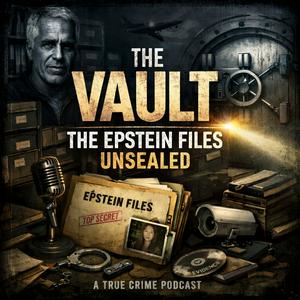
About The Vault: The Epstein Files
The Vault: The Epstein Files Unsealed is a deep-dive investigative podcast that pulls back the curtain on one of the most protected criminal networks in modern history. This series is built from the ground up on the actual paper trail—unsealed court records, depositions, exhibits, emails, and filings that were never meant to be read by the public. No pundit panels. No spin. Just the documents themselves, examined line by line, name by name, connection by connection—paired with precise, document-driven analysis that explains what the record truly shows.Each episode opens the vault on newly unsealed or long-buried Epstein files and walks listeners through what they actually reveal about power, money, influence, and the systems that failed survivors at every turn. Alongside the filings themselves, informed commentary breaks down the legal strategy, the institutional behavior, the contradictions, and the implications hiding between the lines. From judges’ orders and sealed exhibits to sworn testimony and back-channel communications, the show connects the dots the media often won’t—or can’t. Patterns emerge. Timelines collapse. Excuses fall apart.The Vault is a working archive in audio form, a living record of the Epstein case as told by the courts themselves—supplemented by rigorous analysis that provides context, challenges official narratives, and exposes where the record has been distorted, sanitized, or deliberately ignored. Every claim is grounded in filings. Every episode is anchored to the record. Listeners aren’t told what to think—they are shown what exists, what was said under oath, and what the commentary reveals about how those facts were buried, softened, or misrepresented.If you want to understand how Jeffrey Epstein was protected, who circled him, how institutions closed ranks, and why accountability keeps slipping through the cracks, The Vault: The Epstein Files Unsealed is where the record finally speaks for itself—and where the commentary ensures the documents do what no press release ever will.
Podcast websiteListen to The Vault: The Epstein Files, The Daily T and many other podcasts from around the world with the radio.net app
Get the free radio.net app
- Stations and podcasts to bookmark
- Stream via Wi-Fi or Bluetooth
- Supports Carplay & Android Auto
- Many other app features
Get the free radio.net app
- Stations and podcasts to bookmark
- Stream via Wi-Fi or Bluetooth
- Supports Carplay & Android Auto
- Many other app features

The Vault: The Epstein Files
Scan code,
download the app,
start listening.
download the app,
start listening.
The Vault: The Epstein Files: Podcasts in Family
 UK
UK