Listen to this podcast in the app for free: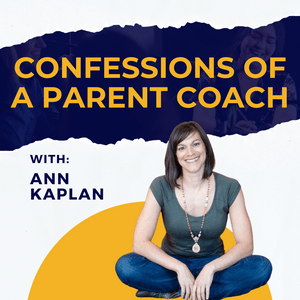 Download for free in the App Store
radio.net
Sleep timer
Save favourites
Available Episodes
5 of 146
- Doing the Work vs Talking About the WorkHave you ever received a compliment but still didn't believe it on the inside? Same. The truth is that external praise can't really change the way we feel about ourselves. So why do we keep using it to improve our kids' disposition, self-esteem, or confidence? When our kid puts themself down, it makes perfect sense that our instinct is to leap in and replace the negative with positive. "You're not dumb, you're the smartest kid I know!" But it really doesn't work in the end. In fact, external praise can sometimes backfire, giving kids the unintended message that their worth depends on others' perceptions, that if they misbehave, others may not think highly of them anymore, or that the way to feel good is to look outside themselves for praise. Of course, we don't want to give kids these messages! It's natural for kids to believe we are the source of their self-esteem - we've been the source of everything else their whole lives! And you know what? They're right! Our way of being with our kids IS the seed their self-concept grows from. But it doesn't come from our compliments or praise; it comes because we are connected to them and they feel safe with us. So how do we do that? Self-esteem, confidence, and behavior change come from a few places: • Healthy parent-child attachment. When we work on ourselves so that we are neutral and non-attached to kids' behavior and accomplishments, we can just BE with them in true connection, which is the single most important thing for kids' self-concept. • Struggling and overcoming. More important for kids than their parents thinking they're wonderful, is their parents seeing them as capable - that they have what it takes to solve a problem. Hand your kids' problems back to them with lots of love and confidence. Let them fail and receive them with lots of love and belief when they do. • Being seen. Instead of evaluating them and their work, just observe them and know them. "That painting is beautiful," becomes "I noticed you're painting a lot lately." "I'm proud of you" becomes "I can see you're really proud of yourself for that." • Self-discovery. When we ask questions, we help them discover how THEY feel about themselves and support their growth away from being preoccupied with how others feel about them. When your child says, "Did you see me do that? Watch me, aren't you proud of me? Didn't I do a good job?" Turn that into a question: "Yes, I noticed! How do you feel about the thing that you just did?" Working with me means learning to be the impetus for a positive self-concept and behavior in your child, in a whole new, healthy way. If you're ready to learn how, set up a free call with me today, and I'll show you! https://calendly.com/annkaplan/discoverycall--------21:17
- The Snowball Effect Inside of YouParts beget parts. Self begets Self. This is a common expression you might overhear in circles of Internal Family Systems practitioners. Essentially, we're saying that when we take time to connect with our True Selves, two things happen: we're more likely to engage in life from our True Self, and we're more likely to receive the True Self of the people we're interacting with. (Self begets Self). And, conversely, when we're all blended up with parts of our ego, we stir up more ego stuff in ourselves, and spark the egoic parts of everyone else. Parts beget parts. Makes sense, right? It's like a positive or negative snowball effect that goes on inside us and everyone else, all the time! In this week's episode of Confessions Of A Parent Coach, I'm sharing multiple stories that illustrate this concept in real life. We have so many opportunities to kick off either of these snowballs in ourselves, and it doesn't take much. Listen in to hear how I do it, and how you can too! If you're ready to take control of the snowball effect within you and see what amazing relationships and experiences await you, set up a free Discovery Call and let's see if we're a good fit! https://calendly.com/annkaplan/discoverycall--------31:29
- Helping Kids Give ThanksTis the season...to nag our kids about gratitude nonstop. It's Thanksgiving time, and that means lots of kids will be the beneficiaries of even more generosity than usual and will be expected to be grateful for their blessings. Remember when we were kids, and our parents nagged us about saying 'thank you' or writing thank-you notes, or told us stories about how good we had it compared to others? How much true gratitude did that inspire in us? In this week's episode of Confessions Of A Parenting Coach, I share 3 tools for actually creating TRUE gratitude in our kids (no nagging or thank you notes required). If you're ready to get my eyes on your parenting challenges and create a clear pathway to the behavior and relationship you hope for with your child, set up a free Discovery Call! I will learn about your family, help you see the roadmap to the family dynamics of your dreams, and decide if I am the person to help you get there. https://calendly.com/annkaplan/discoverycall--------22:16
- Connection is KingWhy are some kids at their worst when they're with their parents? You may have heard it's because they are comfortable letting it all hang out when they're with their parents, which is a piece of the puzzle, but far from the whole story. The bottom line is that kids (and all humans) crave energy, intensity, attention, and interaction from the people around them, and when kids get that negatively (in the form of anger, worry, or interference from their parents, for example), we start to see negative behavior increase as a means to feel connection. Connection is king. This week on the podcast, I'll explore what that looks like and how we can use the fact that "connection is king" to create positive behaviors and relationships with our kids. Doing this kind of personal growth work is the quickest way to unlock incredible parenting for your kiddo and the most joyful life you could ever experience! So if you're ready to look into implementing these ideas in your own life, set up a free Discovery Call and let's see if we're a good fit! https://calendly.com/annkaplan/discoverycall--------28:21
- Self-Led ParentingHave you ever done the "right thing" even though it felt like torture? Of course! We've all been in countless situations where we knew what we should do, and we were able to make ourselves do it, but it sucked. Telling the truth when it would have been easier to lie, staying calm with our kiddo when, inside, we are seething, holding a boundary when we wish we could just cave... It's so normal! But what if it were possible to do those "right" things and it NOT feel so hard? What if doing the right thing just organically happened, not because you were forcing yourself to be good, but because that was just what naturally unfolded? This week on the podcast, I'll explore what that looks like and how we can get there. It's something IFS calls "Self-Led," and I'll share a story about one client who got there in her parenting and how things changed because of her transformation. Doing this kind of personal growth work is the quickest way to unlock incredible parenting for your kiddo and the most joyful life you could ever experience! So if you're ready to look into implementing these ideas in your own life, set up a free Discovery Call and let's see if we're a good fit! https://calendly.com/annkaplan/discoverycall--------27:56
More Education podcasts
 Coffee Break SpanishEducation, Courses, Language Learning
 The Mel Robbins PodcastEducation, Health & Wellness, Society & Culture, Mental Health, Relationships, Self-Improvement
 The Daily StoicBusiness, Education, Society & Culture, Self-Improvement
 Coffee Break FrenchEducation, Courses, Language Learning
 The Rich Roll PodcastEducation, Health & Wellness, Society & Culture, Self-Improvement
 6 Minute EnglishEducation, Language Learning
 The Humans vs Retirement PodcastBusiness, Education, Society & Culture, Careers, Investing, Personal Journals, Self-Improvement
 The Digital SisterhoodEducation, Society & Culture, Documentary, Self-Improvement
 Law of Attraction Changed My LifeEducation, Kids & Family, Religion & Spirituality, Parenting, Self-Improvement, Spirituality
 Begin Again with Davina McCallEducation, Health & Wellness, Society & Culture, Mental Health, Self-Improvement
Trending Education podcasts
 English Learning for Curious Minds | A More Interesting Way To Learn EnglishEducation, Language Learning
 Am I the Genius?Education, Self-Improvement
 Stories in Slow Italian - Learn Italian through storiesEducation, Language Learning
 Español con JuanEducation, Courses, Language Learning
 The Wellness WayEducation, Self-Improvement
 The Art of AccomplishmentBusiness, Education, Health & Wellness, Management, Mental Health, Self-Improvement
 Dreaming Spanish Podcast – Chats in Beginner SpanishEducation, Language Learning
 THE ED MYLETT SHOWBusiness, Education, Entrepreneurship, Self-Improvement
 Talking Rubbish - The Recycling PodcastEducation, Science, Society & Culture, Documentary, Tutorials, CATEGORY_NATURE
 Comfort AffirmationsEducation, Self-Improvement
 Le français avec FluiditéEducation, Courses, Language Learning
 Easy Italian: Learn Italian with real conversations | Imparare l'italiano con conversazioni realiEducation, Society & Culture, Courses, Language Learning, Places & Travel
 The Broke GenerationBusiness, Education, Tutorials
 Clutterbug - Real-Life Hacks and Tips to Declutter, Organize and Clean your Home FastEducation, Kids & Family, Leisure, Home & Garden, Self-Improvement
 Learning English StoriesEducation, Language Learning
 Know ThyselfEducation, Self-Improvement
 Learn Italian with Joy of LanguagesEducation, Courses, Language Learning
 German for BeginnersEducation, Courses, Language Learning
 English Unleashed: The PodcastEducation, Language Learning
 Life KitBusiness, Education, Health & Wellness, Kids & Family, Self-Improvement
 Andy Ramage PodcastEducation, Health & Wellness, Self-Improvement
 Cyprian MajcherEducation
 Align with Jenna Zoe: The Human Design PodcastEducation, Religion & Spirituality, Science, Life Sciences, Self-Improvement, Spirituality
 The Zero to Finals Medical Revision PodcastEducation, Health & Wellness, Science, Life Sciences, Medicine
 BPLUS بیپلاس پادکست فارسی خلاصه کتابEducation, Kids & Family, Self-Improvement
 Motivation Daily by MotiversityEducation, Health & Wellness, Self-Improvement
 Primary Care Knowledge BoostEducation, Science
 جافکری | JafekriEducation, Self-Improvement
 Hoy Hablamos: Podcast diario para aprender español - Learn Spanish Daily PodcastEducation, Courses, Language Learning
 The Let Them TheoryEducation, Self-Improvement
About Confessions of a Parent Coach
Welcome to Confessions of a Parent Coach, the podcast where you'll learn that even parenting experts like me, Ann Kaplan, mother of four, and your host won't have all the answers. I believe that once you realize there's no such thing as a perfect parent, you can achieve fabulous behavior and amazing relationships with your kids.
Podcast websiteListen to Confessions of a Parent Coach, Coffee Break Spanish and many other podcasts from around the world with the radio.net app
Get the free radio.net app
- Stations and podcasts to bookmark
- Stream via Wi-Fi or Bluetooth
- Supports Carplay & Android Auto
- Many other app features
Get the free radio.net app
- Stations and podcasts to bookmark
- Stream via Wi-Fi or Bluetooth
- Supports Carplay & Android Auto
- Many other app features

Confessions of a Parent Coach
Scan code,
download the app,
start listening.
download the app,
start listening.
 UK
UK