
Listen to this podcast in the app for free: Download for free in the App Store
radio.net
Sleep timer
Save favourites
The Homeopathy Health Show with Atiq & Naila
Atiq Ahmad Bhatti
Latest episode
195 episodes
EP202: Fertility, Homeopathy & the Vanier System | Liz Lalor | Part 1
18/11/2026 | 45 mins.🎙️ THE HOMEOPATHY HEALTH SHOW
PART 1 - Fertility, Homeopathy & the Vanier System | Liz Lalor
Episode Summary
In the first of a fascinating two-part conversation, Atiq & Naila welcome internationally respected homeopath, lecturer and author Liz Lalor to The Homeopathy Health Show.
Liz shares the deeply personal journey that led her to develop her fertility programme, beginning with her own experiences of being told she would not conceive and subsequently discovering homeopathy.
Drawing upon decades of clinical experience, Liz explores the development of her structured fertility approach, the influence of the Vanier system, and the ways she integrates constitutional prescribing, protocols and individualised case analysis.
The conversation also explores the emotional impact of fertility difficulties, the importance of understanding each patient's circumstances, and the challenges faced by couples navigating uncertainty, disappointment and difficult reproductive decisions.
Liz discusses the reasoning behind her programme, her observations from clinical practice and her commitment to educating qualified homeopaths in its application.
A thoughtful conversation about fertility, clinical experience, professional flexibility and the responsibility that accompanies working with people seeking to start a family.
In This Episode We Explore
A Personal Journey into Fertility Work
Liz's own fertility experiences and how they influenced her subsequent career.
The Vanier System
The place of the Vanier approach within Liz's clinical methodology and its influence on her fertility programme.
Constitutional Prescribing and Structured Protocols
Why Liz distinguishes between a structured programme and broader constitutional homeopathic practice.
Candida and Fertility
Liz's clinical perspective on Candida-related treatment and why she considers this an important component of her programme.
The Emotional Experience of Infertility
The psychological and emotional difficulties that patients may experience when conception does not happen as expected.
Pregnancy and Clinical Decision-Making
Liz's discussion of prescribing decisions during pregnancy, different practitioners' approaches and the importance of clinical judgement.
Teaching and Professional Responsibility
Why Liz believes her fertility programme should be taught to trained homeopaths rather than marketed directly to vulnerable patients.
Key Questions Explored
What inspired Liz to develop her fertility programme?
How did her personal experiences shape her approach?
What distinguishes the Vanier system from other approaches?
How does Liz combine protocols with individualised prescribing?
What role does she assign to Candida-related treatment?
How does she approach the emotional burden of infertility?
Why is professional training particularly important in fertility work?
About Our Guest
Liz Lalor is an Australian homeopath, author, lecturer and international educator whose work includes fertility, psychological case analysis and the interpretation of delusion rubrics.
Her teaching and conference presentations have taken her across Australia, New Zealand, Europe, India and North America. She has also contributed to homeopathic education and authored works exploring psychological themes and repertory interpretation.EP201: Qigong, Homeopathy & the Light of Healing | Rix Pyke & Dodo Kitchen
12/11/2026 | 38 mins.🎙️ THE HOMEOPATHY HEALTH SHOW
Qigong, Homeopathy & the Light of Healing | Rix Pyke & Dodo Kitchen
Episode Summary
What does it mean to be a practitioner who can support others without becoming overwhelmed by the experiences and emotions they bring into the consultation room? And how might practices such as Qigong, meditation and movement complement a homeopath's personal and professional life?
In this episode, we welcome Rix Pyke and Dodo Kitchen for a thoughtful conversation exploring the connections they make between homeopathy, Qigong, spirituality and the experience of healing.
Rix shares her journey into homeopathy, beginning with her own experience of consulting a homeopath in 1982 before training at the School of Homeopathy in Devon. She reflects on how being listened to and having her complete health history considered shaped her understanding of the profession.
We explore Qigong as a daily practice, its relationship with movement, stillness and awareness, and how Rix describes using it to regain equilibrium after emotionally demanding consultations. The conversation also considers the importance of practitioner boundaries: being fully present with a patient, listening deeply, but not absorbing their distress.
A particularly moving part of the discussion takes us to their community clinic in Peckham, South London. Through its garden, yurt, community activities and low-cost therapies, the clinic offers a welcoming space for people who might otherwise struggle to access support. Rix shares the thinking behind this work and the importance of making time for those who cannot afford private fees.
We also explore the meaning of healing beyond the removal of physical symptoms, the relationship between sleep and wellbeing, the influence of modern lifestyles and screens, and the idea of light as a recurring theme in their spiritual and therapeutic perspectives.
An inspiring conversation about the practitioner, the patient and the wider community — and the importance of creating spaces in which people feel heard, supported and connected.
In This Episode We Explore
The Journey into Homeopathy
Rix's first experience of homeopathy in 1982 and how it influenced her decision to train.
The importance of taking a full case history and considering the person as a whole.
Rix's training at the School of Homeopathy in Devon with Misha Norland.
Her earlier working life as a bricklayer and builder.
The influence of family, personal experience and a belief in the body's innate capacity for self-healing.
Qigong, Movement and Stillness
How Rix and Dodo came to practise Qigong.
The relationship between Qigong, yoga, meditation and movement.
Rix's experience of reaching a state of inner silence through Qigong.
The role of daily practice in restoring a sense of equilibrium.
How movement and awareness can help practitioners reconnect with their own bodies.
The Practitioner: Presence, Boundaries and Energy
The emotional demands of working with patients who bring difficult or harrowing experiences.
Why practitioners need to develop healthy boundaries.
The distinction between actively listening and absorbing another person's distress.
Rix's experience of meditation and the circle of light as a way of understanding practitioner protection.
The danger of feeling responsible for fixing every patient or achieving a particular outcome.
The importance of looking after the practitioner as well as the patient.
Healing Beyond the Physical Symptoms
Rix's reflections on healing as a continuous process rather than simply fixing a problem.
The relationship between physical wellbeing, emotional experience and changes in how a person sees their life.
Naila and Rix's discussion about patients becoming more connected to themselves.
Understanding that not every patient approaches healing in the same way.
The importance of meeting people where they are rather than imposing expectations upon them.
Homeopathy, Spirituality and Human Evolution
Rix's experience of the Guild of Homeopaths course and its emphasis on meditation and intuition.
The influence of Martin Miles, Janice McAuliffe and other teachers.
The book Homeopathy and Human Evolution and its wider philosophical themes.
Rix's perspective on the vital force, energetic exchange and the role of intuition.
The idea that individual development and collective progress are connected.
The Healing Yurt: A Community Clinic in Peckham
How Rix and Dodo became involved in running a community clinic in South London.
Their work supporting people who would otherwise struggle to afford private therapies.
The garden, community growing projects, yurt and sauna.
The welcoming atmosphere created through gardening, conversation, tea and contact with nature.
The value of community, compassion and human connection.
Their commitment to offering one or two days each month to people who cannot afford private fees.
The need for continued funding and donations to sustain this work.
Light, Nature and Modern Living
The symbolic and spiritual significance of light in Rix's understanding of healing.
The discussion around natural daylight, artificial light and screen use.
Rix's reflections on the pineal gland and its traditional association with the third eye.
The importance of sleep and the sleep–wake rhythm.
The role of gardens, outdoor activity, food growing and connection with nature.
The resilience and creativity of younger generations.
Listening to the Body and Supporting Wellbeing
Why Rix believes many people have become disconnected from their own bodily experiences.
The importance of helping patients describe and understand their symptoms.
The changes practitioners may observe in sleep, digestion, energy and daily life.
The value of combining awareness of the body with homeopathic practice.
The importance of supporting children and families.
About Our Guests
Rix Pyke and Dodo Kitchen
Rix Pyke is a homeopath who first encountered homeopathy in 1982 and later trained at the School of Homeopathy in Devon with Misha Norland. She also studied through the Guild of Homeopaths, where she describes developing a meditation and spiritual practice alongside her homeopathic studies.
Her work brings together homeopathy, Qigong and an interest in the relationship between physical, emotional and spiritual wellbeing. She also has a long-standing commitment to community-based work and making therapeutic support accessible to people who may not be able to afford private fees.
Rix and Dodo run a community clinic in Peckham, South London, alongside their private practices. Their work includes a welcoming community space with a garden, a yurt and access to low-cost therapies.
Dodo is also involved in Qigong and the community clinic. The recording provides less individual biographical detail about her, so further information can be added when available.
Connect With Our Guests
Community clinic: Peckham, South London.
Clinic funding: The guests mention previous support from Homeopathy UK and the Society of Homeopaths.
Website / social media: Not provided in the recording.
Key Questions Explored
What first inspired Rix to become a homeopath?
How did her own experience of homeopathy shape her understanding of the profession?
What does Qigong offer that complements a daily homeopathic practice?
How can practitioners remain present with patients without absorbing their distress?
Why can the pressure to fix or cure every patient become exhausting?
What does it mean to understand healing as a continuous process?
How can meditation, intuition and spiritual practice influence the practitioner's approach?
What is the Healing Yurt, and how does its community setting support its work?
Why are gardens, nature and human connection important features of the clinic?
How might modern lifestyles and screen use affect our relationship with natural light and sleep?
How can practitioners encourage patients to become more aware of their own bodies?
What can the homeopathic community learn from collective and community-based projects?Bonus Episode: When Well-Selected Remedies Fail | Dr Gaurang Gaikwad
07/11/2026 | 1h 34 mins.🎙️ THE HOMEOPATHY HEALTH SHOW
When Well-Selected Remedies Fail: Intercurrent Remedies, Complex Cases & Clinical Thinking | Dr Gaurang
Episode Summary
What happens when a well-selected homeopathic remedy does not bring the expected response? When a patient has already tried numerous remedies, the case remains unchanged, and the practitioner needs to reconsider the direction of their prescription?
In this episode, we welcome Dr Gaurang for a detailed clinical discussion on approaching difficult and unresponsive cases. Drawing on his clinical experience, he explores how practitioners can reassess a case, look beyond the presenting pathology and consider whether a different prescribing approach may be needed.
Through a series of clinical examples, Dr Gaurang discusses the use of intercurrent remedies, nosodes, sarcodes, less commonly considered remedies and pathological prescribing. He demonstrates how repertory work and materia medica can be used alongside one another, and why understanding the patient's history, previous prescriptions and individual patterns may open up new possibilities for case analysis.
The cases include chronic skin conditions, ingrown toenails, osteoarthritis, acne, chalazion and infertility. Remedies discussed include X-ray, Dysenteric Compound, Osteoarthritic Nosode, Solanum tuberosum ergotum, Platinus acerifolia and Lac defloratum.
We also explore the importance of reviewing cases that are not progressing, translating the patient's own language into repertory rubrics, understanding potency and repetition, and recognising the value of mentorship.
An engaging and thought-provoking conversation about clinical reasoning, learning from difficult cases and remaining open to different ways of approaching homeopathic practice.
In This Episode We Explore
When Well-Selected Remedies Fail
Why a case may not respond despite apparently well-selected remedies.
The importance of reviewing previous prescriptions and understanding what has already been tried.
Recognising when a familiar prescribing approach may need to change.
Dr Gaurang's approach to reviewing complex and unresponsive cases.
Learning from clinical difficulties and what he describes as the value of failure in developing clinical understanding.
Repertory and Materia Medica: Working Together
Why repertory and materia medica should often be used in parallel.
Using materia medica knowledge to identify an entry point into a difficult case.
Moving beyond individual rubrics towards recognising broader patterns.
Translating the patient's own language into repertory terminology.
The possibility of future repertory development through pattern recognition and connections between symptoms, themes and provings.
Intercurrent Remedies, Nosodes and Sarcodes
The role Dr Gaurang gives to intercurrent remedies in cases that are not progressing.
Exploring bowel nosodes and their relationship, in his clinical framework, to digestive, skin and recurrent inflammatory presentations.
Dysenteric Compound and the themes he associates with it.
Osteoarthritic Nosode and its use in the clinical examples discussed.
The place of nosodes, sarcodes and less frequently prescribed remedies in his approach to complex cases.
X-Ray and the Question of Lack of Reaction
A case of long-standing, severe dry eczema that had not responded to numerous previous prescriptions.
The importance of suppression and lack of reaction in Dr Gaurang's assessment.
His discussion of X-ray as a remedy associated in materia medica with skin changes, dryness, cracks and a lack of vitality.
The importance he places on recognising a remedy picture through both clinical observation and repertory confirmation.
Dysenteric Compound and the Bowel Nosodes
An ingrown toenail case in which many familiar local remedies had previously been prescribed.
Looking beyond the local pathology to the patient's digestive history and broader symptom picture.
The patient's anxiety, nervousness, fear of judgement and concern about how others perceive him.
Dr Gaurang's reasoning for considering Dysenteric Compound.
His discussion of the bowel nosodes and their different remedy pictures.
Osteoarthritic Nosode and Clinical Observation
A case involving an older woman with severe knee osteoarthritis and restricted mobility.
Dr Gaurang's review of 95 cases in which he had used Osteoarthritic Nosode between 2023 and 2024.
The patterns he identified among the cases he considered to have improved.
His observations concerning laterality, temperature, postmenopausal symptoms and complementary remedies.
The importance of collecting clinical experience and reviewing patterns over time.
Exploring the Plant and Fungal Kingdoms
A complex acne case involving a history of abuse, fear, trauma and feelings of being attacked and forsaken.
The relationship between the patient's emotional themes, dreams and physical presentation within Dr Gaurang's case analysis.
His differentiation of Solanum tuberosum ergotum from other remedies in the Solanaceae group.
The interesting intersection of plant and fungal remedy themes.
Pathological Prescribing and Less Familiar Remedies
A case of chalazion in a young child that had not responded to an initial prescription.
Why Dr Gaurang reconsidered the case and explored a pathological prescribing approach.
His discussion of Platinus acerifolia and its materia medica indications.
The importance of returning to older materia medica sources and exploring remedies that may be less familiar.
Lac Defloratum and Understanding the Patient's Language
A complex case involving infertility, fibroids and a history of previous prescriptions.
Why the patient's reason for seeking help at that particular moment became an important starting point for the case analysis.
The significance of the symptom of headache ameliorated by conversation.
Differentiating Lac defloratum from Pulsatilla.
Dr Gaurang's discussion of ascending potencies and his clinical approach to the case.
Potency, Repetition and Susceptibility
How Dr Gaurang approaches potency selection across different types of cases.
His distinction between low, medium and high potencies in relation to the presenting symptom picture.
The use of LM potencies in cases requiring repeated prescribing.
Why repetition and potency may need to be adapted to the individual patient's susceptibility.
The discussion around split doses, water doses and observing the patient's response.
The Importance of Mentorship
Why developing as a homeopath involves more than reading materia medica and repertories.
The value of learning from experienced practitioners and observing cases.
Finding a mentor who is approachable, grounded and willing to answer questions.
Building clinical confidence through ongoing study, discussion and practical experience.
About Our Guest
Dr Gaurang Gaikwad
Dr Gaurang joins us to share his clinical approach to challenging cases and the lessons he has drawn from years of homeopathic practice.
Throughout the discussion, he demonstrates how he brings together repertory, materia medica, clinical observation and knowledge of different remedy groups. He also shares his experience of working with nosodes, sarcodes, intercurrent remedies and less commonly prescribed remedies.
He discusses the importance of ongoing study, learning from experienced teachers and developing the confidence to reassess a case when the expected response has not occurred.
During the episode, Dr Gaurang also refers to his extensive free teaching resources on YouTube and his educational work exploring the animal kingdom in homeopathy.
Connect With Our Guest
Email: gauranghg@gmail.com
Key Questions Explored
What should a homeopath do when a well-selected remedy fails to produce the expected response?
How important is it to understand which remedies and prescribing approaches have already been tried?
When should a practitioner consider an intercurrent remedy?
How can repertory and materia medica work together in complex cases?
What are the clinical patterns Dr Gaurang associates with X-ray?
What are bowel nosodes, and how does he differentiate between them?
What led him to explore Osteoarthritic Nosode in a series of cases?
How can the patient's emotional experience help guide remedy differentiation?
What is the significance of translating patient language into repertory rubrics?
How does he approach potency, repetition and susceptibility?
Why is mentorship so important in developing as a homeopath?Bonus Episode: The Architecture of Healing: Energy, Remedies & the Living Patient | Colin Griffith
06/11/2026 | 1h 19 mins.🎙️ THE HOMEOPATHY HEALTH SHOW
Episode Title
The Architecture of Healing: Energy, Remedies & the Living Patient | Colin Griffith
Episode Summary
What does it really mean to understand the architecture of healing?
In this special bonus episode, we welcome contemporary homeopath, teacher and author Colin Griffith for an introduction to his upcoming masterclass, The Architecture of Healing.
Drawing on decades of clinical experience, Colin shares how his understanding of homeopathy has evolved beyond simply applying textbook knowledge. He describes the importance of learning from living patients, recognising the individual expression of remedies and bringing together knowledge, intuition and clinical experience.
Using the analogy of a tapestry, Colin explores how different threads contribute to the healing process. He introduces the idea of energy as a dynamic and moving structure, and considers how remedies may have their own distinctive patterns of movement and expression.
The conversation also provides a preview of the four themes at the heart of his masterclass: the midline and reciprocal tension membrane, the thymus gland and remedial action, the nodes of the Moon, and the concept of disempowerment.
Along the way, Colin reflects on new remedies, contemporary provings, ancestral experiences and the importance of allowing homeopathy to evolve through clinical observation and individual understanding.
An inspiring introduction to a fascinating exploration of homeopathy, its philosophy and the many dimensions that may contribute to the experience of healing.
In This Episode We Explore
The Architecture of Healing
Colin's journey from textbook learning to developing his own clinical understanding.
The tapestry analogy and the different threads that contribute to the healing process.
Why knowledge must be combined with intuition and experience.
Learning from the living experience of patients rather than relying exclusively on books.
The importance of recognising the individual expression of remedies.
Energy, Movement and Homeopathy
Colin's perspective on energy as the foundation of the architecture of healing.
How energy may move in different directions and patterns.
The individual characteristics and movement of remedies.
The relationship between structure, energy and the living patient.
Why homeopathy must remain open to discovery and development.
The Midline and Reciprocal Tension Membrane
An introduction to the midline and reciprocal tension membrane (RTM).
Their relationship within Colin's wider understanding of the body's structure.
The connection with the fascia and the energetic perspective discussed during the session.
The proposed relationship between these structures, memory and emotional experience.
A preview of the first masterclass session.
The Thymus Gland and Remedial Action
Colin's interest in the thymus gland and its potential significance within his approach.
The use of thymus gland in combination remedies.
The idea of creating remedies to open new possibilities within a case.
His exploration of protection remedies and the concept of spiritual prophylaxis.
How remedies may be considered in preparation for challenging experiences.
The Nodes of the Moon and the Journey Through Time
Colin's exploration of the nodes of the Moon.
The relationship he draws between time, energy and the patient's journey.
The significance of the past, present and what remains unresolved.
Remedies associated with lunar themes, including Silica and Moonstone.
A preview of the third masterclass session.
Disempowerment and Reclaiming Empowerment
Why Colin considers disempowerment an undervalued concept in homeopathy.
How people may experience disempowerment through relationships, education and life experiences.
The relationship between practitioners and patients.
Recognising the importance of observation and allowing patients to experience their own responses.
How practitioners can develop confidence in their clinical decisions.
New Remedies, Provings and the Evolution of Homeopathy
Colin's experience with newer remedies and contemporary provings.
Exploring remedies such as Bog Oak, Citrine and Raw Kundalini.
His reflections on Rainwater, Blackbird Song and other less familiar remedies.
Why materia medica should remain fluid rather than becoming fixed.
The responsibility of each generation to contribute to the ongoing development of homeopathy.
About Our Guest
Colin Griffith
Colin Griffith is a contemporary homeopath, teacher and thinker whose work explores modern interpretations of classical homeopathy.
He is the author of The New Materia Medica, Volumes 1, 2 and 3, and has taught internationally through seminars and courses designed to deepen practitioners' understanding of the inner experience of patients and the individual expression of remedies.
His approach brings together classical homeopathic philosophy, clinical experience, intuition and an interest in newer remedies and provings.
Colin's work encourages practitioners to remain curious, explore beyond conventional materia medica and develop their own understanding through the experience of working with patients.
Connect With Our Guest
Online:
Instagram:
Facebook:
Key Questions Explored
What does Colin mean by the architecture of healing?
How did his own clinical experience change his approach to homeopathy?
Why is it important to move beyond textbook knowledge?
How can practitioners understand remedies through energy and movement?
What is the reciprocal tension membrane, and how does Colin describe its significance?
What role does the thymus gland play in his approach?
How can the nodes of the Moon offer another perspective on a patient's journey?
Why is disempowerment an important concept for both patients and practitioners?
How do new remedies and provings contribute to the evolution of homeopathy?
How can practitioners develop greater confidence in their own clinical observations?EP200: The Voice of Homeopathy, 200 Conversations, 200 Stories | Atiq & Naila
04/11/2026 | 48 mins.🎙️ THE HOMEOPATHY HEALTH SHOW
The Voice of Homeopathy, 200 Conversations, 200 Stories | Atiq & Naila
Episode Summary
In this very special 200th episode of The Homeopathy Health Show, Atiq & Naila take a moment to look back on an extraordinary journey of conversations, discoveries, inspiration and connection.
From the early days of wondering how to fill a 57-minute radio programme to hosting conversations with some of the most recognised and inspiring names in homeopathy, the show has grown into a platform connecting practitioners, teachers, researchers, students and homeopathy enthusiasts from around the world.
But as Naila reflects, perhaps the most incredible thing isn't actually the number 200. It's the people they have met along the way.
In this personal and often humorous episode, Atiq & Naila share behind-the-scenes stories, the unexpected moments, technical mishaps, memorable conversations and the experiences that have shaped them as presenters and homeopaths.
They explore what they have learned from 200 conversations, how different professional backgrounds enrich homeopathic practice, and why homeopathy offers so many opportunities for continued learning and development.
A particularly fascinating discussion considers the balance between expanding our knowledge and remaining grounded in the foundations of classical homeopathy. Atiq reflects on the importance of staying flexible while returning to the roots of the discipline, while Naila shares her perspective on nutrition, clinical experience and the importance of supporting families through education.
The episode also celebrates the people who have trusted them with their stories, the guests who have shared their knowledge, the UK Health Radio Network and, most importantly, the listeners who have made the journey worthwhile.
This is more than a celebration of 200 episodes. It is a celebration of the people, ideas, experiences and shared passion that continue to give homeopathy a voice.
200 conversations. 200 weeks. Countless moments of inspiration. And the conversation continues.
In This Episode We Explore
Celebrating 200 Episodes
The journey from the first episode to reaching this incredible milestone.
How the original idea of giving homeopathy a voice developed into an international radio and podcast platform.
The evolution of the show and how the conversations have changed over time.
Why 200 episodes represent not just recordings, but 200 weeks of commitment and connection.
The importance of the listeners and the wider homeopathic community.
Behind the Microphones
The early challenges of presenting a radio show.
Listening back to your own voice and getting comfortable behind the microphone.
The funny moments, recording mistakes and technical mishaps.
The challenges of internet connections, missing recordings and editing.
Atiq's tendency to go off on a tangent — and Naila's famous WhatsApp reminder to stop!
The importance of making guests feel relaxed and comfortable enough to share their stories.
The People Behind the Conversations
Why the most memorable part of the journey is the people they have met.
The personal stories and experiences that guests have trusted them to share.
How one conversation can inspire another homeopath, student or someone considering entering the profession.
The importance of giving practitioners a platform where their voices can be heard.
The sense of community that develops when homeopaths hear the experiences of others around the world.
What 200 Conversations Have Taught Us
How much there is still to discover within homeopathy.
The different professional backgrounds people bring into the profession.
How experiences in engineering, medicine, nursing, nutrition, IT and other fields can influence a practitioner's approach.
Why every homeopath develops their own individual perspective and style.
How conversations can open doors to new subjects, ideas and clinical approaches.
Homeopathy: An Art, a Science and a Journey of Discovery
Atiq's analogy of homeopathy as an art, with each practitioner creating their own portrait.
The importance of having strong foundations while continuing to explore.
The relationship between classical homeopathy and newer approaches.
Exploring different methods without losing sight of the fundamental principles.
Why practitioners should remain open, flexible and willing to learn.
Are We Becoming Better Homeopaths Through More Information?
Whether having more information always makes us better practitioners.
The value of expanding our understanding of different approaches.
Recognising when a particular method or perspective may be relevant to a case.
Avoiding unnecessary complexity and confusion.
Why Atiq believes we should remain grounded in classical homeopathic foundations while continuing to develop.
The Importance of Nutrition and Foundations
Naila's perspective on the relationship between nutrition and homeopathic practice.
How nutritional knowledge can help practitioners recognise wider patterns.
The role of dietary foundations and tissue salts in Naila's approach.
Why supporting the individual involves looking beyond the presenting complaint.
The importance of adapting our understanding to the needs and circumstances of each patient.
Educating the Next Generation
Naila's passion for educating parents and families.
The importance of supporting children and recognising recurring health concerns.
Why education and reassurance matter to both parents and practitioners.
The role of experienced homeopaths and teachers in supporting newer practitioners.
Encouraging continued learning and clinical development.
Thank You for Being Part of the Journey
A special acknowledgement of Johan Ilgenfritz and the UK Health Radio Network.
Gratitude to every guest who has contributed to the show.
Thanking listeners who have followed the journey, whether for one episode or all 200.
Inviting listeners to suggest future guests, topics and conversations.
Looking ahead to the next 200 episodes.
About Your Hosts
Atiq Ahmad Bhatti
Atiq Ahmad Bhatti is a homeopath, broadcaster, writer and producer, and co-host of The Homeopathy Health Show. He is also co-founder of Homeopathy in Practice, an educational platform supporting homeopaths through professional development, teaching and clinical learning.
With a background spanning broadcasting, business and technology, Atiq brings a broad perspective to conversations about homeopathy, its development and its place in the modern world.
His passion is giving homeopathy a voice, connecting practitioners internationally and creating opportunities for meaningful conversations that inspire learning and collaboration.
Naila Cheema
Naila Cheema is a homeopath, nutritionist and Biochemic Tissue Salts Practitioner. She is co-founder of Homeopathy in Practice and co-host of The Homeopathy Health Show.
Naila brings her clinical experience, nutritional knowledge and deep interest in the human experience to the conversations. Her passion lies in exploring what inspires practitioners, understanding different approaches to homeopathy and encouraging education for both homeopaths and families.
Together, Atiq & Naila bring complementary perspectives to the show, creating conversations that are informative, engaging, personal and rooted in their shared passion for homeopathy.
Connect with
Online:
www.homeopathyinpractice.co.uk
www.homeopathnaila.com
www.homeopathatiq.com
Instagram:
https://www.instagram.com/thevoiceofhomeopathy
https://www.instagram.com/homeopathnaila/
https://www.instagram.com/like_treatslike/
https://www.instagram.com/homeopathyinpractice/
Facebook:
https://www.facebook.com/Neeli.KC
https://www.facebook.com/groups/1324196628568116/
https://www.facebook.com/liketreatslike
More Alternative Health podcasts

Trending Alternative Health podcasts
About The Homeopathy Health Show with Atiq & Naila
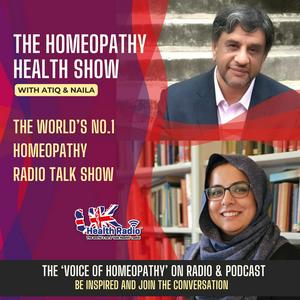
The Homeopathy Health Show is the ’Voice of Homeopathy on Radio & Podcast’, bringing together guests from the world of Homeopathy to share their perspectives, anecdotes, insights, experiences and valuable contributions to field.Whether they are Homeopaths, educators, lecturers, authors, researchers or students, a diverse range of ’Homeopathic Voices’ is featured.Support Homeopathy on Radio & Podcast by subscribing!The Homeopathy Health Show is the world’s No.1 Radio Talk Show on all things Homeopathy.
Podcast websiteListen to The Homeopathy Health Show with Atiq & Naila, Live Well Be Well with Sarah Ann Macklin | Health, Lifestyle, Nutrition and many other podcasts from around the world with the radio.net app
Get the free radio.net app
- Stations and podcasts to bookmark
- Stream via Wi-Fi or Bluetooth
- Supports Carplay & Android Auto
- Many other app features
 UK

