
Listen to this podcast in the app for free: Download for free in the App Store
radio.net
Sleep timer
Save favourites
69 episodes
Answering Parents' Questions
14/10/2026 | 29 mins.Hosts Ryan and Mike take on anoother round of questions submitted by parents. Topics include screens and texting, boredom and sibling conflict, morning routines, a young adult testing house rules, and a kid who can't put down a book. Along the way, they talk about why earned incentives work better than consequences, how to avoid getting pulled into negative attention loops, and what it looks like to step back into parental authority, even when it feels late.
Find Mike @ www.grownowadhd.com & on IG
Find Ryan @ www.adhddude.com & on Youtube
{{chapters}}
[00:00:00] Start
[00:00:54] 13-Year-Old Struggling With Texting Etiquette
[00:05:29] Boredom and Sibling Fights at Age 10
[00:10:35] Morning Routines: Ignoring Behavior vs. Consequences
[00:15:56] Reclaiming Parental Authority With an 18-Year-Old
[00:23:12] When a 9-Year-Old Won't Stop ReadingUnderstanding ADHD medications: What Parents Need to Know - Part Two
23/09/2026 | 16 mins.ADHD Parenting Podcast – Episode 66: Understanding ADHD Medications: What Parents Need to Know – Part Two
Hosts Ryan and Mike continue their two-part deep dive into ADHD medications by walking through the actual medication categories and how they differ. They cover the two stimulant families — methylphenidate-derived (Ritalin, Concerta, Focalin, Jornay PM) and amphetamine-derived (Adderall, Vyvanse, Dexedrine) — and explain why a poor response to one class doesn't mean all stimulants will fail. From there they break down alpha agonists like clonidine and guanfacine, non-stimulants including Strattera and Qelbree, and the role SSRIs play when anxiety or depression co-occurs with ADHD. They also address the growing reality that pediatricians and nurse practitioners — not psychiatrists — are now the primary prescribers of ADHD medication due to a severe nationwide shortage that isn't getting better. The episode closes with a reminder that parents don't need to become medication experts; they need enough knowledge to ask better questions and partner effectively with their child's prescriber.
Find Mike @ www.grownowadhd.com & on IG
Find Ryan @ www.adhddude.com & on Youtube
{{chapters}}
[00:00:00] Start
[00:01:35] The Two Stimulant Families Explained
[00:03:42] Why Finding the Right Medication Takes Time
[00:05:11] Alpha Agonists: A Different Category
[00:06:44] Non-Stimulants: Strattera and Qelbree
[00:09:40] SSRIs and ADHD: Separate but Related
[00:11:12] Why Pediatricians Now Prescribe Most ADHD Meds
[00:13:11] Conclusion and Key TakeawaysUnderstanding ADHD medications: What Parents Need to Know - Part One
09/09/2026 | 26 mins.Hosts Ryan and Mike tackle one of the most frequently asked questions from parents: Is ADHD medication safe? In this first installment of a two-part series, they break down what the long-term research actually shows about stimulant medications, address common fears around side effects — including appetite suppression, sleep difficulties, growth concerns, personality changes, tics, and cardiovascular risks — and explain how each is typically monitored and managed by prescribers. They also discuss the medication holiday debate, make the case that medication decisions should be adult-guided with input from the child rather than child-decided, and explain why pharmacogenetic testing doesn't deliver on its marketing promises. Throughout the episode, Ryan and Mike emphasize that the right question isn't just whether medication has risks, but what the risks of untreated ADHD look like — and that informed decisions should be made with a licensed clinician, not strangers in Facebook groups.
Find Mike @ www.grownowadhd.com & on IG
Find Ryan @ www.adhddude.com & on Youtube{{chapters}}[00:00:00] Start[00:02:21] Long-Term Safety of ADHD Medication[00:06:15] Common Side Effects and How to Manage Them[00:10:51] Height Velocity and Growth Concerns[00:12:15] Personality Flattening and the Zombie Myth[00:16:11] Should Kids Take Meds Only on School Days?[00:19:05] Who Should Make Medication Decisions?[00:22:18] Why Genetic Testing Doesn't Pick the Right Med[00:24:05] Conclusion and Part Two PreviewTop Three Tips For A Successful School Year (High School)
26/08/2026 | 20 mins.Hosts Ryan and Mike deliver the high school companion to their elementary and middle school back-to-school episode, focusing on the shift parents need to make from managing their teen to consulting.
Find Mike @ www.grownowadhd.com & on IG
Find Ryan @ www.adhddude.com & on Youtube
{{chapters}}
[00:00:00] Start
[00:04:26] Tip 1: Stop Rescuing Executive Functions
[00:06:43] Tip 2: Set Technology Expectations Now
[00:10:00] The Phone You Bought Is Your Problem
[00:14:01] Tip 3: Build Independence, Not Dependence
[00:16:38] Bonus: Collaborative Relationships With TeachersTop Three Tips For A Successful School Year (Elementary & Middle School)
12/08/2026 | 25 mins.Hosts Ryan and Mike share the three things that will have the biggest impact on an ADHD child's school year — and none of them involve buying supplies. First, they explain why setting clear, specific expectations before school starts (morning routines, homework, electronics, bedtime, after-school activities) prevents the negotiation battles that derail families every fall. Second, they walk through building routines now rather than scrambling once school begins, with particular emphasis on keeping school-issued laptops out from behind closed doors and advocating with the school when technology becomes a distraction rather than a tool. Third, they lay out how to start strong with teachers through concise, collaborative communication — and why badmouthing a teacher in front of your child or demanding a classroom switch does more harm than good. Throughout the episode, Ryan and Mike stress that consistency lowers emotional intensity and that small changes now prevent big problems in September and October.
Find Mike @ www.grownowadhd.com & on IG
Find Ryan @ www.adhddude.com & on Youtube
{{chapters}}
[00:00:00] Start
[00:05:19] Tip 1: Set Clear Expectations Before School
[00:09:23] Tip 2: Build Routines Before You Need Them
[00:13:45] Managing School-Issued Laptops and Screens
[00:16:37] Tip 3: Start Strong With Teachers
[00:21:18] Don't Badmouth Teachers in Front of Your Child
[00:22:47] Summary: Small Changes Now Prevent Big Problems
More Kids & Family podcasts










Trending Kids & Family podcasts

























About The ADHD Parenting Podcast
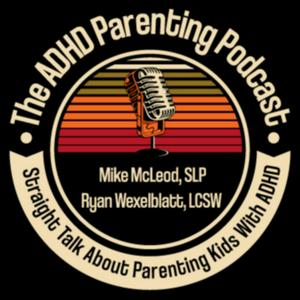
The ADHD Parenting Podcast helps parents of children and teens with ADHD improve behavior, emotional regulation, executive function, and cooperation at home and school. Hosted by Ryan Wexelblatt, LCSW, founder of ADHD Dude, and Mike McLeod, SLP, executive function specialist and author of The Executive Function Playbook, each episode delivers practical, evidence-informed strategies for reducing conflict, strengthening routines, supporting school success, and helping kids with ADHD build independence and confidence.
Podcast websiteListen to The ADHD Parenting Podcast, Greeking Out from National Geographic Kids and many other podcasts from around the world with the radio.net app
Get the free radio.net app
- Stations and podcasts to bookmark
- Stream via Wi-Fi or Bluetooth
- Supports Carplay & Android Auto
- Many other app features
Get the free radio.net app
- Stations and podcasts to bookmark
- Stream via Wi-Fi or Bluetooth
- Supports Carplay & Android Auto
- Many other app features

The ADHD Parenting Podcast
Scan code,
download the app,
start listening.
download the app,
start listening.
 UK
UK