

Listen to this podcast in the app for free: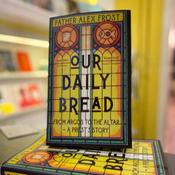 Download for free in the App Store
radio.net
Sleep timer
Save favourites
292 episodes
Fruitful Work - All In - Your Christian Career Guide - Co Founder Olly Perkins -The God Cast Podcast
18/09/2026 | 27 mins.Your career is 80,000 hours long. Will you spend it building your own kingdom, or God’s?ALL-IN will stir your ambition to help you see your work and career in a new light. This Christian guide to work and vocation offers you:A practical framework: Biblical principles to help you fearlessly navigate high-stakes career choices and bear extraordinary fruitCase studies: Real-world stories of people making a difference for JesusStrategic pathways: Different routes you can take to maximise your disciple-making impactWhether you’re a student or graduate exploring your next steps, a school pupil making plans for your future, or working and seeking fresh clarity in your career, this guide is for you.Our dream is for every Christian to embrace Jesus’ mission of making disciples of all nations – to join the next generation of revival-starters, nation-changers and gospel patrons – and help transform the world for him.Together, we’re going all-in for Jesus. Will you join us?Don’t hold back. Your career can help make disciples.New Orleans Musician John 'Papa' Gros - The God Cast Podcast #NewOrleans
17/09/2026 | 28 mins.John's Website https://www.johnpapagros.com/Tour Dates https://www.johnpapagros.com/shows
Born in New Orleans, John Papa Gros (pronounced grow) has spent more than a quarter-century championing the music of the Big Easy. He's played it all New Orleans funk, rock roll, jazz, blues, Americana, pop/rock and he swirls thoseemstyles into a genre-bending gumbo that pays tribute to his influences while still pushing ahead into new territory. Like Allen Toussaint and Dr. John, Gros is a proud local who carries on the tradition of New Orleans music, both honoring its past and helping to shape its future. After kicking off his career as an organist and pianist, for George Porter Jr. Runnin Pardners, during the 1990s, Gros formed the funk group Papa Grows Funk in 2000. For 13 years, the band performed every Monday night at the Maple Leaf Bar, delivering greasy, groove-heavy Big Easy funk, while with releasing six criticallyacclaimed albums and touring the world, carrying the iR&Brand of New Orleans' music to far-flung places. Papa Grows Funk called it quits in 2013. Gros resumed is role as a top sid an for many Nola artists including Better Than Ezra, Little Feat, Anders Osborne, The Metermen, The funky Meters, and The Neville Brothers. Finally, Gros began focusing once again on songwriting and his solo career which he'd kicked off in 2004 with the album Day's End by prepping a second solo record that focuses on the full range of his musical influences and abilities. Thus River on Fire was born in 2016. River on Fire finds John shifting his songwriting focus back to the instrument that started his lifelong musical journey - the piano. The album reaches far beyond Papa Grows Funk groove-based sound and offers listeners a bit of everything party songs, funk grooves, upbeat rockers and Americana singer/songwriteR&Ballads. Rock n Roll Hall of Fame, New Orleans legendary music creator and Gros mentor, Allen Toussaint, describes John as an instrument of New Orleans music at it best. I was paying homage to Allen in every song, be it subtle hints oR&Blatant highway robbery, admits Gros. It all coming together in the right place, at the right time. As a sid an, Ive worn a lot of different musical hats, he says. With River on Fire and the new solo band, I am all about rediscovering who I am, bracing my different sides and blending it together into one package. Throughout it all, the goal r ains the same: to honor the music he's been living his whole life, and to add his own page to New Orleans' history book.Stefan Rousseau - Chief Political Photographer of The Press Association - The God Cast Interview
26/08/2026 | 32 mins.About Stefan RousseauFor the past fifteen years, I've spent much of my time travelling with and photographing the Prime Minister of Great Britain. This has taken me to every corner of the world and includes Tony Blair's first visits to Afghanistan, Iraq and later to Libya where he held historic talks with Colonel Gaddafi.In 2009, I became the British Press Awards Photographer of the Year and retained the title in 2010.My career began in 1988 when I started work on a weekly paper in Hertfordshire. After two and a half years of summer fetes, Christmas bazaars and golden weddings I moved to Essex to join a regional press agency and learned much about the highs and lows of national photojournalism.In 1993, the bright lights of London beckoned and after knocking on many doors, I began working for the Press Association.Here on my website are some highlights of the past few years. In this job so many pictures don't get published and never get seen by anyone other than my picture desk. I therefore wanted to show some of those photographs alongside the better known ones.I have started to expand the travel section including sets of pictures from some of the fascinating places I have visited. I intend to increase these portfolios as long as I keep travelling the world.In the Weddings gallery, again I thought it would be nice to show what are quite often very natural and revealing pictures. There is so much emotion at a wedding that it is very easy for the subjects to forget you're there. I don't make a living out of them but they're fun to do once in a while!So if you'd like to get in touch and offer me endless paid travel assignments then do write or if you'd just like to know more about the life of a news photographer, that's ok too!photography@stefanrousseau.comAbout Fr AlexFr Alex Frost is the vicar of St Matthew’s the Apostle, Burnley, where he grew up. He describes himself as the ‘fundamentally unemployable’ host of The God Cast, a podcast devoted to issues of faith and spirituality, which has featured celebrities such as Eamonn Holmes, Alastair Campbell, Edwina Currie, Dom Joly, George Galloway, Anthea Turner and football legend Lou Macari. Anthea Turner and football legend Lou Macari. Ordained in 2015 after a mixed career working as a football referee, manager at Argos and a stand-up comic, Fr Alex also served on The Church of England General Synod for Blackburn Diocese. He is married to Sarah and has three children.Fr Alex made headlines when he featured in a 2021 BBC documentary The Cost of Covid – One Year On, which has been viewed over 12 million times since it was aired. Running a food bank from a car park in Burnley, helping the desperate amid his flock as the pandemic raged, Fr Alex’s down-to-earth style of ministry struck a chord with people of all faiths, cultures and classes across the UK in a time when the divide between rich and poor widens cataclysmically. The Church of England priest, who sports tattoos of his favourite band Depeche Mode, has become the last bastion of support for many in the aftermath of austerity measures, Government cuts and Covid 19 upon a community already ravaged by poverty, addiction and neglect. More recently Fr Alex has been front and centre campaigning for the reclassification of Ketamine, including working as part of a Government consultation, and has featured on National Media outlets including Good Morning Britain, BBC Radio 4 and BBC Radio 5 Live. Fr Alex has also spearheaded a campaign for more working class vocations in the Anglican Communion, and in 2025 brought a Private Members Motion to the National Church. His address received a standing ovation and in January 2026 the church unanimously supported his proposals and is now pressing ahead with his plans.T.V Smith - The Adverts - The Bored Teenagers - The God Cast Interview with Fr Alex Frost #punk
25/08/2026 | 32 mins.#punk #music Timothy "T. V." Smith (born 5 April 1956) is an English singer-songwriter who was part of punk band The Adverts in the late 1970s. Since then he has fronted other bands, as well as pursuing a solo career..BiographySmith and Gaye Black (a.k.a. Gaye Advert) moved from, respectively, Okehampton in mid-Devon, and Bideford, a small coastal town in Devon, to form The Adverts in London in 1976.The Adverts are best known for their 1977 hit single "Gary Gilmore's Eyes" and acclaimed 1978 debut album Crossing the Red Sea with the Adverts. Following unsuccessful follow-up album Cast of Thousands, The Adverts split up in late 1979, and Smith formed a new band, T.V. Smith's Explorers. They were: Erik Russell (guitar), Colin Stoner (bass), Mel Wesson (keyboards) and David Sinclair (drums). The Explorers released their debut single "Tomahawk Cruise" (a response to the installation of BGM-109 Tomahawk Cruise missiles on UK soil) in 1980, followed by an album, The Last Words of the Great Explorer. Smith then recorded as a solo artist, releasing the album Channel Five in 1983.
Fr Alex Frost is the vicar of St Matthew’s the Apostle, Burnley, where he grew up. He describes himself as the ‘fundamentally unemployable’ host of The God Cast, a podcast devoted to issues of faith and spirituality, which has featured celebrities such as Eamonn Holmes, Alastair Campbell, Edwina Currie, Dom Joly, George Galloway, Anthea Turner and football legend Lou Macari. Anthea Turner and football legend Lou Macari. Ordained in 2015 after a mixed career working as a football referee, manager at Argos and a stand-up comic, Fr Alex now also serves on The Church of England General Synod for Blackburn Diocese. He is married to Sarah and has three children.
Fr Alex made headlines when he featured in a 2021 BBC documentary The Cost of Covid – One Year On, which has been viewed over 12 million times since it was aired. Running a food bank from a car park in Burnley, helping the desperate amid his flock as the pandemic raged, Fr Alex’s down-to-earth style of ministry struck a chord with people of all faiths, cultures and classes across the UK in a time when the divide between rich and poor widens cataclysmically. The Church of England priest, who sports tattoos of his favourite band Depeche Mode, has become the last bastion of support for many in the aftermath of austerity measures, Government cuts and Covid 19 upon a community already ravaged by poverty, addiction and neglect.
More recently Fr Alex has been front and centre campaigning for the reclassification of Ketamine, including working as part of a Government consultation, and has featured on National Media outlets including Good Morning Britain, BBC Radio 4 and BBC Radio 5 Live. Fr Alex has also spearheaded a campaign for more working class vocations in the Anglican Communion, and in 2025 brought a Private Members Motion to the National Church. His address received a standing ovation and in January 2026 the church unanimously supported his proposals and is now pressing ahead with his plans.
He is due to travel to Pakistan in mid 2026 as part of documentary investigation into the unexplained death of his parishioner Kelsey Devlin. Kelsey features heavily in Alex's first book, and the project is being supported by documentary maker Masood Khan and ITV.Church of England Vicar Rev Robb Sutherland discussing ministry, working class vocations and Synod.
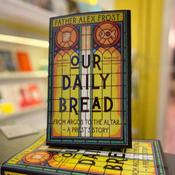
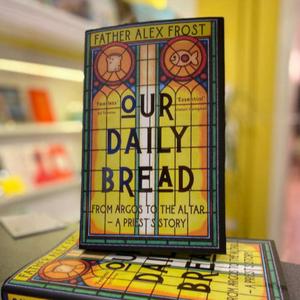
10/08/2026 | 36 mins.Alex is the host of The God Cast purchase his book here https://harpercollins.co.uk/products/our-daily-bread-from-argos-to-the-altar-a-priests-story-father-alex-frost?variant=40158841110606Robb recently was a member of '#churchofengland #synod About Robb from his church website https://www.holynativity.co.uk/people/revdrobb/Robb is married to Ruth. In their spare time they play in a local rock band called Silverthorn and ride motorbikes. The most exotic location they have travelled on the back of them is the Rocky Mountains.When he was at university Robb started to ask all of the Christians he met awkward questions about ‘what it means to follow this guy called Jesus’? He never really stopped asking those awkward questions so transferred from a degree in Chemistry to Religious Studies. From then he felt a persistent calling to ordained ministry. Robb became an RE teacher and taught in a local comprehensive school whilst exploring his call to the priesthood. Following ordination in 2009, he served a curacy in Morley and then came to Holy Nativity in 2012.Robb and Ruth are both musicians, writing and releasing songs together. They have many years of involvment in Alt:Worship and with their band Metanoia have developed develop the Rock Mass liturgies and worship in a culturally authentic way. A regular Rock Mass takes place here at Holy Nativity to engage with new congregations and new ways of experiencing God through worship.“He’s still asking us those awkward questions about Jesus” – Robb’s exasperated friends.BA(Hons) in Religious Studies, PGCE Secondary Education (Religious Education), MA in Theology and Ministry, MA in Liturgy.
More Arts podcasts
Trending Arts podcasts
About The God Cast - Religion - Football - Comedy - Music - Politics - Celebrities with Fr Alex Frost
Fr Alex Frost is the vicar of St Matthew the Apostle, Burnley, where he grew up. He is also the host of The God Cast, a podcast devoted to issues of faith and spirituality, which has featured celebrities such as Stephen Cottrell, Alastair Campbell, Edwina Currie, Dom Joly, George Galloway, Anthea Turner and football legend Lou Macari. Ordained in 2015 after a mixed career working as a football referee, manager at Argos and a stand-up comic, Fr Alex currently sits on General Synod. He is married to Sarah and has three grown up children.
Podcast websiteListen to The God Cast - Religion - Football - Comedy - Music - Politics - Celebrities with Fr Alex Frost, THEMOVE and many other podcasts from around the world with the radio.net app
Get the free radio.net app
- Stations and podcasts to bookmark
- Stream via Wi-Fi or Bluetooth
- Supports Carplay & Android Auto
- Many other app features
Get the free radio.net app
- Stations and podcasts to bookmark
- Stream via Wi-Fi or Bluetooth
- Supports Carplay & Android Auto
- Many other app features
The God Cast - Religion - Football - Comedy - Music - Politics - Celebrities with Fr Alex Frost
Scan code,
download the app,
start listening.
download the app,
start listening.
The God Cast - Religion - Football - Comedy - Music - Politics - Celebrities with Fr Alex Frost: Podcasts in Family
 UK
UK