
Listen to this podcast in the app for free: Download for free in the App Store
radio.net
Sleep timer
Save favourites
322 episodes
Can AI Fix the Biggest Problems in Physiotherapy? - Chewing It Over with Nick Sanderson of Splose
18/10/2026 | 41 mins.CLICK HERE FOR SPLOSE
In this episode of Chewing It Over, Jack speaks with Nick, founder of Splose, about the evolution of practice management software, artificial intelligence and the challenges facing modern MSK clinics.
Nick shares his unconventional journey from building websites for allied health professionals in Australia to developing an all-in-one practice management platform. After repeatedly encountering clinicians frustrated by disconnected systems, time-consuming documentation and inefficient administration, he decided to build something different.
The conversation explores how Splose has evolved, particularly following the introduction of AI functionality in 2024. Its AI scribe now extends beyond simple transcription, incorporating patient histories, previous consultations and administrative information to support clinical documentation.
However, Nick is clear that AI should support rather than replace clinical judgement. Jack challenges him on the future of automated objective assessments, the potential for increasingly sophisticated monitoring technologies and the risk of clinicians becoming complacent when reviewing AI-generated records.
They also discuss Splose's expansion into the UK, where the complexity of private medical insurance billing initially presented unexpected challenges. Nick explains how partnerships with Healthcode and ePractice-related providers helped address these barriers.
The discussion broadens into software development, customer feedback, investor expectations and the importance of maintaining a product-led philosophy while scaling a technology business.
Finally, Nick identifies clinician burnout, administrative overload and financial pressures as major challenges facing allied health.
Ultimately, the episode argues that the most valuable healthcare technology isn't necessarily the most autonomous. It's the technology that gives clinicians more time, attention and capacity to care for patients.
5 clinical/professional takeaways
- AI scribes are becoming much more than transcription tools. Integrating previous patient history, consultation information and administrative workflows could make documentation significantly more useful, rather than simply faster.
- Clinical judgement remains essential. AI can help generate and organise documentation, but clinicians must still review and approve their records. Objective assessment is particularly challenging when important findings cannot be reliably captured through audio alone.
- Automation introduces new risks as well as efficiencies. The easier it becomes to produce clinical notes, the easier it may become to approve them without sufficient scrutiny. Saving time must not come at the expense of clinical accuracy.
- Practice management software needs to reflect local healthcare systems. Splose's experience entering the UK demonstrates how billing, private medical insurance and payment processes can become major barriers, even when the underlying clinical software is well received.
- Reducing burnout requires more than technology. Administrative automation can reduce unnecessary work, but it cannot independently solve the emotional, professional and financial pressures facing clinicians. Education, mentorship and appropriate clinical support remain essential.The State of MSK with Jack Chew - BONUS NAF Podcast 078 | Hosted By Adam Meakins
23/09/2026 | 40 mins.MSKAwards.com
Thank you to the absolute legend that is Adam Meakins for hosting Jack on his podcast to discuss the MSKAwards amongst other things like social media, the ineptitude of professional bodies and regulators as well as cowboys!
MSKAwards Nominations close in 8 days (end of Sept) so click on the link and nominate yourself or a colleague/service for one of the 8 awards. Awards are open to NHS and non-NHS nominations plus the party will be absolutely fantastic so checkout the ticket options too.
We will see you there!!Challenging Pain Orthodoxies - Chewing It Over with Asaf Weisman
30/08/2026 | 1h 9 mins.In this episode of Chewing It Over, Jack is joined again by Asaf Weisman for a deliberately challenging discussion about some of the prevailing ideas within modern pain science.
Asaf argues that pain medicine has spent decades on a series of intellectual “side quests”, particularly following the development of the biopsychosocial model and modern definitions of pain in the 1970s. His criticism isn't that psychological, social or neurological factors are irrelevant, but that theoretical possibilities have sometimes been promoted with greater certainty than the evidence warrants.
A central theme is nociception and the role of the brain. Asaf challenges descriptions of pain as simply an output of the brain or a neurological expression of perceived threat. Instead, he argues that pain requires underlying somatic signalling, while the brain participates in processing and modulating that experience rather than independently generating it.
The discussion explores the language clinicians use around pain, the distinction between modulation and causation, and whether attempts to explain persistent pain have sometimes made the subject unnecessarily complex.
Importantly, the conversation also identifies areas of agreement. Asaf accepts that psychological and social factors can substantially alter an individual's pain experience, even when underlying nociceptive signalling remains unchanged. Stress, context and other factors can influence pain through modulation.
For clinicians, this creates a more practical discussion about management. Rather than becoming trapped in theoretical explanations, Asaf argues for identifying and addressing modifiable risk factors associated with persistent pain, while using exercise, modalities and other interventions where they help patients pursue meaningful activity.
It's a provocative conversation that challenges clinicians not simply to replace one pain model with another, but to scrutinise the assumptions underneath both.
Be precise about causation versus modulation. A psychosocial factor influencing the intensity of someone's pain doesn't necessarily establish that it independently caused the pain. That distinction is central to Asaf's argument.
Don't turn theoretical models into established biological facts. Models can help generate hypotheses and guide research without every component of the model having been empirically demonstrated.
The brain isn't being dismissed. Asaf's position is more nuanced than “pain is peripheral”. He explicitly accepts that the brain processes and modulates pain and that stress and psychosocial circumstances can change the resulting experience.
Language matters clinically. Terms such as “pain output”, “threat”, “nociception” and “biopsychosocial” carry assumptions. Using them casually can make a proposed mechanism sound more established than it actually is.
Don't let the theoretical debate distract from modifiable factors. Whatever model a clinician favours, the practical priority remains identifying things that can meaningfully be changed — including activity, physical health and relevant psychosocial stressors — and helping the patient address them.
5 clinical/professional takeawaysThe MSKAwards 2026! Chewing It Over with Laura Beaven
23/08/2026 | 49 mins.In this episode of Chewing It Over, Jack is joined by Laura Bevan, Head of Communications at Physio Matters, for a complete guide to the inaugural MSK Awards — and, remarkably, Laura's first ever podcast appearance.
Taking place on 27 November in Birmingham, the MSK Awards have been created as a dedicated celebration of excellence across the MSK community. Rather than another conference or educational event, the evening is designed to recognise the clinicians, leaders and teams making a genuine difference to patients and colleagues — including those whose work often happens quietly behind the scenes.
Jack and Laura discuss the thinking behind the awards, the categories, nominations and judging process, as well as what attendees can expect from the evening itself. The ambition is to create something that combines a prestigious awards ceremony with a genuinely enjoyable end-of-year celebration: dinner, entertainment, networking and a proper party with the wider MSK community.
They also reveal that two-time Olympic triathlon champion Alistair Brownlee will join the event as its celebrity guest speaker. Rather than simply making an appearance, Brownlee will be interviewed about his experiences of injury, rehabilitation and working with MSK professionals throughout an extraordinary elite sporting career.
With leading MSK clinicians and educators attending alongside teams from across the profession, the awards are intended to become an annual opportunity to recognise the breadth of work happening across MSK healthcare.
The message is simple: our profession spends plenty of time discussing how it can improve. Sometimes it should also celebrate what it's already doing brilliantly.Make Data Driven Smart Decisions Don’t Fly Blind! - Chewing It Over with Elona Bregasi and Xhesika Tusha of Dataplayer
16/08/2026 | 24 mins.dataplayer.io
In this episode of Chewing It Over, Jack speaks with Elona Bregasi and Xhesika Tusha from Dataplayer about why many clinic owners are effectively “flying blind” when it comes to understanding the performance of their businesses.
Clinicians are trained to deliver healthcare, not necessarily to run data-driven organisations. As a result, many practices rely heavily on intuition, revenue figures and diary occupancy when making business decisions. The problem is that a busy clinic can still have significant weaknesses hidden beneath those headline numbers.
Elona and Xhesika highlight patient retention as a particularly important example. A clinic may have a full diary because it continually attracts new patients, while simultaneously losing existing patients earlier than expected. Without measuring retention, cancellation rates, utilisation and future appointment coverage, owners can miss these underlying problems.
The conversation also explores another growing challenge: having too much data. Information may be scattered across practice management, accounting and booking systems, while clinic owners increasingly experiment with uploading spreadsheets into generic AI tools. Without a consistent data model or appropriate expertise, this can create misleading conclusions and potentially introduce concerns around sensitive patient and business information.
Dataplayer aims to bring these different sources together, turning raw operational information into dashboards and actionable insights tailored to each clinic.
Ultimately, the discussion argues that good clinic data isn't about collecting everything. It's about identifying measurable, actionable metrics that help owners understand what's actually happening—and using them to make better decisions about patients, clinicians and the future of their business.
More Science podcasts



Trending Science podcasts











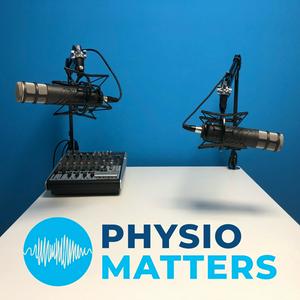
About The Physio Matters Podcast
Become a Paid Subscriber: https://podcasters.spotify.com/pod/show/tpmpodcast/subscribe
Putting big mouths and big ideas behind microphones.
The Physio Matters Podcast - Clinical Gold Delivered Direct.
Episodes will feature expert, honest advice, delivered directly to listeners at no cost. Musculoskeletal and Sports Medicine information for those working in physiotherapy, sports therapy, sports rehabilitation, medicine and all divisions of the healthcare industry.
Podcast websiteListen to The Physio Matters Podcast, The Rest Is Science and many other podcasts from around the world with the radio.net app
Get the free radio.net app
- Stations and podcasts to bookmark
- Stream via Wi-Fi or Bluetooth
- Supports Carplay & Android Auto
- Many other app features
Get the free radio.net app
- Stations and podcasts to bookmark
- Stream via Wi-Fi or Bluetooth
- Supports Carplay & Android Auto
- Many other app features
The Physio Matters Podcast
Scan code,
download the app,
start listening.
download the app,
start listening.
The Physio Matters Podcast: Podcasts in Family
 UK
UK