
Listen to this podcast in the app for free: Download for free in the App Store
radio.net
Sleep timer
Save favourites
473 episodes
If the AMOC Collapses - Could We Reverse the Damage?
16/10/2026 | 30 mins.Episode 405
The Atlantic Meridional Overturning Circulation (AMOC) is a major system of ocean currents that plays a vital role in Earth’s climate. If it collapses, the consequences could be catastrophic. We could see ice-age level winters in Europe, coupled with scalding hot summers - and impacts on food production around the world. The trouble is it’s already weakening.
That’s why scientists are building an early warning system that'll warn us of imminent AMOC collapse. But will a warning come soon enough for us to act - and will anyone actually listen?
The team explains how the warning system would work, what happens if the AMOC does collapse and how soon it could happen. Plus they look at new research which suggests the AMOC may not be a classic tipping point - because we may be able to resuscitate it even if it stops.
To discuss this, Penny Sarchet and Rowan Hooper are joined by climate reporters Alec Luhn and Madeleine Cuff.
To read more about these stories, visit https://www.newscientist.com/
Image Credit:
Tipping Points: CC BY 4.0, https://commons.wikimedia.org/w/index.php?curid=148459736
Learn more about your ad choices. Visit megaphone.fm/adchoicesSecrets of the World’s Longest-Lived Animals
09/10/2026 | 12 mins.Episode 404
Jonathan the tortoise was born in the year 1832, on a beach in the Seychelles. 194 years later and Jonathan is still alive, celebrating his birthday. How exactly has he managed to survive for so long?
Jonathan is a giant tortoise and the world’s oldest known land animal. His genome has now been sequenced, revealing intriguing hints about longevity. And it seems the key to a long life is all down to mitochondrial function.
From Greenland Sharks to the enigmatic quahog, this also seems to be the case for Earth’s other longest-lived creatures - one of which survived for 507 years.
Rowan Hooper and Penny Sarchet discuss what these animals tell us about the science of healthy aging, whether there are any takeaways for us humans - and they celebrate the amazing life of Jonathan.
To read more about these stories, visit https://www.newscientist.com/
Learn more about your ad choices. Visit megaphone.fm/adchoicesNew Fossil Shows Birds Weren’t the Only Dinosaurs to Evolve Flight
02/10/2026 | 27 mins.Episode 403
A new species of feathered dinosaur has been discovered - and it looks like a supercharged magpie with teeth. Fossil evidence and an artist’s reconstruction show the dinosaur looks remarkably like a bird - yet it’s not actually an ancestor of modern birds.
Over 100 million years old, Norellraptor barsboldi is named after two famous palaeontologists - one of whom taught palaeontologist Steve Brusatte.
Steve is the author of The Story of Birds and joins the team to discuss this incredible finding, which shows flight may have evolved at least two separate times. He also explains how dinosaurs didn’t go extinct - but still roam among us today.
On the panel are Rowan Hooper and Penny Sarchet.
To read more about these stories, visit https://www.newscientist.com/
Learn more about your ad choices. Visit megaphone.fm/adchoicesThis El Niño Is About To Cause a Global Catastrophe
25/09/2026 | 21 mins.Episode 402
The current El Niño is shaping up to cause catastrophe on a global scale. Global temperatures are being pushed up, unleashing extreme weather which could devastate ecosystems. The heat alone is expected to kill half a million people over the next five months.
Sea-surface temperatures are expected to climb 4°C above average in parts of the Pacific - and it’s becoming clear this is an issue that affects us all. From extreme heat in some places to heavy rainfall in others, many countries are bracing for impact. Combined with the threat of “king tides”, California has even declared a state of emergency.
Despite the sweltering heat we’ve just experienced, forecasters now say 2027 will be the hottest year on record - before it’s even begun. So how can we prepare?
To discuss the threat we’re facing and possible solutions (like geoengineering), Rowan Hooper and Penny Sarchet are joined by climate journalists Madeleine Cuff and Alec Luhn.
To read more about these stories, visit https://www.newscientist.com/
Learn more about your ad choices. Visit megaphone.fm/adchoicesHow to Be Hopeful: Caitlin Moran and New Scientist Look to the Future
21/09/2026 | 48 mins.Episode 401
Anxiety is everywhere. Climate change, political turmoil and a constant stream of alarming headlines can make optimism feel impossible. But to be hopeful you don’t need to ignore reality. What if it’s about paying attention to the breakthroughs that are already changing the world?
In this special episode Penny Sarchet and Rowan Hooper are joined by bestselling author Caitlin Moran, who spent a year chasing hope.
Prompted by her new book How to Be Hopeful, the New Scientist team shares eight recent developments that genuinely make them optimistic about the future. From the explosive growth of solar energy and the possibility of crops that make their own fertiliser, to new classes of medicines, AI-assisted scientific discovery, and even the search for life beyond Earth, this episode is a celebration of progress, curiosity and human ingenuity.
Also on the panel are Madeleine Cuff, Catherine de Lange, and Michael Le Page.
To read more about these stories, visit https://www.newscientist.com/
Learn more about your ad choices. Visit megaphone.fm/adchoices
More Education podcasts








Trending Education podcasts









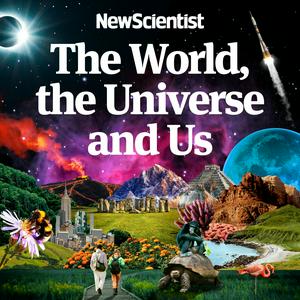
About The World, the Universe and Us
From the evolution of intelligent life, to the mysteries of consciousness; from the threat of the climate crisis to the search for dark matter, The world, the universe and us is your essential weekly dose of science and wonder in an uncertain world. Hosted by journalists Dr Rowan Hooper and Dr Penny Sarchet and joined each week by expert scientists in the field, the show draws on New Scientist’s unparalleled depth of reporting to put the stories that matter into context. Feed your curiosity with the podcast that will restore your sense of optimism and nourish your brain.
For more visit newscientist.com/podcasts
Podcast websiteListen to The World, the Universe and Us, The Rich Roll Podcast and many other podcasts from around the world with the radio.net app
Get the free radio.net app
- Stations and podcasts to bookmark
- Stream via Wi-Fi or Bluetooth
- Supports Carplay & Android Auto
- Many other app features
Get the free radio.net app
- Stations and podcasts to bookmark
- Stream via Wi-Fi or Bluetooth
- Supports Carplay & Android Auto
- Many other app features

The World, the Universe and Us
Scan code,
download the app,
start listening.
download the app,
start listening.
The World, the Universe and Us: Podcasts in Family

 UK
UK