
Listen to this podcast in the app for free: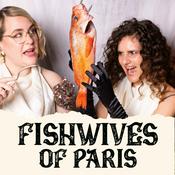 Download for free in the App Store
radio.net
Sleep timer
Save favourites
35 episodes
We Remember Le Marché des Enfants Rouges, Paris’s Oldest Covered Market
20/10/2026 | 36 mins.The Marché des Enfants Rouges, the oldest covered market in Paris, burned overnight on October 11 to 12, 2026.
This episode is a tribute to the market and the 17 purveyors who worked there. Emily shares what is known so far, and Caroline and Emily trace its history from the early 1600s, its place in the Marais, and the community that fought to save it more than once. They explain how listeners can help.
Podcast Show Notes
In this episode:
• What is known so far about the overnight fire of October 11 to 12, 2026
• How firefighters reached the market on foot and kept the fire from spreading to neighboring buildings
• Why the tight streets of the Marais made access so difficult
• Why the loss matters to the neighborhood, to regulars, and to the 17 purveyors
• How the idea of protecting architectural heritage took shape after the French Revolution
• The history of Les Halles and the Marché des Enfants Rouges, the oldest covered market in Paris
• How the market got its name from a local orphanage where children wore red
• How neighbors and filmmaker Bertrand Tavernier helped stop plans to turn the market into a parking garage
• A look at the restaurants, counters, and stalls that made the market a place to eat as well as shop
• The mayor's pledge to rebuild, and how listeners can support the purveyors
Key Takeaways
• The Marché des Enfants Rouges burned overnight from Sunday, October 11 to Monday, October 12, 2026, and the cause of the fire is not yet known.
• The market was closed at the time, and the only reported injury was a minor one to a firefighter.
• Firefighters kept the fire contained to the market itself, but the market was almost entirely destroyed.
• Built in the early 1600s, it was the oldest covered market in Paris, with 17 purveyors working there.
• The name Enfants Rouges refers to a nearby orphanage where children were dressed in red as a symbol of Christian charity.
• Local associations and artists helped save the market from demolition plans in 1982 and again in the 1990s, and it was renovated before reopening.
• Its mix of traditional stalls and restaurant counters made it unusual among French markets, and Food & Wine ranked it fifth-best market in the world in 2026.
• Mayor Emmanuelle Grégoire has said the market will be rebuilt and that a place will be found for the purveyors to keep working in the meantime, though rebuilding will take years.
Support the purveyors of the Marché des Enfants Rouges. Noémie Wagner, president of the association that represents the market's purveyors, has launched an online fundraiser (cagnotte). Donate here.
https://www.fondation-patrimoine.org/les-projets/marche-des-enfants-rouges/106147
Share a memory of the market with us at bonjour@fishwivesofparis.com.
• • • • • • • • • •
ABOUT THE HOSTS
Caroline Fazeli
Caroline is a French food and wine expert, WSET Diploma holder, former chef, and founder of Lyon Wine Tastings. She has spent nearly a decade helping visitors discover French food, wine, and culture.
Instagram:
https://www.instagram.com/winedinecaroline
• • • • • • • • • •
Emily Monaco
Emily is a culinary journalist, author, and longtime Paris resident whose work focuses on French food culture, history, and tradition.
Instagram:
https://www.instagram.com/emily_in_france
Substack:
https://emilyinfrance.substack.com/
• • • • • • • • • •
ABOUT FISHWIVES OF PARIS
Fishwives of Paris is a podcast about French food, wine, history, and gastronomy. Every episode uncovers the stories, myths, and surprising truths behind the foods and drinks that define France.
Filmed in Paris and Lyon.
Visit Caroline at Lyon Wine Tastings:
https://www.lyonwinetastings.com
Get 20% off your wine tasting with the code FISHWIVES
Follow Fishwives of Paris:
https://www.instagram.com/fishwivesofparisSteak Frites: The English Roots of a French Classic
13/10/2026 | 39 mins.Steak frites may be the most iconic dish in any Paris bistro, but almost nothing about it started in France.
Caroline and Emily trace the fries to Belgium and the street carts of the Pont Neuf, the steak to England, and the dish itself to a 1950s national myth. They also explain why French beef tastes so different, how to order your cuisson, and why the sauce may be the most French part of all.
Podcast Show Notes
In this episode:
• Why frites trace back to Francophone Belgium, not France
• The fish-fry legend about how fries were invented, and why it falls apart
• How French fries likely got their name from World War I soldiers
• A Belgian historian's theory about pommes Pont-Neuf sold from Paris street carts
• Why "steak" is an English word, and why the French call the British les rosbif
• How beefsteak à l'anglaise arrived in France by way of an England-based chef's cookbook
• Roland Barthes and the 1950s birth of the steak frites myth
• The story of Le Relais de Venise and its one-dish menu, launched in 1959
• Why French beef is butchered, raised, and aged differently than in the US and UK
• Ordering your steak in France, from bleu to saignant to à point
• The sauces that make steak frites French, from Café de Paris to béarnaise
Key Takeaways
• French fries most likely originated in Francophone Belgium, and American soldiers in World War I helped popularize the name.
• The legend that fried potatoes replaced fried river fish in 1680 doesn't hold up, since potatoes weren't yet common in the region.
• Steak is an English word and an English technique, served on 19th century French menus "in the English style."
• Historically, French cattle were raised for work and dairy, then slow cooked, which is why braises like pot-au-feu and boeuf bourguignon came first.
• Steak frites became a French national dish in the 1950s, when Roland Barthes described steak as a shared national myth.
• French beef is mostly grass-fed and slaughtered at roughly 28 to 38 months, compared with about 18 months in the US and two years in the UK.
• Leaner, older beef is one reason French steak is served rarer and paired with rich sauces.
• Well-done steak is rare in France, and diners who prefer it are often better off ordering something else.
Get Emily's guide to the best steak frites in Paris here!
https://news.fishwivesofparis.com/steak-frites
🇫🇷 PLANNING A TRIP TO PARIS OR LYON?
Get Emily's Paris Guide — a curated collection of our favorite places to eat, drink, and explore in Paris.
✨ https://cart.winedinecaroline.com/fishwives-guide-to-paris
Get Caroline's Lyon Guide - her favorite restaurants in Lyon.
✨ https://cart.winedinecaroline.com/lyon-restaurant-guide/
• • • • • • • • • •
🎙️ ABOUT THE HOSTS
🍷 Caroline Fazeli
Caroline is a French food and wine expert, WSET Diploma holder, former chef, and founder of Lyon Wine Tastings. She has spent nearly a decade helping visitors discover French food, wine, and culture.
📸 Instagram:
https://www.instagram.com/winedinecaroline
• • • • • • • • • •
🥐 Emily Monaco
Emily is a culinary journalist, author, and longtime Paris resident whose work focuses on French food culture, history, and tradition.
📸 Instagram:
https://www.instagram.com/emily_in_france
📰 Substack:
https://emilyinfrance.substack.com/
• • • • • • • • • •
🇫🇷 ABOUT FISHWIVES OF PARIS
Fishwives of Paris is a podcast about French food, wine, history, and gastronomy. Every episode uncovers the stories, myths, and surprising truths behind the foods and drinks that define France.
🎙️ Recorded in Lyon.
🍷 Visit Caroline at Lyon Wine Tastings:
Use code FISHWIVES for 20% off!
https://www.lyonwinetastings.com
📸 Follow Fishwives of Paris:
https://www.instagram.com/fishwivesofparisCatherine de Medici was France’s Medieval Martha Stewart, and a Witch?
06/10/2026 | 52 mins.Catherine de Medici gets credit for nearly every French culinary innovation, from macarons to the fork.
This episode brings in Florence based food and wine expert Coral Sisk to test those legends one by one. Caroline and Emily trace the real origins of macarons, gelato, choux pastry, duck a l'orange, and table manners, and separate what Catherine de Medici likely brought from Italy from what French pastry chefs invented centuries later.
Podcast Show Notes
In this episode:
• Why a French food podcast is covering a Florentine noblewoman
• The myth that macarons came from Catherine de Medici's Italian court
• The chicken farmer legend behind the invention of Florentine gelato
• How gelato actually reached Paris a century later, via Sicilian immigrant Francesco Procopio dei Coltelli
• The invented pastry chef behind the cream puff legend
• Why the choux pastry technique still points to a real origin roughly 200 years later
• Duck a l'orange and its roots in Persian, Arab, and Florentine cooking
• The artichoke banquet story and the fat shaming Catherine faced as queen
• Why Catherine is remembered as either a villain or a visionary, depending on who is telling the story
• The fork myth, and how table manners, not objects, may be her real legacy
Key Takeaways
• Le macaron as a Parisian sandwich cookie was invented in Paris in the 19th century, not by Catherine de Medici.
• Gelato reached Paris around a century after Catherine arrived in France, brought by Sicilian immigrant Francesco Procopio dei Coltelli.
• The French recipe for pate a choux does not appear until roughly 200 years after Catherine's arrival.
• The pastry chef character often named Pappalini, Pantanelli, or Pastarelli was likely invented by 19th century Lyonnais pastry chef Pierre Lacan.
• Duck a l'orange with a gastrique sauce was first published in a French recipe book in 1930.
• Forks existed in France before Catherine, but a fork per diner was not yet standard practice.
• Food historian Barbara Wheaton found no 16th century record of the entourage of cooks Catherine reportedly brought with her.
• Catherine was widely criticized and fat shamed during her lifetime, long before the culinary legends took shape after her death.
ABOUT CORAL SISK
Coral Sisk is an Italian food expert, food writer, sommelier, and culinary tour guide based in Florence.
Coral’s Blog
https://thecuriousappetite.com/
Coral’s Tours
https://curiousappetitetravel.com/
Ernesto Drinks, Coral’s low ABV Negroni
https://www.instagram.com/ernesto.drinks/
• • • • • • • • • •
ABOUT THE HOSTS
Caroline Fazeli
Caroline is a French food and wine expert, WSET Diploma holder, former chef, and founder of Lyon Wine Tastings. She has spent nearly a decade helping visitors discover French food, wine, and culture.
Instagram:
https://www.instagram.com/winedinecaroline
• • • • • • • • • •
Emily Monaco
Emily is a culinary journalist, author, and longtime Paris resident whose work focuses on French food culture, history, and tradition.
Instagram:
https://www.instagram.com/emily_in_france
Substack:
https://emilyinfrance.substack.com/
• • • • • • • • • •
ABOUT FISHWIVES OF PARIS
Fishwives of Paris is a podcast about French food, wine, history, and gastronomy. Every episode uncovers the stories, myths, and surprising truths behind the foods and drinks that define France.
This Episode was filmed in Paris, Lyon, and Florence.
Visit Caroline at Lyon Wine Tastings:
https://www.lyonwinetastings.com
Follow Fishwives of Paris:
https://www.instagram.com/fishwivesofparisCancoillotte: The Obscure Cheese That Went Viral
29/09/2026 | 43 mins.Cancoillotte is gloopy, smelly, difficult to pronounce (CON-KWAH-YOWT), and suddenly all over French TikTok.
The centuries-old cheese from Franche-Comté has been reinvented as a low-fat, high-protein fitness food, becoming France’s unlikely answer to America’s cottage-cheese obsession. But its rise reveals something much bigger, the way French attitudes toward food may be changing.
Caroline and Emily trace cancoillotte from its origins as a way to use leftover skim milk through wartime industrialization, French spelling fame and its current TikTok explosion. Along the way, they ask what happens when a food culture traditionally built around pleasure, moderation and terroir begins talking about protein, fat and macros.
Podcast Show Notes
Cancoillotte has spent centuries as a deeply regional specialty of Franche-Comté. In 2026, it suddenly became a national fitness trend.
Its unusual nutritional profile helps explain the appeal: cancoillotte contains relatively little fat compared with many cheeses, although the episode questions the viral framing of it as an exceptionally high-protein food. Much of the difference comes down to something decidedly less glamorous: water.
The story also stretches much further back. Cancoillotte developed from metton, a skim-milk cheese that could be melted with water or milk, butter and flavorings. Industrial packaging later made it transportable, including for French soldiers during World War I.
Then came an especially French brush with fame: cancoillotte became notorious as one of the hardest words featured in France’s televised Dictée Nationale.
Its current explosion was not entirely accidental. Cancoillotte had already been promoted within sports communities for years before a major TikTok moment in April 2026 accelerated the trend. French media followed, and Carrefour reported April sales jumping 13–16%.
The result is a distinctly modern French contradiction: the nutritional language may look increasingly American, but the food being embraced remains hyper-local, protected and rooted in terroir.
Key Takeaways
Cancoillotte's 2026 TikTok boom accelerated a trend that had already been building within French sports and fitness culture.
Its reputation as a “high-protein” cheese is misleading without context: it is particularly notable for being low in fat and high in water.
Traditional French ideas of eating well historically emphasized pleasure, complete meals, conviviality and moderation rather than macronutrients.
Cancoillotte originated as a practical way to use skim milk and evolved from a regional homemade food into an industrial product.
Younger French consumers appear to be moving away from some stronger traditional cheeses toward milder cheeses and meals built around cheese.
The cancoillotte craze combines new fitness-driven values with something deeply traditional: regional identity and terroir.The Surprisingly Messy History of Mayonnaise
22/09/2026 | 33 mins.Mayonnaise is the world's most popular sauce, but nobody agrees on who invented it.
This episode traces the history of mayonnaise from a Spanish port battle to a Paris pharmacist's ointment. Caroline and Emily examine the competing French origin stories, the codification of the sauce by Antonin Careme's critics, and how mustard, eggs, and oil became the modern formula loved and hated worldwide.
Podcast Show Notes
In this episode:
• The legend of the Duke of Richelieu inventing mayonnaise at Port Mahon in 1756
• Competing 18th and 19th century spellings, bayonnaise, mahonnaise, and mayonnaise
• The Duke of Mayenne's 16th century version and its unfortunate ending
• Antonin Careme's attempt to codify the correct spelling and origin
• Culinary historian Pierre Leclercq's theory that Paris perfected the sauce
• Andre Viard's early recipes, including a mayonnaise made with veal brains
• Why French cuisine names dishes after their texture, and English rarely does
• How to make mayonnaise from scratch with egg yolk, mustard, and oil
• French idioms built around mayonnaise, including "faire monter la mayonnaise"
• Global mayonnaise culture, from Japanese Kewpie mayo to wartime chocolate cake
Key Takeaways
• Mayonnaise's true origin is disputed between French and Spanish claims.
• The Duke of Richelieu legend places the sauce's invention at Port Mahon in 1756.
• Andre Viard's cookbook contains the earliest known recipe resembling mayonnaise, thickened with egg.
• Antonin Careme argued the sauce should be called "magonnaise," from the French verb "manier."
• Culinary historian Pierre Leclercq traces mayonnaise's roots to medieval pharmacists' egg and oil ointments.
• Traditional American mayonnaise contains no mustard, while French mayonnaise almost always does.
• Japan's Kewpie mayonnaise originated in 1925 after a Ministry of Agriculture intern encountered mayo in the UK.
• Homemade mayonnaise is made by whisking egg yolk with mustard while slowly adding oil.
More Arts podcasts









Trending Arts podcasts



























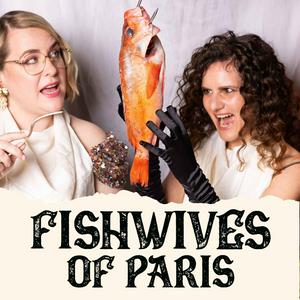
About Fishwives of Paris
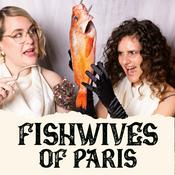
Flipping the table on French food mythology and serving the real stories behind your favorite cuisine, with culinary journalist Emily Monaco and wine expert Caroline Fazeli.
Want to watch us in 4k? Head over to https://youtube.com/@fishwivesofparis
Podcast websiteListen to Fishwives of Paris, The Magnus Archives and many other podcasts from around the world with the radio.net app
Get the free radio.net app
- Stations and podcasts to bookmark
- Stream via Wi-Fi or Bluetooth
- Supports Carplay & Android Auto
- Many other app features
Get the free radio.net app
- Stations and podcasts to bookmark
- Stream via Wi-Fi or Bluetooth
- Supports Carplay & Android Auto
- Many other app features

Fishwives of Paris
Scan code,
download the app,
start listening.
download the app,
start listening.
 UK
UK