

Listen to this podcast in the app for free: Download for free in the App Store
radio.net
Sleep timer
Save favourites
54 episodes
An Osprey Nest for Knepp
06/10/2026 | 29 mins.On the day that Tim Mackrill and his team install an osprey nesting platform at Knepp, Isabella Tree grabs the chance to chat to the raptor reintroduction specialist about his work and his vision for ospreys and other birds of prey in England. What kind of nest is an osprey looking for? Why do they need a helping hand? How many ospreys would England have had in the past, and how many should we hope for in the future? And what did it take to turn a trout farmer on Rutland Water from being an ardent opponent of ospreys to one of their most enthusiastic supporters?
Isabella Tree is co-owner of Knepp and the award-winning author of ‘Wilding’, which was made into a major film in 2024.
Her book ‘White Stork – restoring a missing bird to Britain’ will be published by Bloomsbury on 1 April 2027.
Send us a message or leave a comment
Find out more about Knepp on our website and why not follow us on Instagram?Bringing Back the Bison
01/09/2026 | 34 mins.Derek Gow is one of the UK’s most ardent and proactive reintroduction specialists. The Guardian calls him ‘the guerrilla rewilder’. Join his impassioned conversation with Isabella Tree as they discuss the possibilities of restoring bison to Britain, and how these ‘creators of disturbance’ might impact landscapes, people and their dogs. Knepp is still hoping to have bison one day – but what will it take to get them here?
Isabella Tree is co-owner of Knepp and the award-winning author of ‘Wilding’, which was made into a major film in 2024.
The award-winning film ‘Derek vs Derek’, featuring Derek Gow locking antlers with his farming neighbour Derek Banbury, is released in UK cinemas this month.
Send us a message or leave a comment
Find out more about Knepp on our website and why not follow us on Instagram?The Return of the Black-veined White
04/08/2026 | 33 mins.Join Isabella Tree and butterfly man Neil Hulme as they anticipate the exciting reintroduction of the black-veined white – a butterfly that went extinct in Britain a hundred years ago. Standing in front of the cages at Knepp where butterflies recently imported from Spain have laid their eggs, Neil is like an anxious midwife. Will the caterpillars survive the winter and the various predators insinuating themselves through the netting? How many butterflies will emerge in spring for their release on the South Downs next year?
Isabella Tree is co-founder of Knepp rewilding project and award-winning author of ‘Wilding’, which was made into a film in 2024.
Send us a message or leave a comment
Find out more about Knepp on our website and why not follow us on Instagram?Slippery Slope: The Secret Life of Eels
07/07/2026 | 26 mins.Isabella Tree catches up with Carl Sayer, Professor of Limnology & Freshwater Ecology at University College London - aka the Eel Man - as he prepares for this year’s survey of Knepp’s eels. Once bountiful in the UK, eels have all but disappeared from most water systems, impacted by overfishing and obstructive dams and weirs that prevent their migration. Carl has loved eels since he discovered them as a boy and relishes the mystery that still surrounds their adventurous lifecycle. Happily, his surveying at Knepp provides grounds for optimism and giggles all round for his students attempting to measure and weigh the slippery customers.
Isabella Tree co-founded the Knepp rewilding project with her husband, Charlie Burrell. She is the award-winning author of ‘Wilding’, which was made into a major motion picture in 2024.
Send us a message or leave a comment
Find out more about Knepp on our website and why not follow us on Instagram?Snakes and lizards
02/06/2026 | 35 mins.Meet Reuben Martin, a seventeen-year-old herpetologist who has been monitoring Knepp’s snakes and lizards with his father Tim. Reuben’s ability to read a landscape and know where snakes and lizards lurk is extraordinary. He is passionate about communicating the wonders of these secretive creatures to those of us who may be a little less certain of their charms. Learn about the habitat that keeps snakes and lizards safe, and how we can improve conditions for them in our landscapes and gardens.
Isabella Tree co-founded the Knepp rewilding project with her husband, Charlie Burrell. She is the award-winning author of 'Wilding', which was made into a major motion picture in 2024.
Send us a message or leave a comment
Find out more about Knepp on our website and why not follow us on Instagram?
More Life Sciences podcasts

Trending Life Sciences podcasts
About The Knepp Wilding Podcast
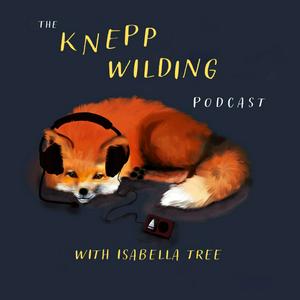
Join Knepp co-owner Isabella Tree and experience some of the wildlife wonders encountered, the secrets uncovered and the remarkable people who are part of the Knepp Wilding project.
Podcast websiteListen to The Knepp Wilding Podcast, Science Friday and many other podcasts from around the world with the radio.net app
Get the free radio.net app
- Stations and podcasts to bookmark
- Stream via Wi-Fi or Bluetooth
- Supports Carplay & Android Auto
- Many other app features
Get the free radio.net app
- Stations and podcasts to bookmark
- Stream via Wi-Fi or Bluetooth
- Supports Carplay & Android Auto
- Many other app features

The Knepp Wilding Podcast
Scan code,
download the app,
start listening.
download the app,
start listening.
The Knepp Wilding Podcast: Podcasts in Family
 UK
UK