
Listen to this podcast in the app for free: Download for free in the App Store
radio.net
Sleep timer
Save favourites
623 episodes
THE Ohio State: Woody Hayes, Michigan, and the Birth of a Dynasty (Part 1)
27/10/2026 | 56 mins.Chuck Todd and J.A. Adande explore how the Buckeyes became a college football powerhouse and the complicated legacy of legendary coach Woody Hayes.
From the historic Michigan rivalry and the infamous Snow Bowl to Hayes' coaching philosophy, controversial temper, and lasting influence, they uncover the people and moments that built Ohio State's football dynasty.
See omnystudio.com/listener for privacy information.Super Tuesdays - The Worst Version Of Trump We’ve Seen In An Election Year… One Week Out From The Midterms
27/10/2026 | 1h 9 mins.One week out, Chuck Todd and Chris Cillizza go hunting for the counterfactual — the actual data that would tell a Republican this election isn’t what it looks like — and come back with exactly one: a polling error. “That’s a hell of a thing to bank on.” Chuck argues this is the worst version of Trump we’ve ever seen in an election year, a candidate reduced to the Nobel committee and calling Abdul El-Sayed a “jihadist” in Michigan, while his own top economic adviser went on Fox Business to call the affordability crisis a myth eight days out. Plus: why Democrats may run better in red states than blue, how Republicans sat on their money until it was too late to define Talarico, how Ohio got away entirely, what the Ramaswamy ad says about where the line is, and the new Times/Siena 2028 numbers. Plus their election-night announcement with Decision Desk HQ.
18+ only. Restrictions and eligibility requirements apply. Event contract trading involves significant risk and is not appropriate for everyone. Please carefully consider if it is appropriate for you in light of your personal financial circumstances. Kalshi products are not available in all jurisdictions. See kalshi.com/regulatory for more information. Sign up today to get $25 in bonuses when you trade $25: SUPERTUESDAYS
http://kalshi.com/r/SUPERTUESDAYS
Timeline:
00:00 One week out: what could still change this, and the red-state theory
07:00 The worst version of Trump, and a party that won’t say “affordability”
13:00 Hunting for the counterfactual, and why every Republican ad is nostalgia
19:00 The money came too late: how they let Talarico define Paxton
24:00 Kalshi: Iowa, Maine and Kansas as the three most divided markets
30:00 Where the line is on the Ramaswamy ad, and building a firewall
36:00 Adding states to the 2028 map, and Minnesota’s outlier year
44:00 Times/Siena 2028: Harris at 12, Vance at 33, and a wide-open field
52:00 “All the Projection”: the election-night announcement with Decision Desk HQ
58:00 The World Series, the sports equinox, and a two-Hurricane Heisman problem
1:05:00 Newsphere, one more show on Election Day, and sign-off
See omnystudio.com/listener for privacy information.Full Episode - There’s No Evidence That Disproves The Blue Wave + The “Packers Model” For Local Development?
26/10/2026 | 2h 43 mins.Chuck Todd can’t find a single tea leaf that cuts against the blue wave. Early voting in Texas shows Latino turnout running ahead of the 2024 presidential, with the biggest jump among young Hispanic voters furious about ICE overreach. Florida Democrats are up 91% in early in-person voting despite rule changes designed to hurt them. Chuck’s deeper question: everyone assumes polling error favors Republicans — what if this is the cycle it breaks the other way? Meanwhile Trump has directed DOJ to preemptively sue Alaska to block certification if Dan Sullivan loses to Mary Peltola, is trying to invalidate 20,000 California ballots, and is attacking Lisa Murkowski — the most popular Republican in Alask. Plus Musk pouring another $78 million into GOP coffers (nearing half a billion this cycle) while a Russian company angles for a stake in an Alaska gas project discussed during Ukraine negotiations.
Then, Thomas Nelson — Outagamie County Executive, former Wisconsin state assemblyman, and author of The Green and Gold Standard: A People’s History of the Green Bay Packers — joins the Chuck ToddCast to explain why the NFL’s only fan-owned franchise now faces an existential threat. The league has since banned the Packers’ nonprofit structure, and private equity has created what Nelson estimates is a $900 million disadvantage: a single owner can sell 49% to PE and retain complete control, while the Packers legally can’t sell to anyone. The crunch point is the escrow required for guaranteed contracts. Nelson argues the league owes it to Green Bay to make the team whole, walks through the three eras that built the franchise — Lambeau, Lombardi, and Harlan — and notes that without this model the Packers would have left town decades ago. Plus whether the community-ownership structure could be a template for local development, and a look at Wisconsin’s 50-50 politics heading into November.
Finally, Chuck hops into the ToddCast Time Machine to revisit the long lasting impacts of Ronald Reagan’s “A Time For Choosing” speech and why persuasion should matter as much as performance in politics.
For free and unbiased Medicare help, dial (980) 734-3985 to speak with my trusted partner, Chapter, or go to askchapter.org/chuck / *Paid Partnership
Chapter and its affiliates are not connected with or endorsed by any government entity or the federal Medicare program. Chapter Advisory, LLC represents Medicare Advantage HMO, PPO, and PFFS organizations and stand alone prescription drug plans that have a Medicare contract. Enrollment depends on the plan’s contract renewal. While we have a database of every Medicare plan nationwide and can help you to search among all plans, we have contracts with many but not all plans. As a result, we do not offer every plan available in your area. Currently we represent 50 organizations which offer 18,160 products nationwide. We search and recommend all plans, even those we don’t directly offer. You can contact a licensed Chapter agent to find out the number of products available in your specific area.
Get your wardrobe sorted and your gift list handled with Quince. Don't wait! Go to https://Quince.com/CHUCK for free shipping on your order and 365-day returns. Now available in Canada, too!
Timeline:
00:00 Chuck Todd’s introduction
09:00 The polling drought — and what if the error favors Democrats?
15:45 Latino turnout surges in Texas early voting
19:30 ICE overreach and the Hispanic backlash
23:00 Young voters, El-Sayed, and the Florida early vote
29:30 Searching for a counter-argument to the wave
32:15 Republicans have no closing argument
42:00 Easing tariffs to save Susan Collins
47:30 The Ramaswamy ad and what Trump’s delight in it reveals
57:30 Musk’s half-billion, Starlink, and the Skydance play
1:06:00 Novatek, Alaska gas, and Putin’s business dangles
1:13:00 Trump’s own tax breaks and rules that only bind other people
1:17:15 Suing to invalidate Alaska’s election
1:23:30 A president consumed by grievance in the final days
1:33:00 Thomas Nelson joins The Chuck ToddCast
1:34:00 How a county executive ended up writing the definitive Packers history
1:37:30 The nonprofit structure, and why the NFL banned it
1:42:45 Private equity and a $900 million disadvantage
1:50:45 Guaranteed contracts, escrow, and where the money runs out
1:56:00 Could the Packers model work for data centers and local development?
1:59:45 Teams that relocate purely for tax breaks
2:02:15 Lambeau, Lombardi, Harlan — and the Aaron Rodgers problem
2:09:30 What the financial gap actually means on the field
2:12:15 Wisconsin as a 50-50 state and the chaos of the Senate primary
2:21:30 What LaFleur needs to keep his job
2:24:00 ToddCast Time Machine - Tuesday, October 27th 1964
2:25:15 Ronald Reagan gives “A Time For Choosing” speech
2:27:45 Goldwater’s victory was a rebuttal to the Republican establishment
2:29:15 Goldwater’s conservatism became synonymous with anti civil rights
2:31:00 Reagan travelled the country and honed his message
2:33:00 Reagan became capable of articulating conservatism to the country
2:34:15 Reagan didn’t try to “own the libs”, he tried to persuade people
2:37:30 Modern politics is too focused on the messenger, not the message
2:42:00 Performance has to lead to tangible governing results
See omnystudio.com/listener for privacy information.Chuck’s Commentary - There’s No Evidence That Disproves The Blue Wave + Candidate Trump Would Destroy President Trump
26/10/2026 | 1h 51 mins.Chuck Todd can’t find a single tea leaf that cuts against the blue wave. Early voting in Texas shows Latino turnout running ahead of the 2024 presidential, with the biggest jump among young Hispanic voters furious about ICE overreach. Florida Democrats are up 91% in early in-person voting despite rule changes designed to hurt them. Chuck’s deeper question: everyone assumes polling error favors Republicans — what if this is the cycle it breaks the other way? Meanwhile Trump has directed DOJ to preemptively sue Alaska to block certification if Dan Sullivan loses to Mary Peltola, is trying to invalidate 20,000 California ballots, and is attacking Lisa Murkowski — the most popular Republican in Alask. Plus Musk pouring another $78 million into GOP coffers (nearing half a billion this cycle) while a Russian company angles for a stake in an Alaska gas project discussed during Ukraine negotiations.
Finally, Chuck hops into the ToddCast Time Machine to revisit the long lasting impacts of Ronald Reagan’s “A Time For Choosing” speech and why persuasion should matter as much as performance in politics.
For free and unbiased Medicare help, dial (980) 734-3985 to speak with my trusted partner, Chapter, or go to askchapter.org/chuck / *Paid Partnership
Chapter and its affiliates are not connected with or endorsed by any government entity or the federal Medicare program. Chapter Advisory, LLC represents Medicare Advantage HMO, PPO, and PFFS organizations and stand alone prescription drug plans that have a Medicare contract. Enrollment depends on the plan’s contract renewal. While we have a database of every Medicare plan nationwide and can help you to search among all plans, we have contracts with many but not all plans. As a result, we do not offer every plan available in your area. Currently we represent 50 organizations which offer 18,160 products nationwide. We search and recommend all plans, even those we don’t directly offer. You can contact a licensed Chapter agent to find out the number of products available in your specific area.
Get your wardrobe sorted and your gift list handled with Quince. Don't wait! Go to https://Quince.com/CHUCK for free shipping on your order and 365-day returns. Now available in Canada, too!
Timeline:
00:00 Chuck Todd’s introduction
09:00 The polling drought — and what if the error favors Democrats?
15:45 Latino turnout surges in Texas early voting
19:30 ICE overreach and the Hispanic backlash
23:00 Young voters, El-Sayed, and the Florida early vote
29:30 Searching for a counter-argument to the wave
32:15 Republicans have no closing argument
42:00 Easing tariffs to save Susan Collins
47:30 The Ramaswamy ad and what Trump’s delight in it reveals
57:30 Musk’s half-billion, Starlink, and the Skydance play
1:06:00 Novatek, Alaska gas, and Putin’s business dangles
1:13:00 Trump’s own tax breaks and rules that only bind other people
1:17:15 Suing to invalidate Alaska’s election
1:23:30 A president consumed by grievance in the final days
1:32:15 ToddCast Time Machine - Tuesday, October 27th 1964
1:33:30 Ronald Reagan gives “A Time For Choosing” speech
1:36:00 Goldwater’s victory was a rebuttal to the Republican establishment
1:37:30 Goldwater’s conservatism became synonymous with anti civil rights
1:39:15 Reagan travelled the country and honed his message
1:41:15 Reagan became capable of articulating conservatism to the country
1:42:30 Reagan didn’t try to “own the libs”, he tried to persuade people
1:45:45 Modern politics is too focused on the messenger, not the message
1:50:15 Performance has to lead to tangible governing results
See omnystudio.com/listener for privacy information.Interview Only w/ Thomas Nelson - The “Packers Model” For Local Development?
26/10/2026 | 56 mins.Thomas Nelson — Outagamie County Executive, former Wisconsin state assemblyman, and author of The Green and Gold Standard: A People’s History of the Green Bay Packers — joins the Chuck ToddCast to explain why the NFL’s only fan-owned franchise now faces an existential threat. The league has since banned the Packers’ nonprofit structure, and private equity has created what Nelson estimates is a $900 million disadvantage: a single owner can sell 49% to PE and retain complete control, while the Packers legally can’t sell to anyone. The crunch point is the escrow required for guaranteed contracts. Nelson argues the league owes it to Green Bay to make the team whole, walks through the three eras that built the franchise — Lambeau, Lombardi, and Harlan — and notes that without this model the Packers would have left town decades ago. Plus whether the community-ownership structure could be a template for local development, and a look at Wisconsin’s 50-50 politics heading into November.
For free and unbiased Medicare help, dial (980) 734-3985 to speak with my trusted partner, Chapter, or go to askchapter.org/chuck / *Paid Partnership
Chapter and its affiliates are not connected with or endorsed by any government entity or the federal Medicare program. Chapter Advisory, LLC represents Medicare Advantage HMO, PPO, and PFFS organizations and stand alone prescription drug plans that have a Medicare contract. Enrollment depends on the plan’s contract renewal. While we have a database of every Medicare plan nationwide and can help you to search among all plans, we have contracts with many but not all plans. As a result, we do not offer every plan available in your area. Currently we represent 50 organizations which offer 18,160 products nationwide. We search and recommend all plans, even those we don’t directly offer. You can contact a licensed Chapter agent to find out the number of products available in your specific area.
Get your wardrobe sorted and your gift list handled with Quince. Don't wait! Go to https://Quince.com/CHUCK for free shipping on your order and 365-day returns. Now available in Canada, too!
Timeline:
00:00 Thomas Nelson joins The Chuck ToddCast
01:00 How a county executive ended up writing the definitive Packers history
04:30 The nonprofit structure, and why the NFL banned it
09:45 Private equity and a $900 million disadvantage
17:45 Guaranteed contracts, escrow, and where the money runs out
23:00 Could the Packers model work for data centers and local development?
26:45 Teams that relocate purely for tax breaks
29:15 Lambeau, Lombardi, Harlan — and the Aaron Rodgers problem
36:30 What the financial gap actually means on the field
39:15 Wisconsin as a 50-50 state and the chaos of the Senate primary
48:30 What LaFleur needs to keep his job
See omnystudio.com/listener for privacy information.
More Government podcasts

Trending Government podcasts










About The Chuck ToddCast
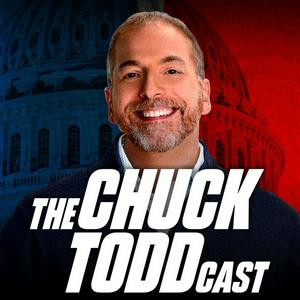
The Chuck ToddCast is back! If you're looking for smart, no-nonsense political conversation, you've come to the right place. The Chuck ToddCast goes beyond the headlines, featuring conversations with top reporters, insiders, and newsmakers from D.C. to the heartland. No scripts, no spin—just real discussions about what’s shaping our politics and why it matters.
Podcast websiteListen to The Chuck ToddCast, The Week in Westminster and many other podcasts from around the world with the radio.net app
Get the free radio.net app
- Stations and podcasts to bookmark
- Stream via Wi-Fi or Bluetooth
- Supports Carplay & Android Auto
- Many other app features
Get the free radio.net app
- Stations and podcasts to bookmark
- Stream via Wi-Fi or Bluetooth
- Supports Carplay & Android Auto
- Many other app features
The Chuck ToddCast
Scan code,
download the app,
start listening.
download the app,
start listening.
The Chuck ToddCast: Podcasts in Family
 UK
UK