
Listen to this podcast in the app for free: Download for free in the App Store
radio.net
Sleep timer
Save favourites
752 episodes
The mitochondria in your brain influence your sleep - here's how you can help them.
24/11/2026 | 13 mins.See omnystudio.com/listener for privacy information.Teenagers, Bedrooms and Phones With Carly Taylor
22/11/2026 | 14 mins.Does your teenager come home from school, head straight to their room with barely a hello, and seem glued to their phone? No wonder so many parents feel shut out. This week, Carly looks at what’s going on during adolescence, drawing on her experience as a parent of two and her work as a counsellor and coach with young people.
Carly is a counsellor and coach who specialises in building psychological hardiness, which is the ability to navigate challenge, stay engaged, and take meaningful action under pressure. Her work integrates modern psychology with Eastern and Stoic approaches, helping people build resilience, live with purpose, and respond to life’s challenges with greater clarity, courage and steadiness.
Support
If this episode has raised concerns about your teenager, contact Kids Helpline on 1800 55 1800 (for young people aged 5 to 25), Lifeline on 13 11 14, or visit headspace.org.au.
References
Foulkes, L. (2024). Coming of Age: How Adolescence Shapes Us. Bodley Head.
Foulkes, L. & Blakemore, S-J. (2018). Studying individual differences in human adolescent brain development. Nature Neuroscience.
Blakemore, S-J. (2018). Avoiding social risk in adolescence. Current Directions in Psychological Science.
Damour, L. (2016). Untangled. Ballantine Books.
Haidt, J. (2024). The Anxious Generation. Penguin Press.
See omnystudio.com/listener for privacy information.The Brain Cliff: Can We Shape How Our Brains Change? with Dr Norman Swan
20/11/2026 | 1h 1 mins.What does it really mean to reach “the brain cliff” and is cognitive decline inevitable? Dr Norman Swan joins Dr Paul Taylor to discuss his book The Brain Cliff and how the brain adapts and changes throughout life. They explore how the brain builds “scaffolding” through new connections, why exercise can support brain plasticity, and how purpose, learning and social engagement may help keep the mind challenged. Norman also shares lessons from people who remain cognitively sharp into old age, and discusses stress, retirement, everyday memory lapses and the idea of “digital dementia.“ The conversation also examines what is and isn’t known about GLP-1 medications, cognitive enhancers, brain-training programs and vaccines in relation to brain health. Throughout, they distinguish normal changes in memory from dementia, and discuss how physical activity, ongoing learning and meaningful engagement may contribute to healthy ageing.
Key takeaways
Cognitive changes with age don’t automatically mean dementia, and cognitive decline isn’t inevitable.
The brain can adapt by building new connections,what Dr Norman Swan describes as “scaffolding.” He discusses how exercise and ongoing challenge may support this plasticity.
Staying engaged through learning, purposeful projects and social activities can keep the brain working in varied ways, including through midlife and retirement.
Chronic stress and rumination may affect brain health; the conversation highlights focusing on what’s within your control while recognising that circumstances limit control for many people.
Technology can help with “cognitive offloading,” but how it’s used matters: active learning and connection differ from passively consuming content.
They discuss GLP-1 medications, supplements, cognitive training and vaccines, noting that evidence varies and some findings remain uncertain.
Time Stamps
00:00 The Brain Cliff: Is cognitive decline inevitable? 02:42 Brain “scaffolding” and plasticity
06:15 How brain health and physical health connect
09:19 The resting brain, mental time travel and purpose
15:34 Everyday memory lapses and what they may mean
17:19 Exercise, myokines and lessons from cognitive superagers
21:53 How superagers respond to stress
23:05 Chronic stress, control and brain health
27:37 Retirement, learning and staying socially engaged
36:13 “Digital dementia” and how we use technology
42:48 GLP-1 medications, muscle loss and dementia risk
51:33 Creatine, cognitive enhancers and brain training
55:55 Vaccines and the research on dementia risk
Resources
Books: The Brain Cliff
Website: https://www.tonicmedianetwork.com.au/
LinkedIn: https://www.linkedin.com/in/drnormanswan/
Instagram: https://www.instagram.com/norman.swan/?hl=en
See omnystudio.com/listener for privacy information.Autophagy is a critical cellular process - here's what we know about optimising it: Wisdom Wednesdays
17/11/2026 | 16 mins.See omnystudio.com/listener for privacy information.The Label Is Not You With Carly Taylor
15/11/2026 | 9 mins.Humans love a label. Shy, anxious, lazy, talented. We pick up labels from a young age, and before long they can start to become part of our identity. In this episode of Mojo Monday, Carly looks at why labels stick with us so easily, when they help, and how they can influence our decisions.
Carly shares a surprising study about carrots, a story from her own label as years as a flute player, and an idea from ACT that changes how you approach your own labels. She finishes with a simple practice you can try this week, whatever your label happens to be.
Carly is a counsellor and coach who specialises in building psychological hardiness, which is the ability to navigate challenge, stay engaged, and take meaningful action under pressure. Her work integrates modern psychology with Eastern and Stoic approaches, helping people build resilience, live with purpose, and respond to life’s challenges with greater clarity, courage and steadiness.
See omnystudio.com/listener for privacy information.
More Education podcasts



Trending Education podcasts












About Hardiness with Dr Paul Taylor
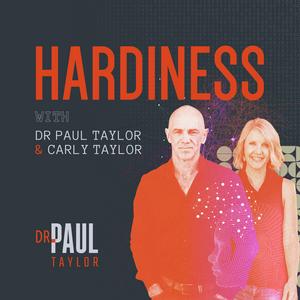
Host Dr Paul Taylor, a Psychophysiologist, Neuroscientist, Exercise Scientist, and Nutritionist interviews experts from around the world on cutting edge research and practices related to improving hardiness in your mind, body and brain to become your best self.
Podcast websiteListen to Hardiness with Dr Paul Taylor, Law of Attraction Changed My Life and many other podcasts from around the world with the radio.net app
Get the free radio.net app
- Stations and podcasts to bookmark
- Stream via Wi-Fi or Bluetooth
- Supports Carplay & Android Auto
- Many other app features
Hardiness with Dr Paul Taylor: Podcasts in Family
 UK