

Listen to this podcast in the app for free: Download for free in the App Store
radio.net
Sleep timer
Save favourites
9 episodes
Keeping summer simple: Making the holidays work for SEN children
16/07/2026 | 45 mins.In this episode, Liz Horobin and Sarah Reay are joined byHolly Bolt, Gemma Chapple and Catherine Tinkler to explore the joys and challenges of the long summer holidays for families of neurodivergent and SENDchildren.
The discussion covers the need for rest and recovery, theimpact of disrupted routines, sensory pressures, screen time, working-parent dilemmas, financial pressures, and the importance of realistic expectations. The guestsshare practical, low-pressure ideas for keeping children regulated and engaged, from loose daily structure and “could-do” lists to free activities, Blue Peterbadges, short learning bursts and building-in downtime.
Above all, the episode reassures parents that there is noperfect summer - connection, flexibility, and being “good enough” are what matter most.Speech, language and learning: making the connections
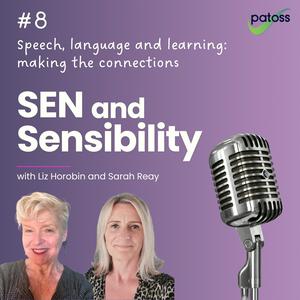
11/06/2026 | 55 mins.In this episode of SEN & Sensibility, the panelexplores the relationship between speech, language and communication needs and literacy difficulties, highlighting how developmental language disorder and dyslexia can overlap and how language needs may be missed in the classroom. The discussion emphasises the importance of early identification, joined-up support and collaboration between teachers, specialist professionals, speech andlanguage therapists and families. The episode calls for practical,compassionate approaches that reduce barriers, improve access to learning andhelp children thrive.Reading Matters: Practical perspectives from practice
16/04/2026 | 37 mins.This episode explores reading development anddifficulties, focusing on how understanding the reading process can shapemore effective and motivating support for learners.
Key points include:
The discussion offers practical insight andreassurance for practitioners and parents alike, highlighting how motivatingenvironments, accessible resources, and informed strategies can help learnersengage more confidently with reading.Teaching writing in schools: from messiness to mastery
05/03/2026 | 52 mins.In this thought‑provoking conversation, Liz Horobin andSarah Reay are joined by Dr Tim Mills (National Curriculum& Writing Framework advisor) and Dr Francesca Bonafede(National Literacy Trust) to explore the state of writing in UK schoolsand what really shapes young people’s motivation to write.
Fran shares new insights from a major study of 14,700pupils aged 8–18, revealing sharp declines in writing enjoyment as childrenget older, rising anxiety around grammar and accuracy, and the powerful role ofchoice, freedom, and authentic purpose in restoring engagement.
Tim unpacks how curriculum design and the writing frameworkcan support teachers in navigating tensions between assessment requirements andnurturing motivation. Together, the guests discuss:
This rich, research‑informed discussion makes a compellingcase for rethinking how schools approach writing — shifting from perfectproducts to nurturing empowered, confident young writers.Inside the Universal Classroom
05/02/2026 | 29 mins.Join Liz Horobin and Sarah Reay as they talk with Professor Joel Talcott about The Universal Classroom—an innovative, neuroscience informed approach designed to help teachers better understand and support children’s learning needs in Year One.
Joel explains how the Universal Classroom shifts the focus from traditional outcome-based assessments to the underlying cognitive skills that shape learning—such as language, attention, working memory, and social–emotional development. Rather than adding to teacher workload, the project provides a simple, 5-minute questionnaire that structures the observations teachers already make and turns them into clear, actionable guidance for classroom practice and targeted intervention‑based assessments to the underlying cognitive skills that shape learning—such as language, attention, working memory, and social–emotional development.
The conversation explores:
Why Year One is such a crucial stage for early identification and support
The importance of recognising that all children have individual learning profiles—not just those with diagnosed difficulties
How the project is being codeveloped with teachers, parents, and education experts
How the Universal Classroom design empowers teachers and enhances communication with parents
What comes next for validation, intervention mapping, and future expansion
Joel also shares how schools can get involved in the ongoing pilot and provides a preview of his upcoming talk at the PATOSS Dyslexia Charity Conference on April 25th, where he’ll present early findings and next steps for the Universal Classroom initiative.
This episode explores how educational neuroscience can support truly inclusive, child centred practice, and why early, universal tools can make a meaningful difference for every learner.‑centred practice—and why early, universal tools can make a meaningful difference for every learner.
More Education podcasts
 The Mel Robbins PodcastEducation, Health & Wellness, Mental Health, Relationships, Self-Improvement, Society & Culture
 Finding Freedom with Peter CroneEducation, Health & Wellness, Mental Health, Religion & Spirituality, Self-Improvement, Spirituality
 Coffee Break ItalianCourses, Education, Language Learning
 Begin Again with Davina McCallEducation, Health & Wellness, Mental Health, Self-Improvement, Society & Culture
 Good Life ProjectBusiness, Education, Health & Wellness, Self-Improvement, Tutorials
 Coffee Break SpanishCourses, Education, Language Learning
 Tom's TalksEducation, Health & Wellness, Mental Health, Self-Improvement
 The Daily StoicBusiness, Education, Self-Improvement, Society & Culture
 The Jefferson Fisher PodcastEducation, Relationships, Self-Improvement, Society & Culture
 Coffee Break FrenchCourses, Education, Language Learning
Trending Education podcasts
 The Resilient MindBusiness, Education, Entrepreneurship, Health & Wellness, Mental Health, Self-Improvement
 Navigating Narcissism with Dr. RamaniEducation, Relationships, Self-Improvement, Society & Culture, True Crime
 A Better You by Fernanda RamirezEducation, Health & Wellness, Mental Health, Personal Journals, Self-Improvement, Society & Culture
 Learn GCSE Physics with CognitoEducation
 The Hillsdale College Online Courses PodcastCourses, Education, Government, History, Society & Culture
 {ungeskriptet} - Der Meinungsfreiheit verpflichtet.Education, Self-Improvement, Society & Culture
 School Behaviour Secrets with Simon Currigan and Emma ShackletonCourses, Education, Tutorials
 Pre-Hospital Care PodcastEducation
 The Ralston College PodcastArts, Education
 Short Stories in Italian for BeginnersEducation, Language Learning
 The Geeky Medics PodcastEducation, Health & Wellness, Medicine
 Figuring Out with Raj ShamaniBusiness, Education
 Confident Business EnglishEducation, Language Learning, Self-Improvement, Tutorials
 On Your MarksEducation, Tutorials
 Zero to Finals Medical Revision PodcastEducation, Health & Wellness, Life Sciences, Medicine, Science
 EconTalkCourses, Education, Philosophy, Science, Social Sciences, Society & Culture
About SEN and Sensibility
Welcome to the homepage for SEN and Sensibility, the podcast that brings you lively, intelligent conversation about current developments in the world of SEN.
Join Liz Horobin & Sarah Reay as they meet guests working at the cutting edge of research and innovation to explore the issues that really matter.
Podcast websiteListen to SEN and Sensibility, The Mel Robbins Podcast and many other podcasts from around the world with the radio.net app
Get the free radio.net app
- Stations and podcasts to bookmark
- Stream via Wi-Fi or Bluetooth
- Supports Carplay & Android Auto
- Many other app features
Get the free radio.net app
- Stations and podcasts to bookmark
- Stream via Wi-Fi or Bluetooth
- Supports Carplay & Android Auto
- Many other app features
SEN and Sensibility
Scan code,
download the app,
start listening.
download the app,
start listening.
 UK
UK