
Listen to this podcast in the app for free: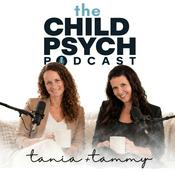 Download for free in the App Store
radio.net
Sleep timer
Save favourites
205 episodes
Why Your Child Falls Apart With You with Tammy and Tania
21/10/2026 | 22 mins.Ever wonder why your child holds it together all day at school, only to completely fall apart the moment they get home?
In this episode of The Child Psych Podcast, registered psychologists Tammy Schamuhn and Tania Johnson explore why children often save their biggest emotions for the people they feel safest with.
From after-school meltdowns to emotional outbursts over seemingly small things, Tammy and Tania unpack what may be happening beneath the surface and why these behaviours aren't necessarily signs of defiance or poor parenting.
In this episode, you'll discover:
- Why children fall apart with their parents: How emotional safety, attachment, and the effort of holding it together throughout the day can contribute to meltdowns at home.
- The hidden cost of being good all day: Why following rules, managing friendships, and meeting expectations can leave children emotionally exhausted.
- Why small things trigger big reactions: Understanding how accumulated stress and unmet needs can overwhelm a child's capacity to cope.
- How to respond without escalating the meltdown: Practical ways to offer connection, co-regulation, and boundaries when emotions run high.
- How to prevent the after-school explosion: Simple strategies to support decompression, emotional regulation, and connection.
The takeaway: Your child's biggest emotions aren't always a reflection of how you're parenting. Sometimes, they're a sign of just how hard your child has been working to hold everything together.
Join Tammy and Tania for a compassionate, practical conversation that will help you see your child's meltdowns through a different lens—and feel more confident supporting them through those difficult moments.
Join us for our upcoming FREE Parenting Summit, November 16–19! 🎉
Four days of inspiring conversations, expert insights, and practical parenting tools—all completely free!
👉 Register here: https://instituteofchildpsychology.com
Hosted on Acast. See acast.com/privacy for more information.Are We Raising Kids Who Are Afraid to Be Independent? | Lenore Skenazy on Free-Range Parenting, Anxiety & Resilience
14/10/2026 | 46 mins.Are we protecting our children—or unintentionally making them more anxious and less confident?
In this episode of The Child Psych Podcast, we sit down with Lenore Skenazy, founder of the Free-Range Kids movement and co-founder of Let Grow, to explore how overprotective parenting may be contributing to childhood anxiety, declining independence, and a lack of resilience in today's children.
Lenore challenges us to rethink modern parenting and the culture of fear surrounding childhood. We discuss why giving children age-appropriate freedom, opportunities for healthy risk-taking, and space to solve problems independently is essential for building confidence, emotional resilience, and problem-solving skills.
Together, we explore the connection between parental anxiety and childhood anxiety, why children need more independent play and unsupervised experiences, and how parents can move away from helicopter parenting without compromising their children's safety.
You'll discover how small changes in parenting can help children develop greater independence, self-esteem, emotional regulation, and the confidence to navigate life's challenges.
Because raising resilient kids isn't about protecting them from every challenge—it's about helping them believe they can handle challenges themselves.
Whether you're raising an anxious child, struggling with the urge to overprotect, or simply looking for ways to foster independence, this conversation offers a refreshing perspective on raising confident, capable, and resilient children.
To find out more about Let Grow , click here
Join us for our upcoming FREE Parenting Summit, November 16–19! 🎉
Four days of inspiring conversations, expert insights, and practical parenting tools—all completely free!
👉 Register here: https://instituteofchildpsychology.com
Hosted on Acast. See acast.com/privacy for more information.Are We Raising Kids Who Can't Live Without Us? — With Julie Lythcott-Haims
07/10/2026 | 50 mins.In this episode, we sit down with Julie Lythcott-Haims, New York Times bestselling author of How to Raise an Adult, to explore how well-intentioned parenting can sometimes get in the way of the very skills children need to become capable, confident adults.
Julie unpacks the rise of the “checklisted childhood,” where success can become defined by grades, activities, achievements, and getting into the “right” school, and explains how this pressure can undermine independence, self-efficacy, and a child’s ability to discover who they really are. We talk about why parents often overhelp out of love and fear, how to know when support becomes overparenting, and why struggle, failure, responsibility, and everyday life skills are so important for healthy development.
We also explore how parents can step back without becoming disconnected, support anxious or struggling children without rescuing them, and shift from managing a child’s life to becoming a trusted guide. Julie offers a powerful reminder that the goal of parenting is not to create a perfect childhood, but to prepare children to navigate adulthood with confidence, resilience, and a sense of ownership over their own lives.
Julie Lythcott-Haims is a New York Times bestselling author, speaker, and former Stanford dean. She is best known for How to Raise an Adult, which explores how overparenting and achievement culture can undermine children’s independence, resilience, and self-confidence—and how parents can better prepare kids to become capable, self-directed adults.
Get Julie's Book "How to Raise an Adult"Join us for our upcoming FREE Parenting Summit, November 16–19! 🎉
Four days of inspiring conversations, expert insights, and practical parenting tools—all completely free!
👉 Register here: https://instituteofchildpsychology.com Hosted on Acast. See acast.com/privacy for more information.Who's Raising Our Kids? The Hidden Forces Shaping Childhood with Dr. Susan Linn
30/09/2026 | 52 mins.Are we raising our children, or are Big Tech, big business, and algorithms quietly doing it for us?
In this thought-provoking episode of The Child Psych Podcast, psychologist Tania Johnson sits down with Dr. Susan Linn, psychologist, author, and one of the world's leading voices on creative play and the commercialization of childhood. Drawing from her groundbreaking book Who's Raising the Kids?, Susan explores how technology companies, advertisers, toy manufacturers, and even schools have become powerful influences in children's lives—often shaping their values, relationships, attention, and development in ways parents never intended.
Together, Tania and Susan unpack what it means to parent in a world where children's attention has become one of the world's most valuable commodities. They discuss why the conversation isn't about blaming parents or banning technology, but about reclaiming childhood through connection, imaginative play, boredom, and real-world experiences. Susan also shares practical, hopeful ways families can resist the pressures of consumer culture and raise children whose identities are shaped by relationships rather than algorithms.
In this episode, you'll learn:
Why the biggest competition for your child's attention isn't other children—it's an industry built to capture it.
How Big Tech and big business influence children's values, relationships, learning, and emotional well-being.
Why imaginative play is one of the most important foundations for healthy child development.
The hidden ways marketing reaches children through toys, apps, schools, games, and digital media.
How parents can reclaim their influence without relying on guilt or fear.
Practical ways to foster creativity, connection, and resilience in a commercialized world.
Why protecting childhood isn't about eliminating technology—it's about ensuring children have the freedom to be children.
If you've ever wondered why it feels harder than ever to compete with screens, devices, and digital entertainment, this conversation will leave you informed, empowered, and inspired. More importantly, it will remind you that parents remain the most powerful influence in a child's life—and that it's never too late to reclaim that role. Dr. Susan Linn is an internationally recognized psychologist, author, ventriloquist, and one of the world's leading advocates for protecting childhood from the harmful effects of commercialism and excessive screen use.
Through her research, writing, and advocacy, she has spent decades helping parents understand the importance of play, creativity, and connection in raising healthy, resilient children.
To learn more about Dr. Linn or to purchase Who's Raising the Kids? Big Tech, Big Business, and the Lives of Children, click here.
Hosted on Acast. See acast.com/privacy for more information.You're Playing With Your Child... But Are You Connecting? with Tammy Schamuhn & Tania Johnson
23/09/2026 | 20 mins."Most parents know that play is important. But what if it's not the game that matters most—it's how you show up while you're playing?
In this episode of The Child Psych Podcast, child psychologists Tammy Schamuhn and Tania Johnson pull back the curtain on what therapists know about play that every parent can use at home. Drawing from the principles of child-centred play therapy, they explore how simple shifts in the way you play can strengthen attachment, build emotional safety, and help your child feel deeply seen and understood.
You'll learn why following your child's lead is more powerful than directing the activity, how presence and attunement create the foundation for emotional regulation, and why children often communicate their inner world through play long before they have the words to explain it. Whether you have five minutes before bedtime or an afternoon at the park, these practical techniques will help you create moments of connection that support your child's emotional development for years to come.
In this episode, you'll learn:
Why your presence matters more than the activity itself.
The power of child-directed play and why following your child's lead builds confidence and connection.
How attunement helps children feel safe, understood, and emotionally secure.
Simple play therapy techniques every parent can use at home.
What reflective responding is and how it deepens connection without needing to solve or fix.
How play supports emotional regulation, communication, and resilience.
Easy ways to create meaningful moments of connection, even in the middle of a busy day.
You don't need expensive toys, elaborate activities, or hours of free time to build a strong relationship with your child. Sometimes the most powerful thing you can do is slow down, enter their world, and simply be present."
Hosted on Acast. See acast.com/privacy for more information.
More Education podcasts





Trending Education podcasts

















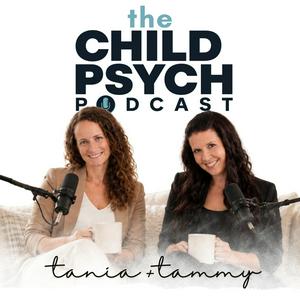
About The Child Psych Podcast
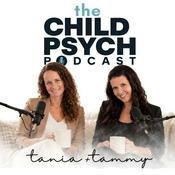
The ChildPsych Podcast brings to you the top parenting & mental health experts in the world. Designed to educate and inspire you with current research & concrete strategies that foster resiliency & healing in children and teens. Most importantly we’re here because we need to raise a generation of children who don’t need to recover from their childhoods. Hosted on Acast. See acast.com/privacy for more information.
Podcast websiteListen to The Child Psych Podcast, Strictly Education and many other podcasts from around the world with the radio.net app
Get the free radio.net app
- Stations and podcasts to bookmark
- Stream via Wi-Fi or Bluetooth
- Supports Carplay & Android Auto
- Many other app features
Get the free radio.net app
- Stations and podcasts to bookmark
- Stream via Wi-Fi or Bluetooth
- Supports Carplay & Android Auto
- Many other app features

The Child Psych Podcast
Scan code,
download the app,
start listening.
download the app,
start listening.
 UK
UK