Season 3, #21 Amanda Thebe World Menopause Day Special: Navigating the Wild West of Menopause.
Navigating the Wild West of Menopause Amanda Thebe is a Fitness and Women’s Health Expert. She is the author of the Amazon best-selling book, Menopocalypse: How I Learned to Thrive During Menopause and How You Can Too! With nearly 30 years of experience in the fitness industry, Amanda is a highly-regarded expert on women’s fitness and health. She is the co-founder and Chief Wellness and Branding Officer at Nyah Health, a complete healthcare solution for menopausal women in Canada. She is Canada’s first menopause workplace educator. She is a popular guest on podcasts, radio, TV and online summits, and she brings a refreshing humour and no-nonsense approach to subjects usually shrouded in shame. Her exercise workouts, health and fitness tips have been featured in Oprah, Shape, Prevention, Health Line, CBC Radio, Global News Canada, The Doctors and many more. https://amandathebe.com/ Instagram: @amanda.thebe Are you ready for this? Amanda and Joyce leave no stone unturned. They begin with an honest, evidence-based discussion of hormone therapy, aligning with the guidance from menopause societies. Together, they explore why some influencers and even doctors go rogue, creating two very different camps. One promotes hormone therapy as a preventative medicine, which would suggest that all women should take it. The other, supported by the menopause societies, recognises its proven benefits: hormone therapy can be effective for hot flushes, night sweats, some vaginal and vulval issues, and possibly certain psychological symptoms—but it is not a preventative medicine. It has an important role, but it is not for everyone. Amanda shares how she struggled with hormone therapy, and how her doctor astonishingly suggested a hysterectomy so she could take oestrogen-only therapy. Joyce and Amanda explain why that advice was, frankly, insane. They also stress that menopause is not a hormone deficiency disorder. The conversation moves on to the clever marketing aimed at women of a certain age. From supplements to face creams, shampoos to chocolate, Amanda and Joyce discuss how the placebo effect can be powerful—many women truly believe these products make them feel better. This year’s theme for World Menopause Day is lifestyle medicine. Amanda highlights how vital lifestyle is for health but also points out the misleading claims women are bombarded with—from weighted vests to warnings that postmenopausal women should avoid cardio and only lift heavy weights. The message here is clear: let’s make lifestyle sexy by embracing nourishing food and regular exercise. In the wild west of menopause, women are often criticised for calling out misinformation. But this is not about women failing to support each other—it is about challenging medical inaccuracies. Their message is simple: beware of anyone trying to sell you something, whether it’s a prescription, a supplement, or even “menopause chocolate.” Trust the advice from the menopause societies. And, as Joyce jokes, hopefully they won’t get sued for saying so! Date of episode recording: 2025-09-11 Duration: 01.22.57 Language of episode: English Presenter: Professor Joyce Harper Guests: Amanda Thebe Producer: Joyce Harper Podcast owner: Joyce Harper
--------
1:22:58
--------
1:22:58
Season 3, #Episode 20 Professor Neil Gittoes: Understanding osteoporosis
Professor Neil Gittoes is Consultant Endocrinologist at the Queen Elizabeth Hospital, Birmingham and Honorary Professor of Endocrinology at the University of Birmingham. He graduated from the University of Birmingham with honours in medicine and anatomical studies and has a PhD in molecular endocrinology. Neil is recognised nationally and internationally for his work in metabolic bone diseases including osteoporosis, vitamin D deficiency and disorders of calcium homeostasis. He has co-authored recent international guidance on management of parathyroid diseases and UK guidance on osteoporosis. Neil was awarded the Goulstonian Lectureship at the Royal College of Physicians, London and has had many key roles, including being the current chair of the Royal Osteoporosis Society. https://theros.org.uk/Did you know you can check your risk of osteoporosis with a quick online tool from the Royal Osteoporosis Society? Just pop onto their website and try the risk checker. If it shows you’re at high risk, it’s worth speaking to your doctor, who may suggest a bone density scan. The good thing is that osteoporosis is largely preventable. Neil talked us through how our bones change as we get older. Half of all women over 50 will break a bone because of osteoporosis, and so will one in five men. Genetics play a big part—about 70 to 80% of our risk comes from our genes—so it’s important to know your family history. But lifestyle matters just as much. Doing regular weight-bearing exercise, cutting down on alcohol, not smoking, keeping vitamin D levels up, and eating enough protein and calcium can all help protect your bones. The tricky thing about osteoporosis is that it’s a silent disease—you don’t feel it happening. But the good news is that there are effective treatments. Some are one-off or short courses, and you don’t need to be on lifelong medication. We also touched on whether women should take HRT to prevent osteoporosis, and Neil had some interesting views. He also explained why getting a diagnosis of osteopenia isn’t something to panic about. Another key point Neil made is how important lifestyle is before the age of 25—that’s when we reach our peak bone mass. So if there’s one message for younger people, it’s that the choices you make in your teens and twenties, especially around exercise, can shape your bone health and your risk of chronic conditions later in life. Date of episode recording: 2025-09-26 Duration: 01.04.57 Language of episode: English Presenter: Professor Joyce Harper Guests: Professor Neil Gittoes Producer: Joyce Harper
--------
1:04:58
--------
1:04:58
Season 3, #E19: Dr Sarah McKay - Understanding dementia and Alzheimer’s
Dr Sarah McKay is a neuroscientist and science communicator and runs The Neuroscience Academy – which provides online training in brain health and applied neuroscience for health. Sarah was born in New Zealand. She obtained her MSc and PhD from Oxford University then moved to Australia, where she conducted five years of postdoctoral research on spinal cord injury. Sarah shares brain science with a clear, science-first voice ... no fluff, no headlines ... just solid research, translated into useful, real-world insights. She has written three books: Baby Brain, The women’s brain book, and brain health for dummies. Her 2015 TEDx talk espoused the virtues of afternoon naps. She lives on Sydney’s Northern Beaches, where she writes, teaches, swims in the ocean year-round, and turns complex neuroscience into practical tools and accessible stories. https://drsarahmckay.com/ Instagram: @drsarahmckay Most of us know someone living with dementia or Alzheimer’s. In this podcast, we separate fact from myth: what are the symptoms, can we reduce our risk, are women more vulnerable to Alzheimer’s, and much more. One of the most striking findings is that around 45% of dementia cases are considered preventable. The choices we make around lifestyle—nutrition, exercise, limiting alcohol, staying mentally and socially engaged, and looking after our hearing and eyesight—can all play a role, according to major dementia and Alzheimer’s organisations. We also address some of the claims circulating on social media about menopause and dementia/Alzheimer’s —for example, the idea that hormone therapy can prevent dementia. Sarah sets the record straight: unfortunately, this isn’t true. She has faced criticism online for challenging this myth, but calling out misinformation is not about women undermining women; it’s about ensuring we share facts rather than perpetuate inaccuracies. That said, research does suggest that frequent hot flushes may be linked to an increased risk. There’s still much more to learn, but what we do know is already powerful. By understanding the evidence on dementia and Alzheimer’s today, we can start taking steps to lower our risk. Date of episode recording: 2025-09-10 Duration: 01.20.12 Language of episode: English Presenter: Professor Joyce Harper Guests: Dr Sarah McKay Producer: Joyce Harper
--------
1:20:13
--------
1:20:13
Season 3, #E18 Dr Nerina Ramlakhan: Reclaiming joy
Nerina is a physiologist, Sleep Expert, Author & keynote speaker, who is dedicated to helping people and organisations to thrive, sleep more deeply and live more joyfully. Nerina spent a decade conducting sleep and wellness programmes at Nightingale Hospital in London, coaches on burnout prevention at Ashridge Business School and is the original founder of BUPA’s Corporate Wellbeing Solutions. Nerina works with individuals as well as numerous corporate clients from various industries including sport (Chelsea Football Club). She is particularly interested in how, post-pandemic, organisations and individuals can thrive rather than merely survive. Her recently published 4th book Finding Inner Safety (Capstone, 2022) suggests that an important way forward in these volatile, uncertain, complex and ambiguous (VUCA) times is to tap into our deepest sources of resilience and inner safety. Many of her keynotes and presentations are focused on showing organisations and individuals how to do this. Nerina is the author of three other books: Tired But Wired (Souvenir Press, 2010), Fast Asleep, Wide Awake (Thorsons, 2016), and The Little Book of Sleep: The Art of Natural Sleep (Gaia, 2018). Her work is often featured in the media including TV and Radio. www.drnerina.com @drnerina Joyce and Nerina have known each other for over 40 years, since they first met while doing their PhDs — which makes this episode particularly special. Both are deeply passionate about the idea of reclaiming joy. In this conversation, Nerina explores what joy really is. It’s not always easy to define. ChatGPT describes it as a deep feeling of happiness, delight, or contentment that often arises spontaneously — not always triggered by something external. Nerina expands on this, explaining why joy is so essential for both our physical and mental wellbeing. Of course, joy looks different for everyone. We each have to discover what brings us joy in our own way. Nerina argues that joy should be recognised as a priority not just in our personal lives, but also in schools and workplaces — right alongside sleep. This is the final episode in the mini-series on reclaiming joy for 2025. I hope it’s sparked some ideas and inspiration for how you might reconnect with your own sense of joy. I’ll be back with another mini-series on joy and happiness next year — so stay tuned.Date of episode recording: 2025-07-30T00:00:00ZDuration: 01.14.09Language of episode: EnglishPresenter:Professor Joyce HarperGuests: Dr Nerina RamlakhanProducer: Joyce Harper
--------
1:14:10
--------
1:14:10
Season 3, #E17: Debbie Robinson: The Yoga Junkie – Sound baths – vibrations for wellness
Debbie is a spiritual coach, certified grief recovery specialist, teacher of multiple Yoga lineages, menopause coach and much more. She is a certified in many types of yoga and is accredited by the Yoga Alliance, with over 25 years' yoga experience. Debbie is also trained in Mental Health, and Occupational Safety and Health. Debbie was born into an environment marked by dysfunction and has navigated a world without safety or guidance. From this experience she brings together the transformative power of movement, mindfulness, spirituality, and healing into a cohesive experience that truly supports people in their journey. She has created something that is both essential and expansive, a sanctuary for those seeking not just physical wellness but a deeper connection to themselves. She runs 1:1 sessions, workshops and retreats and offers eco-conscious yoga accessories and a range of sustainable clothing, embodying her commitment to the environment. Website www.theyogajunkie.co.uk/ Instagram: @theyogajunkie After meeting Debbie at the Big Retreat Festival and experiencing her incredible 90-minute sound bath, I knew I had to invite her onto the podcast. Many people still don’t know what a sound bath is or why they might want to attend one — so in this episode, Debbie walks us through the whole experience. She explains what a sound bath actually is, the instruments she uses, and how these sounds can affect both the body and the mind. She also describes what to expect from the moment you arrive to the moment you leave. For many, it can be a deeply calming and even transformative experience — I personally feel completely relaxed and reset after one. I especially love floating sound baths, which we also talk about. In Debbie’s studio in Wales, participants are suspended in hammocks for a truly unique experience. We also explore what yoga means to Debbie, and how she supports people navigating menopause and grief through her practice. If you’ve never tried a sound bath before, I hope this episode inspires you to give it a go. I’d love to hear what you think.Date of episode recording: 2025-07-31T00:00:00ZDuration: 01.07.09Language of episode: EnglishPresenter:Professor Joyce HarperGuests: Debbie Robinson - the Yoga JunkieProducer: Joyce Harper
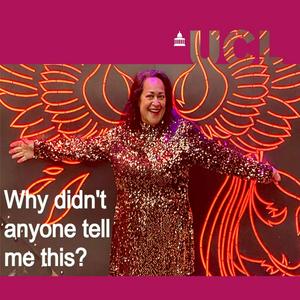
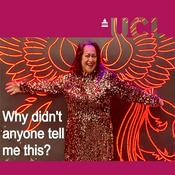
Welcome to season 2 of the podcast - Why didn’t anyone tell me this? This podcast is about health education with an emphasis on reproductive health. We do not cover these topics enough in school or beyond. Joyce Harper and her guests want to give you the tools to empower you to live a healthy, happy and fulfilled life. And on the way, we will debunk some of the myths around our health. This podcast will include a wide range of amazing guests, discussing topics such as nutrition, exercise, sleep, mental health, happiness, cancer, periods, fertility, infertility, fertility treatment, preconception health, pregnancy, miscarriage, PCOS, endometriosis, menopause and much more. Joyce is a cold-water swimmer so expect some episodes about swimming! They will tell you about their work and life journey, what are the key messages they want you to know, their motivation, what makes them happy and their advice to their younger self. Joyce Harper is an award-winning author, educator, academic, and scientist with over 30 years’ experience in reproductive health. She is Professor of Reproductive Science at the Institute for Women’s Health at University College London where she heads the Reproductive Science and Society group. Her latest book, Your Fertile Years, is published by Sheldon Press, 2021. She is chair of the International Reproductive Health Education Collaboration (www.eshre.eu/IRHEC) and co-chair of the UK Fertility Education Initiative. She is founder of Reproductive Health at Work. Further information at www.joyceharper.com.
















 UK
UK