

Listen to this podcast in the app for free: Download for free in the App Store
radio.net
Sleep timer
Save favourites
90 episodes

Ambition isn't a career, it's a Drive!!
15/10/2026 | 36 mins.What if leaving your career doesn't mean retiring your drive? This week we're joined by Hugo Brooks, author, speaker and guide, who walked away from more than 30 years running marketing businesses after his wife asked one simple question: are you sure you want to do this again? We talk about what ambition really is, why "purpose" has become a buzzword, and how to point your drive at something that genuinely means something to you.
Key Takeaways
Ambition is not the same as your goals. It is an independent drive, a simple human desire for tomorrow to be better than yesterday, and we all have it whether we work or not. Stopping a career does not switch it off. Of the driven people Hugo has spoken to who tried simply slowing down, only two or three in ten found it worked. The rest became uncomfortable and went looking for something new to aim at.
That drive moves through three phases: dissatisfaction, desire and determination. It works the same whether you are reorganising a kitchen cupboard or tackling world hunger. Marketing, and plenty of social media scams, work by igniting the middle phase, showing you a vision of something better so you suddenly feel dissatisfied with what you have.
Purpose has been hijacked. It started in the commercial world and has turned into pressure to do something worthy. What really matters is meaning, and meaning is personal. Curing world hunger and going fishing are equally valid if they matter to you. A useful way in is Hugo's eulogy exercise: imagine your best friend speaking at your funeral. Nobody wants them to mention last quarter's sales figures.
Somewhere in midlife the horizon stops moving. For Hugo it was realising he was older than his father was when he died. The question shifts from what can I do with my time to what will I get done with the time I have left. That can send people into denial (cue the Harley Davidson), or it can be the start of a far more meaningful second life.
Finally, treat goals as a direction, not something to worship. Reaching a goal is like walking through a pair of saloon doors: it takes seconds. Life happens in the corridor on the way there, so make the corridor count.
Hugo's book, Ambition: Redefining Success for a Restless Age, is being published in four parts. Part one is available now on Amazon.
Timestamps
00:09 - Welcome and introducing Hugo Brooks
02:24 - Closing a business on the way down, and the identity crisis that followed
04:47 - Why your drive and your goals are not the same thing
07:06 - Ambition as the desire for tomorrow to be better than yesterday
09:23 - The three phases: dissatisfaction, desire and determination
11:37 - Privilege and deprivation: why both can frustrate ambition
14:00 - A Minister for Ambition, and how marketing (and scams) ignite desire
16:13 - Why purpose has become a buzzword
18:33 - Meaning over purpose: from world hunger to going fishing
21:00 - The eulogy exercise
23:26 - Realigning your drive, and how it changes after 50
25:42 - When the horizon stops moving: outliving a parent
28:02 - A second life, and becoming visible in new worlds
30:22 - The book: Ambition, Redefining Success for a Restless Age
32:36 - AI, the future, and why goals are like saloon doors
35:02 - The journey, not the destination, and wrap up
Hugo's book part 1 https://www.amazon.co.uk/s?k=9781067640828Why should you say YES to adventure in retirement?
12/10/2026 | 44 mins.This week we head to Morocco for a week-long motorcycle tour through the Atlas Mountains, taken at 62 and finishing on the very first day of retirement. With video diaries recorded on the road, we look at the difference between a holiday and an adventure, why saying yes can stop your world shrinking once work ends and what happens when 2 Brits join 8 Frenchmen on Royal Enfields.
Key Takeaways
Holidays and adventures serve different needs. A holiday is about rest, comfort and predictability. An adventure, as Richard and Jackie Pickles describe in Retirement Wanderlust, is about novelty, challenge and personal growth, and it comes with far more logistics and unpredictability. Knowing which one you want shapes the trip you choose.
Saying yes more often helps you grow, builds resilience, strengthens relationships and sparks new ideas. But it needs policing. Saying yes to everything is the road to burnout, so protect your energy and your boundaries.
Retirement can quietly make your world smaller. Fewer daily interactions, no work travel and no reason to leave the house all add up. Deliberately saying yes to new experiences is one of the easiest ways to push back.
Giving up control can be liberating. Handing the planning to someone else made the trip stress free, even through sketchy off-road riding, a country where you can rarely get a glass of wine, and long days of functional French.
Multi-generational adventures are worth planning for. One family in the group spent three years organising the trip so fathers, uncles and sons, aged 30 to 70, could ride together while everyone was still able.
Endings deserve marking. Three very different trips ended up bookending the end of a working life, and a rooftop Fête de la Retraite in Marrakesh turned out to be the perfect send-off. Next stop: possibly Madagascar.
Timestamps
01:42 - The Morocco montage
03:31 - Holiday or adventure? Insights from Retirement Wanderlust
07:54 - Why say yes to an adventure at 62?
10:11 - Saying yes: growth, resilience, relationships and creativity, plus avoiding burnout
12:38 - Why your world can shrink in retirement
15:00 - From Rwanda to Morocco: choosing a Vintage Rides tour
17:21 - The route: Marrakesh, Aït Ben Haddou, the Dades Gorge, Imilchil and Ouzoud
19:43 - The Atlas Mountains and the edge of the Sahara
22:01 - Getting by on functional French
24:20 - Meet the group, and a chance meeting with Sam
26:34 - Sketchy off-roading, a dry country and giving up control
28:54 - A multi-generational tour, from 30 to 70
31:15 - Shared experiences with an old friend
33:37 - Why we planned three big trips around retirement
36:00 - Engineering a work exit that didn't go to plan
40:21 - La Fête de la Retraite: a rooftop retirement party in Marrakesh
42:45 - Next stop Madagascar?
www.vintagerides.com
The Wonders of the Atlas: Atlas Mountains Motorcycle Tour
The Great Red Island: 11-Day Motorcycle Tour of MadagascarWhy should you say yes to adventure in retirement!
08/10/2026 | 44 mins.This week we head to Morocco for a week-long motorcycle tour through the Atlas Mountains, taken at 62 and finishing on the very first day of retirement. With video diaries recorded on the road, we look at the difference between a holiday and an adventure, why saying yes can stop your world shrinking once work ends and what happens when 2 Brits join 8 Frenchmen on Royal Enfields.
Key Takeaways
Holidays and adventures serve different needs. A holiday is about rest, comfort and predictability. An adventure, as Richard and Jackie Pickles describe in Retirement Wanderlust, is about novelty, challenge and personal growth, and it comes with far more logistics and unpredictability. Knowing which one you want shapes the trip you choose.
Saying yes more often helps you grow, builds resilience, strengthens relationships and sparks new ideas. But it needs policing. Saying yes to everything is the road to burnout, so protect your energy and your boundaries.
Retirement can quietly make your world smaller. Fewer daily interactions, no work travel and no reason to leave the house all add up. Deliberately saying yes to new experiences is one of the easiest ways to push back.
Giving up control can be liberating. Handing the planning to someone else made the trip stress free, even through sketchy off-road riding, a country where you can rarely get a glass of wine, and long days of functional French.
Multi-generational adventures are worth planning for. One family in the group spent three years organising the trip so fathers, uncles and sons, aged 30 to 70, could ride together while everyone was still able.
Endings deserve marking. Three very different trips ended up bookending the end of a working life, and a rooftop Fête de la Retraite in Marrakesh turned out to be the perfect send-off. Next stop: possibly Madagascar.
Timestamps
01:42 - The Morocco montage
03:31 - Holiday or adventure? Insights from Retirement Wanderlust
07:54 - Why say yes to an adventure at 62?
10:11 - Saying yes: growth, resilience, relationships and creativity, plus avoiding burnout
12:38 - Why your world can shrink in retirement
15:00 - From Rwanda to Morocco: choosing a Vintage Rides tour
17:21 - The route: Marrakesh, Aït Ben Haddou, the Dades Gorge, Imilchil and Ouzoud
19:43 - The Atlas Mountains and the edge of the Sahara
22:01 - Getting by on functional French
24:20 - Meet the group, and a chance meeting with Sam
26:34 - Sketchy off-roading, a dry country and giving up control
28:54 - A multi-generational tour, from 30 to 70
31:15 - Shared experiences with an old friend
33:37 - Why we planned three big trips around retirement
36:00 - Engineering a work exit that didn't go to plan
40:21 - La Fête de la Retraite: a rooftop retirement party in Marrakesh
42:45 - Next stop Madagascar?
www.vintagerides.com
The Wonders of the Atlas: Atlas Mountains Motorcycle Tour
The Great Red Island: 11-Day Motorcycle Tour of MadagascarCan you wear a bikini at 63 or PVC trousers at 62?
01/10/2026 | 34 mins.This week we talk body confidence and ageless style, from older models leading the autumn/winter 2026 catwalks to a Sunday Times piece asking whether you can still fit into the clothes of your youth. We look at why your waistline matters more than your BMI, how two sixty-somethings kept theirs and give an honest (and slightly sweary) update from week two of our own eight-week gym programme.
Key Takeaways
Older models are finally on the catwalk, with Chanel alone featuring 15 over-40s this season. That is real progress, and the silver pound is almost certainly part of the reason. But Kate Moss, Gillian Anderson and Mary Berry are all slim. Until catwalks show older bodies of different shapes and sizes, many of us will still struggle to see ourselves in them.
Wearing a bikini or PVC trousers later in life is not really about the clothes. It is about having enough confidence in your own body to make that choice and feel comfortable with it.
Your waist tells you more than your BMI. If your waist measures more than about 0.6 of your height, that is the danger zone. One study of 7,000 over-65s found a high waist circumference was linked to a 24% higher mortality risk, regardless of BMI.
Muscle is the key to keeping your metabolism going, because it burns calories even at rest and we naturally lose it from our 30s. Lifting weights matters far more than endless crunches, which build your core but do nothing for belly fat. And sadly, you cannot out-train a bad diet.
As for our own eight-week programme, having someone hold you accountable genuinely helps. But logging every blueberry is tedious, skipping meals to avoid the app only leads to bingeing at dinner, and one good day out can undo a week of effort. We are aiming for less heavy and a bit more toned, not a six-pack. Tune in to find out how we get on.
Timestamps
01:05 - Older models on the AW26 catwalks: Chanel, Tom Ford, Givenchy, Kate Moss for Gucci and Gillian Anderson for Miu Miu
02:34 - Burberry's campaign with Mary Berry, Olivia Colman and Lesley Manville, ageing designers and the silver pound
04:50 - Still a way to go on body size and relatability
05:40 - The Sunday Times article: bikinis, PVC trousers and the courage to wear them
06:30 - Digging out our 30-year-old leather trousers
07:13 - Clubbing in Soho, Destroy T-shirts and an accidental vibe
09:36 - Bikinis, cover-ups and body confidence
11:00 - How Alice Hart-Davis kept her waistline after three pregnancies and menopause
11:55 - Why waist measurement matters: cancer risk and the waist-to-height ratio
13:20 - Why metabolism slows as we age: it's all about muscle mass
14:23 - HRT and fat around the middle, plus Phil Hilton's approach
14:50 - The study of 7,000 over-65s linking waist size to mortality
16:50 - Why crunches won't shift belly fat
17:50 - Our eight-week gym programme and why we signed up
19:10 - Armoured motorcycle jeans for Morocco that don't quite fit
21:33 - Three apps, calorie targets, 10,000 steps and weigh-ins
23:52 - What we like and don't like so far
25:52 - Skipping meals to avoid logging food, and the pre-start Sunday binge
28:11 - 10,000 steps while moving the kids into uni, and "cheating steps"
30:37 - Why fun costs a pound and a Times reader's joyless toning diet
32:58 - Our goals and wrap-upWhat do women over 50 actually hire a male companion for? Spoiler: it's mostly not what you think.
24/09/2026 | 34 mins.This week we are joined by George Goulburn, a straight male companion based in Sydney, who left a 25-year corporate career at 51 to work in what he calls the caring economy. We talk about what his clients actually want, why women over 50 are his core clientele, the loneliness epidemic and why making someone feel seen can change everything.
Key Takeaways
The thing women book George for most is not sex. It is companionship: someone who is completely present, puts their phone away, pays attention, and actually sees them. Many of his clients have been in relationships where there has been no intimacy or real connection for years, sometimes decades. They feel invisible. Two hours of genuine attention can be more transformative than years of waiting for something to change.
The work is nothing like how male escorting is typically imagined. George will not take a booking without a phone call first, asks for photographs because the women have already seen him, and turns down clients he does not feel a connection with. His minimum booking is two hours because women need time to feel safe and to arrive at whatever the session becomes. Sex, if it happens at all, is rarely the point.
The narrative that women become non-sexual after menopause is, as George puts it, a really messed up narrative. Most of his clients are 50 plus and at various points in their menopause journey. Many of them are financially independent, done being told what to do, and clear-eyed about what they want. The issue is not desire. The issue is that dating apps are soul-destroying and the options for meaningful connection are genuinely poor.
George also works with people society rarely acknowledges as having needs at all: people with disabilities, mature virgins, and couples who want help reigniting their connection. His eldest client was 82. He has seen a woman in her mid-50s who had never kissed anyone before. He discounts his rates for clients with disabilities because, as he says, everyone deserves touch and affection.
Timestamps
00:09 - Welcome and introducing George Goulburn, straight male companion
02:35 - How it started: a lover on Bumble who wanted to pay him
03:20 - How family and friends reacted, including his son and his mum
04:59 - Lovers versus clients, and why George lives ethically non-monogamous
06:30 - Pricing strategy: finding a mentor who had already done the work
08:20 - What he got wrong early on, and how it differs from dating
09:51 - Why his minimum booking is two hours, and what women actually want
12:14 - Who books him: divorced, widowed, in sexless marriages, and feeling invisible
14:35 - Online dating, the transactional culture, and why women go to a professional
16:30 - What he does to make women feel seen and beautiful
18:30 - The client who withdrew from her mortgage and went to work transformed
19:27 - Bette Midler, energy, and why confidence is not about looks
21:52 - The narrative that menopause means shutting up shop, and why that is wrong
24:18 - What he would say to a woman thinking about booking, and to men who want to do this work
26:44 - The loneliness epidemic beyond older women
27:10 - Mature virgins, disabilities, and people society does not see
31:34 - Seeing couples: helping reignite connection and showing partners what is possible
33:59 - How to find George, and wrap up
If you want to find George:
https://www.georgegoulburn.com/
https://www.instagram.com/georgegoulburnofficial/
He travels internationally (except the USA, for obvious reasons) and is happy to answer questions.
More Education podcasts







Trending Education podcasts











About When the f**k did I become old?
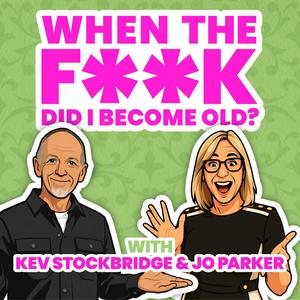
When the Fuck Did I Become Old? is the no-holds-barred podcast for everyone over 55 who is done being invisible. Co-hosted by Jo Parker and her partner Kev Stockbridge, this is real talk about ageing from 55 onwards. With humour, honesty and a healthy dose of profanity, Jo and Kev tackle everything from hot flushes and shit sleep to grief, reinvention, sex after 55 and dating in later life. Plus menopause, loneliness, retirement, mental health and the art of staying visible when society wants you to disappear.If you’re over 55 and feel like life is shifting fast physically, emotionally, financially and nobody’s talking about it properly, this is your podcast. Each episode blends Jo and Kev’s raw reflections with unfiltered conversations from guests who have lived a little (and learned a lot).Jo and Kev’s mission? To break the silence around ageing, smash the stereotypes and make getting older something we can laugh at, cry through and fully own….together.It’s ageing, without the airbrushing Season 1 - The Journney Begins...Season 2 - The Search for a Co-HostSeason 3 - A new Co-Host; my partner Kev StockbridgeSubscribe to the podcast on Apple Podcasts or Spotify Follow us onInstagram https://www.instagram.com/whenthefkdidibecomeold/Facebook https://www.facebook.com/WhenthefkdidIbecomeold/TikTok https://www.tiktok.com/@whenthefkdid_i_becomeoldYouTube https://www.youtube.com/@WhentheFdidIbecomeoldEmail us whenthefkdidibecomeold@gmail.com
Podcast websiteListen to When the f**k did I become old?, The Studies Show and many other podcasts from around the world with the radio.net app
Get the free radio.net app
- Stations and podcasts to bookmark
- Stream via Wi-Fi or Bluetooth
- Supports Carplay & Android Auto
- Many other app features
Get the free radio.net app
- Stations and podcasts to bookmark
- Stream via Wi-Fi or Bluetooth
- Supports Carplay & Android Auto
- Many other app features

When the f**k did I become old?
Scan code,
download the app,
start listening.
download the app,
start listening.
 UK
UK