
Listen to this podcast in the app for free: Download for free in the App Store
radio.net
Sleep timer
Save favourites
121 episodes
Trust in Life (Episode #116)
15/10/2026 | 1h 32 mins.If you wish to support our podcast, please follow this link. Thank you!
Welcome to a new episode of The Way Out Is In: The Zen Art of Living, a podcast series mirroring Zen Master Thich Nhat Hanh’s deep teachings of Buddhist philosophy: a simple yet profound methodology for dealing with our suffering, and for creating more happiness and joy in our lives.
In this episode, Zen Buddhist monk Brother Phap Huu and leadership coach Jo Confino discuss the concept of ‘trust in life’. Together, they explore how Buddhist teachings can help us to navigate the tension between accepting life as it is and wanting to control it.
The conversation further touches on the challenges of modern life, such as information overload and the tendency to seek quick fixes, and how these can be addressed through mindful practices; the role of suffering in personal growth and the importance of being present with one’s experiences; developing inner trust and understanding; the role of mindfulness, direct experience, and discernment in cultivating trust; the significance of simplicity, listening, and the practice of ‘beginner’s mind’ in spiritual growth; the Buddhist concept of aimlessness; and more.
Co-produced by the Plum Village App:
https://plumvillage.app/
And Global Optimism:
https://globaloptimism.com/
With support from the Thich Nhat Hanh Foundation:
https://thichnhathanhfoundation.org/
List of resources
Brother Phap Ling (Brother Spirit)
https://plumvillage.org/people/dharma-teachers/brother-phap-linh
Interbeing
https://en.wikipedia.org/wiki/Interbeing
The Plum Village Tradition
https://en.wikipedia.org/wiki/Plum_Village_Tradition
The Sun My Heart
https://www.parallax.org/product/the-sun-my-heart/
Mahayana
https://en.wikipedia.org/wiki/Mahayana
Dharma Talks: ‘Redefining the Four Noble Truths’
https://plumvillage.org/library/dharma-talks/redefining-the-four-noble-truths
Ocean Vuong
https://www.oceanvuong.com/
Dharma Talks: ‘The Noble Eightfold Path’
https://plumvillage.org/library/dharma-talks/the-noble-eightfold-path
The Way Out Is In: ‘The Three Doors of Liberation (Episode #18)’
https://plumvillage.org/podcast/the-three-doors-of-liberation-episode-18
Quotes
“Trust in God, but don’t forget to tie up your camel.”
“Understanding is love, is peace – because, when we understand suffering, we don’t want to create more suffering.”
“If we listen deeply, we can see how many conditions we have to generate the understanding that allows us to have joy and happiness in the present moment.”
“As a human being, we all have a spiritual dimension, and it’s not far away. It’s not found in a retreat. It’s not found in a monastery. It is everywhere. It’s in the ultimate dimension, the historical dimension. It’s in the trees. It is us. But we’re not able to activate it – our collective culture doesn’t allow us to tap into that. We have been afraid of being sensitive, of having empathy, and it’s hard to be in a world where we’re not conditionedto be with our feelings.”
“Thay said not to bring your intellectual mind into Dharma talks, because it will try to agree or disagree. The intellectual mind will try to consume the understanding, which becomes a blockage to deeper understanding of your deepest potentials.”
“In Buddhist Zen Mahayana literature, sometimes we have to be a learner, and sometimes we have to let go of the learning because it’s enough. Just practice. Enjoy the present moment.”
“Sometimes we draw a graph and think growth is always going up or being solid. But, sometimes, growth is knowing that we’re suffering but not being carried away by it – just being present and holding it and listening to it.”Asking for Help (Episode #115)
01/10/2026 | 1h 9 mins.If you wish to support our podcast, please follow this link. Thank you!
Welcome to a new episode of The Way Out Is In: The Zen Art of Living, a podcast series mirroring Zen Master Thich Nhat Hanh’s deep teachings of Buddhist philosophy: a simple yet profound methodology for dealing with our suffering, and for creating more happiness and joy in our lives.
In this episode, Zen Buddhist monk Brother Phap Huu and leadership coach Jo Confino discuss the difficulty of asking for help, exploring the cultural and personal barriers that can prevent people from seeking assistance. They emphasize the importance of recognizing indirect requests for help, and the need for compassion and presence when one is asked for help; the role of community and nature in providing support; and the necessity of self-forgiveness and self-care.
The conversation underscores collective responsibility for addressing societal issues, and the power of shared vulnerability in fostering deeper connections. The hosts also share practical steps, from both teachings and their own lives.
Co-produced by the Plum Village App:
https://plumvillage.app/
And Global Optimism:
https://globaloptimism.com/
With support from the Thich Nhat Hanh Foundation:
https://thichnhathanhfoundation.org/
List of resources
Sister Chan Khong
https://plumvillage.org/about/sister-chan-khong
Brother Phap Ling (Brother Spirit)
https://plumvillage.org/people/dharma-teachers/brother-phap-linh
Interbeing
https://en.wikipedia.org/wiki/Interbeing
The Plum Village Tradition
https://en.wikipedia.org/wiki/Plum_Village_Tradition
Wake Up Retreat 2026
https://plumvillage.org/articles/wake-up-retreat-2026-am-i-good-enough
The Four Mantras of Love
https://plumvillage.org/gems/event/The-Four-Mantras-of-Love-V2DFQvyDMgD3NEx7GTKfXz
European Institute of Applied Buddhism
https://www.eiab.eu/
Mahayana
https://en.wikipedia.org/wiki/Mahayana
The Way Out Is In: ‘The Three Jewels (Episode #89)’
https://plumvillage.org/podcast/the-three-jewels-episode-89
‘Beginning Anew’
https://www.parallax.org/mindfulnessbell/article/beginning-anew/
The Way Out Is In: ‘True Love: Practicing in Relationships (Episode #31)’ https://plumvillage.org/podcast/true-love-practicing-in-relationship-episode-31
Quotes
“Because we are alive, everything is possible.”
“Unfortunately, as humans, we tend to only recognize that something is really happening when we experience it.”
“The beauty of mindfulness and meditation is to welcome the vulnerability in ourselves.”
“For someone to ask for help, they need someone to be compassionate.”
“When you can listen deeply, you can hear what the other person is not saying.”
“Asking for help is a leadership skill.”
“People think the environment is outside of themselves – but they are the environment.”
“We need to turn to ourselves, to take responsibility and to forgive ourselves, and then reach out to people in a way that benefits them. Because, when we ask for help, we give them permission to also experience that.”Paths of Change and Resistance (Episode #114)
17/09/2026 | 1h 28 mins.If you wish to support our podcast, please follow this link. Thank you!
Welcome to a new episode of The Way Out Is In: The Zen Art of Living, a podcast series mirroring Zen Master Thich Nhat Hanh’s deep teachings of Buddhist philosophy: a simple yet profound methodology for dealing with our suffering, and for creating more happiness and joy in our lives.
In this episode, Zen Buddhist monk Brother Phap Huu and leadership coach Jo Confino are joined by Zen Buddhist nun Sister True Dedication. Together, they explore the significance and offerings of the Plum Village community – a sanctuary of peace, healing, and mindfulness, in stark contrast to the fast-paced, consumer-driven world outside.
The three speakers further discuss the importance of a physical environment for spiritual practice, where individuals can reconnect with their true selves; the value of community living, where monastics share a collective career and work towards the flourishing of the community rather than individual success; the relevance of the five mindfulness trainings, which serve as ethical guidelines for personal and societal transformation; and much more.
The conversation also touches upon the need for support to maintain and expand the Plum Village facilities, the importance of generosity, and the impact of supporting engaged monastic communities.
Co-produced by the Plum Village App:
https://plumvillage.app/
And Global Optimism:
https://globaloptimism.com/
With support from the Thich Nhat Hanh Foundation:
https://thichnhathanhfoundation.org/
List of resources
Interbeing
https://en.wikipedia.org/wiki/Interbeing
Plum Village Tradition
https://en.wikipedia.org/wiki/Plum_Village_Tradition
The Bodhisattva vow
https://en.wikipedia.org/wiki/Bodhisattva_vow
The Five Mindfulness Trainings
https://plumvillage.org/mindfulness/the-5-mindfulness-trainings
The Fourteen Mindfulness Trainings
https://plumvillage.org/mindfulness/the-14-mindfulness-trainings
Es Devlin
https://esdevlin.com/
Rebecca Solnit
https://www.rebeccasolnit.net/
The Way Out Is In: ‘Stepping into Freedom – Live Recording with Q&A Session (Episode #67)’
https://plumvillage.org/podcast/stepping-into-freedom-live-recording-with-qa-session-episode-67
The Way Out Is In: ‘Cultivating Joy and Togetherness in the Midst of Hardship (Episode #95)’
https://plumvillage.org/podcast/cultivating-joy-and-togetherness-in-the-midst-of-hardship-episode-95
Quotes
“Plum Village emerged from our teacher’s vision of how the world could look and feel different from mainstream society. From the beginning, Plum Village has been a community of resistance. We could even call it a community of resilience: a physical environment that holds different values to the mainstream consciousness. We can all recognize those values. It might be unbridled capitalism, craving, consumerism, violence, or excesses of different kinds that we see in our immediate lives, around us, and in the economic and labor systems that we’re a part of. The vision for Plum Village was, ‘What if we create a physical environment that models entirely different values?’ Embodying those values is the resistance. For example, embodying peace, harmony, collectiveness, and community rather than individualism.”
“We need to reclaim our sovereignty from the machines of our creation.”
“Plum Village is holding an environment of peace and healing and freedom from the rat race; freedom from the world of technological overwhelm.”
“At a retreat, we are invited into a space of sharing our generosity in presence. We’re not sitting for ourselves: we’re sitting for the collective. When we are taking care of our emotions, we’re also taking care of the emotions of the collective, because we start to see the interbeing of the individual and the collective, their interconnectedness.”
“We organize our life in such a way that we are literally cultivating compassion, mindfulness, patience, and inclusiveness every day. We’re not perfect, but this is our work in progress and it’s quite noble and, though we struggle so much, we feel in our bones that we’re doing this work every day. It also allows me to have some faith in the future as we enter this period of disruption for society, for the climate, for agriculture, for nature – to be able to cooperate, to live cooperatively, to share resources, and to moderate and temper our needs. These are such important human practices. The qualities we’re holding here – compassion, mindfulness – are a treasure trove for future generations. These are exactly the values that we want to trust will still be there in decades and centuries to come.”
“In each hamlet are 50 or 60 monastics living together, cultivating non-violence in their speech, in their thinking, in their way of being, in their way of washing a bowl, in their way of brushing their teeth, in their ways of being with the mosquitoes. We’re living as an example of non-violence in the world. And then being able to lift that up into our engagement with everyone who comes to us. It may sound like we’re describing a bubble. But, because we are living in a constant relationship with the thousands of people that come and spend time with us every year, another way to describe us is as being like a river bank with a river flowing through it. We’re a gentle river bank that caresses the water for a little bit before it moves on back into the world. And so people have a chance to taste these energies that we’re generating as a collective here.”
“The only way that we are going to save ourselves from the collapse of civilization is through a collective awakening. Individual awakening is not enough.”
“We’re not going to sort everything out in this lifetime, but what we can offer is more tools, more practices, more understanding, more care, and more compassion for the next generation, so that they can carry this path forward into the future.”
“Thay has really expanded this home – it’s not just for the monks and nuns. The monastery is also open for the lay community to come in and taste true peace.”
“When you come to Plum Village for seven days and don’t drive a vehicle, that’s already an impact. When you’re vegetarian for seven days, that’s an impact. When you are not expressing anger for seven days, that’s an impact. When you’re listening to yourself and healing some blockage that’s been waiting for you to look at it and embrace it, that’s an impact. That’s healing. That is already work for your ancestors, work for society. And so the journey of a monastery – or we could call it a practice center – is important because it is also a place where we know we can put down our masks. It can become a great equalizer. Everyone here, we’re human beings; it doesn’t matter what titles we hold in the world outside. Here, in the monastery, there’s a power to the monastic’s presence.”
“It is very clear from the teachings of Thay and the Buddha, and from our own moral compasses, that, if we don’t take care of our suffering – our loneliness, our violence, and our hatred, by naming it and saying, ‘Okay, I’m co-responsible, and it is my responsibility to also transform this’ – we’re not going to change the system.”You Are Already the Person You Want to Become – Live Recording with Q&A Session (Episode #113)
03/09/2026 | 2h 10 mins.If you wish to support our podcast, please follow this link. Thank you!
Welcome to a new episode of The Way Out Is In: The Zen Art of Living, a podcast series mirroring Zen Master Thich Nhat Hanh’s deep teachings of Buddhist philosophy: a simple yet profound methodology for dealing with our suffering, and for creating more happiness and joy in our lives.
This is our third live recording of the podcast made in London, England, in July, 2026, before a sold-out audience. In it, Zen Buddhist monk Brother Phap Huu and leadership coach Jo Confino are joined on stage by Zen Buddhist nun Sister True Dedication to explore the idea that the answers to life’s issues are often found within ourselves, rather than externally, and that we are already the person we want to become.
The discussion includes reflections on the challenges of recognizing one’s own worth and the societal pressures that contribute to feelings of inadequacy; how mindfulness, presence, and community are essential in cultivating self-acceptance and personal transformation; the role of kindness in daily life; the power of the present moment in fostering personal and collective change; practicing self-compassion; and much more.
The conversation concludes with questions from the audience answered by the three speakers.
Co-produced by the Plum Village App:
https://plumvillage.app/
Plum Village UK:
https://plumvillage.uk/
And Global Optimism:
https://globaloptimism.com/
With support from the Thich Nhat Hanh Foundation:
https://thichnhathanhfoundation.org/
List of resources
Sister True Dedication
https://plumvillage.org/people/dharma-teachers/sister-hien-nghiem
Koan
https://en.wikipedia.org/wiki/Koan
Interbeing
https://en.wikipedia.org/wiki/Interbeing
Plum Village Tradition
https://en.wikipedia.org/wiki/Plum_Village_Tradition
Meredith Monk
https://en.wikipedia.org/wiki/Meredith_Monk
The Way Out Is In: ‘Stepping into Freedom – Live Recording with Q&A Session (Episode #67)’
https://plumvillage.org/podcast/stepping-into-freedom-live-recording-with-qa-session-episode-67
The Way Out Is In: ‘Cultivating Joy and Togetherness in the Midst of Hardship (Episode #95)’
https://plumvillage.org/podcast/cultivating-joy-and-togetherness-in-the-midst-of-hardship-episode-95
Quotes
“Given everything that’s happening in the world, the person I’d like to become is this impossible person – a person who can find an answer to heal and stop all of the suffering, all of the injustice, all of the violence. We know that the pain and discomfort we feel in ourselves is not only a personal, individual discomfort; we’re feeling the pain of the world, and that’s reflected in our bodies and in our feelings. And so, when we can’t accept ourselves, or think we’re not enough, it’s also because we’re not enough in the face of all of this. How could we be?”
“All the suffering of the world is reflected in us in a really concrete way: we watch something on a screen and we have a bodily response. We feel the anxiety, we feel the tension. We felt the heat in the heat wave last week. And that’s doing something to us at an emotional level; a kind of existential fear is triggered. So that suffering is really visceral in us. But what’s really interesting is that there’s also the other side of this: if the suffering of the world is reflected in our bodies and in our minds, the beauty of the word is also there in us.”
“I understand how hard it is to not feel enough in the face of what I would like to do, or need to do, to respond to the world. But, at the same time, all of the goodness of the world is refracted and expressed in unique ways in each one of us. For me, that’s the key to unlocking the door to accepting myself.”
“Coming home to oneself and embracing the pain and the suffering is the first act of mindfulness.”
“Today we’re so afraid of our own pain, of our own suffering, and of our own capacity that we don’t engage anymore. We’re all in our little worlds. And part of the journey of becoming isn’t an individual matter, it’s about becoming as a whole society.”
“We really live in an era of optimization, and we need to pause for a moment and recognize how many parts of our lives we’re trying to optimize. That may be one of the sicknesses of this era. We can’t allow things to be as they are. So with all the mess going on in the world, the injustice and the violence and the inequality, we pick up these habits from the capitalist grind. But we’re not really offering a different energy.”
“Whether you’re in a shop, on the Tube, at work, or on a Zoom call, when something happens, if we have a default response to allow us to come back to our in-breath and out-breath, and take care of our nervous system and arrive back into ourselves, that’s already an act of kindness. We’re rescuing ourselves. We are giving ourselves a breather, literally.”
“Thich Nhat Hanh was very clear that what our society needs – what we all need – is a different way of being and a different quality of being. And he spoke about the preciousness of time. Time is not money, time is not success, time is not work. Time is life. And we know how short this time is that we have with our children, with our loved ones; the time we have is so short and so precious.”
“How we are being in time, how we are allowing the fullness of any moment to reveal itself, whether we’ve just had bad news or experienced a strong emotion, we can be with that in a certain way. And that is already action, that is already a response, and that’s already patterning something different into society.”
“I don’t really discriminate between micro-resistance and systemic resistance. But I do believe that, when we come together in community – like in moments like this, in the weekly sanghas that many of you are part of we’re reinforcing that capacity of breathing together as an act of resistance, walking together, listening deeply. And then that is penetrating into our lives. It makes us change makers, whether we call ourselves a change maker or not. That’s the Buddhist understanding of action, it’s acting at every level and it’s available to all of us. The closer we are to our truth, to our body, to our breathing, you will be surprised by the kind of courage that manifests.”
“Thay would say a smile can save someone’s life in the right circumstances.”
“Kindness for me is real and it’s a force that can shift and change.”
“Breathing is a life jacket. When those emotions really come, our teachers say you are more than one emotion. Come back and breathe. Don’t let that emotion take over your whole being because you’re so much more than just one emotion, you bring up another emotion to embrace it.”
“My dad would say, ‘One, two, three, smile.’ And we would smile, but we hated it also. But he has transmitted that reminder that even in the midst of agony, that smile is your right.”
“We don’t need to set aside time to be more true to ourselves, to be more true to our values, to be more free, and to be more awake to what’s going on. We can simply do it on our way to work. And what’s life for if it’s not for that? To feel that freedom, to feel that agency, and just to arrive fully into the richness, the mud, and the beauty of this life that we have a chance to be in.”
“Engaged Buddhism means bringing everything you’re learning into the here and now.”Dharma and Business (Episode #112)
13/08/2026 | 2h 2 mins.If you wish to support our podcast, please follow this link. Thank you!
Welcome to a new episode of The Way Out Is In: The Zen Art of Living, a podcast series mirroring Zen Master Thich Nhat Hanh’s deep teachings of Buddhist philosophy: a simple yet profound methodology for dealing with our suffering, and for creating more happiness and joy in our lives.
In this episode, Zen Buddhist monk Brother Phap Huu and leadership coach Jo Confino are joined by special guest Pham Minh Huong, businesswoman and spiritual practitioner, to discuss integrating Buddhist teachings into the business world.
Pham Minh Huong shares her journey from being a successful but lonely CEO to one who prioritizes trust, mindfulness, and community in her companies – by adopting practices like servant leadership and consensus-building, and by creating a culture of compassion and collaboration. She emphasizes the importance of presence, authenticity, and the power of mindfulness in navigating crises and maintaining a balanced life, but reflects also on the challenges of integrating spirituality into a business world dominated by metrics and competativeness.
Brother Phap Huu shares his own experience as the abbot of Upper Hamlet, while Jo reflects on writing about sustainable businesses for The Guardian and on his current work as leadership coach.
The conversation highlights the potential for businesses to be a source of meaning, connection, and positive change when guided by spiritual principles.
Ms Pham Minh Huong has nearly 30 years of experience in the finance and banking sector. Having previously served as Head of Treasury and Financial Markets at Citibank N.A., she was among the first members to contribute to its operational growth. She is a visionary leader and a pioneer in introducing new products to the market. Her significant contributions to the securities community and her personal professional reputation have established her as a highly respected leader in Vietnam’s financial market.
Co-produced by the Plum Village App:
https://plumvillage.app/
And Global Optimism:
https://globaloptimism.com/
With support from the Thich Nhat Hanh Foundation:
https://thichnhathanhfoundation.org/
List of resources
Sister Chan Khong
https://plumvillage.org/about/sister-chan-khong
Brother Phap Ung
https://plumvillage.org/people/dharma-teachers/brother-chan-phap-ung
Interbeing
https://en.wikipedia.org/wiki/Interbeing
Plum Village Tradition
https://en.wikipedia.org/wiki/Plum_Village_Tradition
The Way Out Is In: ‘The Three Jewels (Episode #89)’
https://plumvillage.org/podcast/the-three-jewels-episode-89
Order of Interbeing
https://plumvillage.org/community/order-of-interbeing
‘The Four Dharma Seals of Plum Village’
https://plumvillage.org/articles/the-four-dharma-seals-of-plum-village
The Way Out Is In: ‘Space, Time, and the Ultimate Dimension (Episode #54)’
https://plumvillage.org/podcast/space-time-and-the-ultimate-dimension-episode-54
The Art of Power
https://plumvillage.org/books/the-art-of-power
Quotes
“Now I have a path, there is nothing to fear.”
“When I first came to Plum Village, I saw that things were very organized, but I didn’t see leaders. And when I asked, people said, ‘That’s because of Yidma.’ Yidma, in Buddha’s teaching, is about consensus. But, at that time, I couldn’t believe that we could run a business in a slow way and build democratic governance as per Thay’s vision.”
“Good teacher, good methodology, and good friends.”
“If everything is important, then, actually, nothing is important.”
“What Buddhism and what the Buddha and Thay offer us is another dimension of really asking the question, ‘What is happiness? What is success?’”
“Engage, trust – and then there’s cooperation. And when there is cooperation, there is power and the result will come. We have to trust in that.”
“Sometimes it’s via absence that people recognize their love. If you’re always there, there’s not always the opportunity for that.”
More Buddhism podcasts
Trending Buddhism podcasts
About The Way Out Is In
This podcast series is aimed at helping us to transcend our fear and anger so that we can be more engaged in the world in a way that develops love and compassion.
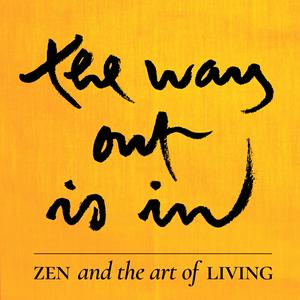
Thich Nhat Hanh’s calligraphy ‘The Way Out Is In” highlights that the way out of any difficulty is to look deeply within, gain insights and then put them into practice.
"The Way Out is In" is co-hosted by Brother Phap Huu, Thich Nhat Hanh's personal attendant for 17 years and the abbot of Plum Village's Upper Hamlet, and Jo Confino, who works at the intersection of personal transformation and systems change.
The podcast is co-produced by the Plum Village App and Global Optimism, with support from the Thich Nhat Hanh Foundation.
Podcast websiteListen to The Way Out Is In, The Modern Buddhism Podcast and many other podcasts from around the world with the radio.net app
Get the free radio.net app
- Stations and podcasts to bookmark
- Stream via Wi-Fi or Bluetooth
- Supports Carplay & Android Auto
- Many other app features
Get the free radio.net app
- Stations and podcasts to bookmark
- Stream via Wi-Fi or Bluetooth
- Supports Carplay & Android Auto
- Many other app features
The Way Out Is In
Scan code,
download the app,
start listening.
download the app,
start listening.
The Way Out Is In: Podcasts in Family
 UK
UK