
Listen to this podcast in the app for free: Download for free in the App Store
radio.net
Sleep timer
Save favourites
13 episodes
Can we switch off diseases?
02/10/2026 | 1h 15 mins.What if treating diseases was as simple as telling your cells to stop making a harmful protein? That’s the premise of siRNA, a technology that silences genes without changing DNA. Just a single dose of siRNA can last for months. Better, it can be reprogrammed to silence a different gene or mutation by simply switching its sequence.
In this episode, Jacob and Saloni explore why it took so long for siRNA to be turned into drugs, why most siRNA drugs so far have targeted liver diseases, and whether they could eventually be used to treat many diseases, from infections to heart disease to rare diseases to cancers.
Hard Drugs is a podcast from Works in Progress about medical innovation presented by Saloni Dattani and Jacob Trefethen.
You can watch or listen on YouTube, Spotify, or Apple Podcasts.
Chapters:
(00:00) - Introduction
(09:58) - siRNA trivia
(28:14) - The 20 year journey to make siRNA drugs
(36:07) - Which diseases could siRNA treat?
(50:45) - Programmable, long-lasting, scaleable drugs
(54:32) - Can siRNA solve everything?
(01:08:23) - Conclusion
Click here to read the episode transcript.
Saloni’s substack newsletter: https://www.scientificdiscovery.dev/
Jacob’s blog: https://blog.jacobtrefethen.com/
Acknowledgements:
Graham Bessellieu, video editor
Abhishaike Mahajan, cover art
Atalanta Arden-Miller, art direction
David Hackett, composer
Articles
Jacob Witten (2026). The kill switch for harmful genes. Works in Progress. https://worksinprogress.co/issue/the-kill-switch-for-harmful-genes/
Virginie Baylot et al. (2024) Between hope and reality: treatment of genetic diseases through nucleic acid-based drugs. https://www.nature.com/articles/s42003-024-06121-9
Chokwassanasakulkit et al. (2024) SiRNAs as antiviral drugs – Current status, therapeutic potential and challenges. https://doi.org/10.1016/j.antiviral.2024.106024
Antonio Fontanellas et al. (2025) RNA-based therapies in liver metabolic diseases. https://doi.org/10.1136/gutjnl-2023-331742Are miracle drugs hiding in plain sight?
24/07/2026 | 2h 31 mins.GLP-1 drugs like Ozempic and Mounjaro have transformed the treatment of obesity as well as diabetes, help treat heart disease, kidney disease, sleep apnea, and maybe even Alzheimer’s. But they are far from the only medicine with more than one use. Aspirin, colchicine, minoxidil, and Viagra were all found to treat more conditions than expected, and about a third of drugs end up with a second approved use.
In this episode, Jacob and Saloni explore the idea of drug repurposing: taking a medicine made for one disease and finding it works against others. They trace how GLP-1 drugs emerged from an adorable Gila monster, why some drugs have multiple uses, why so many of those uses go untested, and how patents, competition, prizes, and platform trials shape whether we ever find them.
Hard Drugs is a podcast from Works in Progress about medical innovation presented by Saloni Dattani and Jacob Trefethen.
You can watch or listen on YouTube, Spotify, or Apple Podcasts.
Chapters:
(00:00) - Introduction
(13:20) - The origins of GLP-1 drugs
(46:07) - GLP-1s for everything?
(01:03:33) - Promiscuous drugs
(01:25:04) - Why isn't drug repurposing more common?
(01:56:39) - How to fix the incentives
Click here to view the episode transcript.
Saloni’s substack newsletter: https://www.scientificdiscovery.dev/
Jacob’s blog: https://blog.jacobtrefethen.com/
Acknowledgements:
Aria Babu, editor at Works in Progress
Graham Bessellieu, video editor
Abhishaike Mahajan, cover art
Atalanta Arden-Miller, art direction
David Hackett, composer
Correction: Saloni misdescribed the mechanism of immortal time bias - it comes from the pre-prescription time being counted in the treatment group, not the control group.
Blogs
Julia Rohrer (2018). The uncanny mountain: p-values between .01 and .10 are still a problem https://www.the100.ci/2018/02/15/the-uncanny-mountain-p-values-between-01-and-10-are-still-a-problem/
Abhishaike Mahajan (2025). Mapping the off-target effects of every FDA-approved drug in existence (EvE Bio) https://www.owlposting.com/p/mapping-the-off-target-effects-of
Videos
George Davey Smith (2026). Does the shingles vaccine prevent dementia? https://www.youtube.com/watch?v=qlTnnQytOJ0
Articles & reports
Radwan Darwish et al. (2025). History of glucagon-like peptide-1 receptor agonists. https://doi.org/10.1016/j.phrs.2025.108045
Brian L. Furman (2012). The development of Byetta (exenatide) from the venom of the Gila monster as an anti-diabetic agent. https://doi.org/10.1016/j.toxicon.2010.12.016
Eric Budish, Maya M. Durvasula, Benjamin N. Roin, Heidi L. Williams (2026). Missing markets for innovation: evidence from new uses for existing drugs. NBER Working paper. https://www.nber.org/system/files/working_papers/w34222/w34222.pdf
Babak Sahragardjoonegani, Reed F Beall, Aaron S Kesselheim, Aidan Hollis (2021). Repurposing existing drugs for new uses: a cohort study of the frequency of FDA-granted new indication exclusivities since 1997. https://pmc.ncbi.nlm.nih.gov/articles/PMC7780607/
BMJ (2020). Covid-19: The inside story of the RECOVERY trial https://www.bmj.com/content/370/bmj.m2670
Stephan Guyenet (2021). The future of weight loss https://worksinprogress.co/issue/the-future-of-weight-loss/
Kevin Hickey, Erin Ward (2024). The Role of Patents and Regulatory Exclusivities in Drug Pricing https://www.congress.gov/crs-product/R46679
Alex Kesin (2025). The three-thousand-year journey of colchicine https://worksinprogress.co/issue/the-three-thousand-year-journey-of-colchicine/
Natália Coelho Mendonça (2024). The promise of SGLT2 inhibitors https://worksinprogress.co/issue/the-future-of-kidney-treatment/
Samy Suissa, Laurent Azoulay (2012). Metformin and the risk of cancer: time-related biases in observational studies https://doi.org/10.2337/dc12-0788
Nicholas Reville (2026). Proposing an NIH High-Leverage Trials (HILT) Program. Center for Addiction Science, Policy, and Research (CASPR) https://caspr.org/policy/papers/HILT/
Web
Smithsonian’s National Zoo. Gila monster. https://nationalzoo.si.edu/animals/gila-monsterInventing the second malaria vaccine with Katharine Collins
27/05/2026 | 2h 15 mins.Malaria is caused not by a virus or bacterium, but by a complex, shape-shifting parasite that has evolved alongside us for millennia. This has made vaccine development a brutal challenge.
In this episode, Jacob and Saloni are joined by Katharine Collins, who co-invented the second malaria vaccine, called R21, during her PhD. They discuss the gruelling process of reverse-engineering a vaccine and eureka moments along the way. They ask whether the biggest barriers to new vaccines are scientific or financial, and what it will take to finally eradicate one of natureʼs most vicious killers.
Hard Drugs is a podcast from Works in Progress about medical innovation presented by Saloni Dattani and Jacob Trefethen.
Timestamps:
00:00 Introduction
05:08 Our favourite parasites
10:12 How to invent a vaccine during your PhD
34:18 Why is it called the R21 vaccine?
37:32 Moving from the bench to billions of doses
41:43 The vicious life cycle of malaria parasites
46:15 Malaria research IN MICE
53:03 The murderer in malaria research
55:51 Would you volunteer to get infected by malaria?
1:08:21 Why did the first malaria vaccine take so long?
1:18:26 Could we have had the vaccine sooner?
1:40:48 Vaccine versus vaccine: which one’s better?
1:46:53 If we did this again today, could we make better vaccines?
2:04:55 Conclusion and our reasons for pessimism and optimism
You can watch or listen on YouTube, Spotify, or Apple Podcasts.
Saloni’s substack newsletter: https://www.scientificdiscovery.dev/
Jacob’s blog: https://blog.jacobtrefethen.com/
Acknowledgements:
Aria Babu, editor at Works in Progress
Graham Bessellieu, video editor
Alice Edwards, captions
Abhishaike Mahajan, cover art
Atalanta Arden-Miller, art direction
David Hackett, composer
Works in Progress
Thesis
Katharine Collins (2014). R21, a novel particle based vaccine for a multi-component approach to malaria vaccination.
Books
R. Killick-Kendrick (2012). Rodent Malaria.
Michael Kremer and Rachel Glennerster (2004). Strong Medicine: Creating Incentives for Pharmaceutical Research on Neglected Diseases.
Articles and reports
Saloni Dattani (2023). Why we didn’t get a malaria vaccine sooner. https://worksinprogress.co/issue/why-we-didnt-get-a-malaria-vaccine-sooner/
Jerome P Vanderberg (2010). Reflections on Early Malaria Vaccine Studies, the First Successful Human Malaria Vaccination, and Beyond https://pmc.ncbi.nlm.nih.gov/articles/PMC2637529/
Pratik Pawar (2022). It Took 35 years to Get a Malaria Vaccine. Why? https://undark.org/2022/05/25/it-took-35-years-to-get-a-malaria-vaccine-why/
Ernst R. Berndt, Rachel Glennerster, Michael R. Kremer, Jean Lee, Ruth Levine, Georg Weizsacker & Heidi Williams (2005) Advanced Purchase Commitments for a Malaria Vaccine: Estimating Costs and Effectiveness. https://www.nber.org/papers/w11288
Ryan Duncombe, Karam Elabd and Justin Sandefur (2024). Avoiding Another Lost Decade on Malaria Vaccines https://www.cgdev.org/publication/avoiding-another-lost-decade-malaria-vaccinesShould everyone be taking statins?
27/02/2026 | 2h 54 mins.Heart disease is the leading cause of death worldwide, but it’s also one of medicine’s biggest success stories. Since the 1950s, the risk of dying from cardiovascular disease has fallen dramatically, thanks to public health efforts, emergency care, medical innovation, and surgeries.
In this episode, Jacob and Saloni explore the cholesterol revolution: from statins discovered in fungi to new drugs that cut LDL cholesterol by 60% and last for months, driven by breakthroughs in genetics, monoclonal antibodies, RNA therapies, and modern medicinal chemistry. They talk about how cholesterol travels through the bloodstream, how it causes atherosclerosis and heart disease, and why it took nearly a century for scientists to form the consensus that lowering cholesterol saves lives.
Hard Drugs is a podcast from Works in Progress and Coefficient Giving about medical innovation presented by Saloni Dattani and Jacob Trefethen.
You can watch or listen on YouTube, Spotify, or Apple Podcasts.
Chapters:
0:00:00 Introduction
13:35 The decline in heart disease mortality
31:02 Surprising facts about cholesterol
55:40 The lipid hypothesis: 7 lines of evidence for the harms of LDL cholesterol
1:22:15 How cholesterol works
1:30:40 The discovery of statins
1:48:44 Should everyone be on statins?
1:57:10 PCSK9 drugs and beyond
2:22:56 Summary
Saloni’s substack newsletter: https://www.scientificdiscovery.dev/
Jacob’s blog: https://blog.jacobtrefethen.com/
Acknowledgements:
Aria Babu, editor at Works in Progress
Graham Bessellieu, video editor
Abhishaike Mahajan, cover art
Atalanta Arden-Miller, art direction
David Hackett, composer
Works in Progress & Coefficient Giving
Correction: In the episode, Saloni makes an error in converting the number of heartbeats per lifetime. It is roughly 2.5 billion beats, not a trillion.
Books
Daniel Steinberg (2007) The Cholesterol Wars.
Jie Jack Li (2009) Triumph of the Heart: The Story of Statins.
Blog posts
James Stein (2025) Lipid and lipoprotein basics series. https://jamesstein18.substack.com/p/part-i-lipid-and-lipoprotein-basics
Articles
Akira Endo (2017) Discovery and Development of Statins https://doi.org/10.1177/1934578X1701200801
Joseph L Goldstein, Michael S Brown (2010) History of discovery: The LDL receptor. https://pmc.ncbi.nlm.nih.gov/articles/PMC2740366/
Patty W. Siri-Tarino and Ronald M. Krauss (2016) The early years of lipoprotein research: from discovery to clinical application https://pubmed.ncbi.nlm.nih.gov/27474223/
Eun Ji Kim and Anthony S. Wierzbicki (2020) The history of proprotein convertase subtilisin kexin-9 inhibitors and their role in the treatment of cardiovascular disease https://pubmed.ncbi.nlm.nih.gov/32537117/
Patrick W. Siri-Tarino et al. (2010) Saturated fat, carbohydrate, and cardiovascular disease. https://www.pnas.org/doi/10.1073/pnas.94.9.4312
Saloni Dattani (2025) Death rates from cardiovascular disease have fallen dramatically — what were the breakthroughs behind this? https://ourworldindata.org/cardiovascular-deaths-decline
Cholesterol Treatment Trialists’ (CTT) Collaboration (2010) Efficacy and safety of more intensive lowering of LDL cholesterol: a meta-analysis of data from 170,000 participants in 26 randomised trials. https://doi.org/10.1016/S0140-6736(10)61350-5
E. J. Mills et al. (2011) Efficacy and safety of statin treatment for cardiovascular disease: a network meta-analysis of 170,255 patients from 76 randomized trials. https://pubmed.ncbi.nlm.nih.gov/20934984/
Julia Brandts and Kausik K. Ray (2023) Novel and future lipid-modulating therapies for the prevention of cardiovascular disease. https://www.nature.com/articles/s41569-023-00860-8
Videos
Ninja Nerd (2018) Lipoprotein metabolism https://www.youtube.com/watch?v=wQY0xpwqPfQThe first cancer vaccine
22/12/2025 | 2h 58 mins.Hepatitis B is a tiny virus that causes hundreds of thousands of deaths from liver disease and cancer each year. The vaccine against it became the first of many milestones: it was the first viral protein subunit vaccine, the first recombinant vaccine, and the first vaccine to prevent a type of cancer.
In this episode, Jacob and Saloni follow the trail of strange jaundice outbreaks that scientists traced to a stealthy liver virus, how scientists turned one viral surface protein into a lifesaving shot for newborns, and how it was all built upon breakthroughs in immunology.
Hard Drugs is a new podcast from Works in Progress and Coefficient Giving about medical innovation presented by Saloni Dattani and Jacob Trefethen.
You can watch or listen on YouTube, Spotify, or Apple Podcasts.
Chapters:
0:00:00 Introducing the hepatitis B vaccine
0:15:46 The mysterious trail of jaundice outbreaks
0:28:03 How a tiny virus causes cirrhosis and liver cancer
0:53:19 Maurice Hilleman's purified hep B vaccine
1:17:36 Turning the hep B vaccine recombinant
1:29:14 The impact of hep B vaccination
1:39:27 The 19th century battle for immunology
2:01:34 How the body makes an almost infinite number of antibodies
2:30:57 How subunit vaccines took over
2:45:33 Conclusion
Saloni’s substack newsletter: https://www.scientificdiscovery.dev/
Jacob’s blog: https://blog.jacobtrefethen.com/
Books:
Paul Offit (2007) Vaccinated: One Man's Quest to Defeat the World's Deadliest Diseases
Arthur M Silverstein (2009) A history of immunology
Ronald W Ellis (1993) Hepatitis B Vaccines in Clinical Practice
Sally Smith Hughes (2011) Genentech: The beginnings of biotech
Articles:
Timothy M. Block et al. (2016) A historical perspective on the discovery and elucidation of the hepatitis B virus https://doi.org/10.1016/j.antiviral.2016.04.012
Naijuan Yao et al. (2022) Incidence of mother-to-child transmission of hepatitis B in relation to maternal peripartum antiviral prophylaxis: A systematic review and meta-analysis https://doi.org/10.1111/aogs.14448
Jill Koshiol et al. (2019) Beasley’s 1981 paper: The power of a well-designed cohort study to drive liver cancer research and prevention https://pmc.ncbi.nlm.nih.gov/articles/PMC5866222/
William J. McAleer et al. (1984) Human hepatitis B vaccine from recombinant yeast https://doi.org/10.1038/307178a0
Chunfeng Qu et al. (2014) Efficacy of Neonatal HBV Vaccination on Liver Cancer and Other Liver Diseases over 30-Year Follow-up of the Qidong Hepatitis B Intervention Study: A Cluster Randomized Controlled Trial https://doi.org/10.1371/journal.pmed.1001774
Anthony R Rees (2020) Understanding the human antibody repertoire https://doi.org/10.1080/19420862.2020.1729683
Correction: Urea was mentioned as a protein, but is actually the product of a protein breakdown process, not a protein itself.
Acknowledgements:
Aria Babu, editor at Works in Progress
Graham Bessellieu, video editor
Abhishaike Mahajan, cover art
Atalanta Arden-Miller, art direction
David Hackett, composer
Works in Progress & Coefficient Giving
More Health & Wellness podcasts



Trending Health & Wellness podcasts












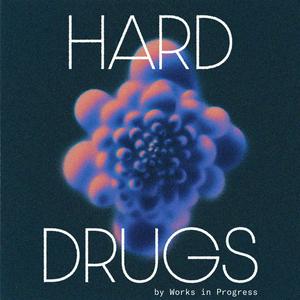
About Hard Drugs
Hard Drugs is a show by Saloni Dattani and Jacob Trefethen about medical innovation: how to speed it up, how to scale it up, and how to make sure lifesaving tools reach the people who need them the most. It is brought to you by Works in Progress.
Podcast websiteListen to Hard Drugs, On The Mend and many other podcasts from around the world with the radio.net app
Get the free radio.net app
- Stations and podcasts to bookmark
- Stream via Wi-Fi or Bluetooth
- Supports Carplay & Android Auto
- Many other app features
Get the free radio.net app
- Stations and podcasts to bookmark
- Stream via Wi-Fi or Bluetooth
- Supports Carplay & Android Auto
- Many other app features

Hard Drugs
Scan code,
download the app,
start listening.
download the app,
start listening.
Hard Drugs: Podcasts in Family
 UK
UK