
Listen to this podcast in the app for free: Download for free in the App Store
radio.net
Sleep timer
Save favourites
240 episodes
Episode 239 - Weight, GLP-1s, and Cancer: Jenny’s Story with Dr. Eleonora Teplinsky
14/10/2026 | 54 mins.This week I’m joined by my lovely friend and community member Jenny Costelloe, alongside oncologist Dr Eleonora Teplinsky, to talk about something I know so many of you will relate to: weight changes after cancer treatment, the struggle to lose weight during ongoing treatment, and the growing conversation around GLP-1 medications.
But this episode is really about much more than weight.
It’s about what happens when cancer treatment, menopause, joint pain, changes to your body and quality of life all collide – and how we begin to work out what might actually help.
Jenny shares her breast cancer story and talks very honestly about the impact surgical menopause and endocrine therapy have had on her body and her life. At one point, she describes feeling almost physically broken – dealing with weight gained through chemotherapy and treatment, reduced mobility and persistent pain that was making everyday life increasingly difficult.
We also hear from board-certified oncologist Dr Eleonora Teplinsky, who helps us understand the emerging evidence around GLP-1 medications after cancer, what we know and still don’t know, and why conversations about weight, metabolic health, symptoms and being able to stay on cancer treatment really matter.
And I love something Jenny says during our conversation:
“This is just about finding the path that works for you individually.”
I couldn’t agree more.
Episode Highlights:
00:00 Intro
05:35 Navigating menopause during cancer treatment
08:09 Considering GLP-1s and BMI thresholds
12:12 Dr Eleonora Teplinsky’s perspective on menopausal concerns
17:06 Impact of endocrine therapy on weight
17:55 Challenges in weight management and sleep
21:00 Exploring GLP-1s and cancer risk
24:17 Concerns with GLP-1 and lifestyle changes
27:36 Discussing weight loss medication options
32:26 Starting GLP-1s with no side effects
35:43 Reduced alcohol craving on GLP-1
40:17 Struggles with post-treatment life
41:36 Starting strength training journey
44:46 Evaluating cancer treatment effects
You can find Dr Teplinsky here:
https://www.instagram.com/drteplinsky/?hl=en
Dr Teplinsky’s book: Beyond the Pink: Navigating Life, Health, and Breast Cancer
Is here: https://www.waterstones.com/book/beyond-the-pink/eleonora-teplinsky/9781538777145?sv1=affiliate&sv_campaign_id=57434&awc=3787_1787842057_ae304a0903d89dccf48ecd30b2f05367&sn=1&utm_source=57434&utm_medium=affiliate&utm_campaign=Easyfundraising
And here is the article on GLP1’s Dani mentions in the podcast: https://www.oncnursingnews.com/view/glp-1-receptor-agonists-show-promise-in-asco-2026-research
A note on GLP-1 microdosing: The term microdosing does not currently have a universally accepted scientific definition. It can refer to different approaches to dosing GLP-1 medications, and the evidence supporting these approaches varies. Listeners should not assume that microdosing is an established or clinically recommended practice. Always consult a qualified healthcare professional before making changes to prescribed medication.Episode 238 - Creatine After Cancer: Could It Help Us Get Stronger?
07/10/2026 | 38 mins.Everyone’s Talking About Creatine. But Should Cancer Survivors Take It?
Creatine seems to be everywhere right now. But what actually is it, what can it do for our strength and muscle, and the big question for this community: is it safe to take after cancer, and can it help with symptoms of menopause?
Today I have two brilliant experts to help us understand both the potential benefits and the safety of creatine after a cancer diagnosis.
First, you'll hear from Dr Eleonora Teplinsky, medical oncologist, who helps us unpack what we currently know — and importantly, what we still don't know — about creatine and cancer. The evidence specifically in people affected by cancer is still limited, so this is an important part of the conversation.
Then I'm joined by Sarah Newman, oncology exercise specialist and founder of Get Me Back, to take the conversation into the practical world of exercise, strength and recovery after cancer.
We talk about what creatine actually does, why maintaining muscle matters so much as we age and go through menopause, and why resistance training is such an important part of the picture.
We also get practical:
Do you have to lift heavy weights?
How often should we be strength training?
Can creatine help if you're not an athlete?
What type should you take?
Does it cause weight gain?
And where should someone start if cancer treatment has left them feeling weak, exhausted or simply disconnected from exercise?
Because this isn't really an episode about taking a scoop of powder.
It's a conversation about rebuilding strength after cancer, understanding our bodies, and finding out what might genuinely help us feel stronger again.
Episode Highlights:
00:00 Intro
04:37 Building healthy habits step-by-step
08:13 Building strength after cancer treatment
10:46 Discussing exercise and creatine use
14:59 Importance of diet and recovery
16:54 Concerns about effective muscle maintenance
22:58 Creating supportive exercise spaces
26:34 Rebuilding muscle after chemotherapy
27:57 Incorporating exercise for bone health
32:37 Benefits of strength training
34:30 Supporting diverse health needs
Disclaimer: This episode is for education and information and isn't a substitute for personalised medical advice. Please speak with your healthcare team before starting creatine or any new supplement, particularly during cancer treatment or if you have other medical conditions. Current cancer-specific evidence on creatine remains limited. (Oncology Nursing Society)
Here are the links mentioned in this episode:
Dr Teplinsky’s article on Creatine: https://drteplinsky.substack.com/p/creatine-supplementation-after-a
Find Sarah and her Get me Back Exercise Programs here: https://www.getmeback.uk/
Find Dr Teplinsky’s new book here: https://www.waterstones.com/book/beyond-the-pink/eleonora-teplinsky/9781538777145Episode 237 - Beyond Tamoxifen and AIs: Are SERDs the New Kids on the Block?
30/09/2026 | 38 mins.What if tamoxifen and aromatase inhibitors weren’t the only options?
For many people with hormone receptor-positive breast cancer, endocrine therapy can be lifesaving – but it can also be incredibly difficult to live with. Joint pain, sleep problems, sexual health changes, bone health, weight and metabolic changes can all have a significant impact on day-to-day life.
And for some, the question becomes: what else is there?
In this episode, Dani is joined by oncologist Dr Eleonora Teplinsky, author of Beyond the Pink: Navigating Life, Health, and Breast Cancer, to explore the changing landscape of breast cancer treatment and survivorship.
One of the big topics is SERDs – a newer generation of endocrine therapies that are creating a lot of interest in the breast cancer world. What are they? How are they different from tamoxifen and aromatase inhibitors? What did we learn from the LIDERA study? And could having more endocrine treatment options eventually make a meaningful difference for patients struggling with side effects?
But, as always, this isn't only about the science.
Dani also sits down with Rachel Bowman, breast cancer survivor and Director at Menopause and Cancer, to mull over what all of this actually means when you’re the person taking these treatments
Dr Teplinsky also shares the thinking behind her new book, Beyond the Pink, which brings together evidence-based, practical information about the questions people often don't have enough time to explore during an oncology appointment.
Here are the links mentioned in this episode:
Find Dr Teplinsky’s new book here: https://www.waterstones.com/book/beyond-the-pink/eleonora-teplinsky/9781538777145
Watch this Substack video with Dr Teplinsky on Serds: https://drteplinsky.substack.com/p/ob-gyn-x-oncologist-session-2-asco
Episode Highlights:
00:00 Introduction
04:31 Discussing rising early-onset cancers with Dr Teplinsky
09:05 Discussing limitations of current treatments
11:46 Uncertainty with new treatments
16:26 Acknowledging emotional struggles post-chemo
19:10 Evolving breast cancer treatment
22:07 Cancer treatment advancements discussion with Rachel
24:06 Discussing cancer drug availability
28:17 Managing menopause and cancer treatment
31:52 HRT journey in Dubai
36:08 Encouragement for endocrine therapy patients
Connect with us:
For more information and resources, visit our website: www.menopauseandcancer.org
Follow us on Instagram @menopause_and_cancer
Find us on YouTube: http://www.youtube.com/@NavigatingMenopauseAfterCancer
Join my NEW blog ‘Still Becoming’ on Substack: https://substack.com/@danibinnington?...
Buy my book ‘Navigating Menopause After Cancer’: https://amzn.eu/d/07dUoYBb
Join our Facebook group: www.facebook.com/groups/menopauseandcancerchathubEpisode 236 - The 5 Things I Know About Menopause After Cancer
23/09/2026 | 37 mins.After more than 200 episodes of conversations with doctors, researchers, therapists, cancer specialists and, most importantly, people navigating menopause after cancer themselves, I’ve learned a lot.
Last week, a dream came true, and we hosted our first global menopause and cancer conference for healthcare professionals - and so for this episode, I’m doing something a little different.
I’m sharing five things I now know to be true (I know, a bold statement!) about menopause after cancer. Things I’ve learned at the conference and things I’ve learned over the years.
You might disagree with me - but here are mine (for today anyway!):
There is rarely one “right” answer.
Especially when it comes to HRT after cancer, risk and personal choice.
Treatment shouldn't mean simply putting up with everything.
We need to talk about the impact of treatments such as tamoxifen and aromatase inhibitors — and what can be done to help.
The things that might sound “small” can have an enormous impact.
Hair, vaginal and bladder symptoms, painful sex, body changes — these things matter.
Menopause after cancer isn't just physical.
Anxiety, sleep, confidence, relationships, identity and that feeling of “Who am I now?”
There is almost always something we can do.
We need to look beyond the medical and expand our thinking. From non-hormonal medications and symptom-specific treatments to movement, sleep, psychological support, lifestyle and community — often it's about finding your own combination of things that help.
Episode Mentions:
Episode 74 - Why Would a Menopause Specialist Who Had Breast Cancer Take HRT?
Episode 71 - Combat Hair Issues in Menopause After Cancer
Episode 75 - From Anxiety to PRSD with Dr Nina Fuller-Shavel
Episode Highlights:
00:00 Intro: Four years of podcasting milestones
04:48 Reflection on September's new beginnings
12:47 Discussing treatment after cancer
17:08 Podcast impact on cancer treatment
27:31 Struggling with menopause and mental health
29:34 Finding support in online groups
34:46 Navigating menopause after cancer
Connect with us:
For more information and resources, visit our website: www.menopauseandcancer.org
Follow us on Instagram @menopause_and_cancer
Find us on YouTube: http://www.youtube.com/@NavigatingMenopauseAfterCancer
Join my NEW blog ‘Still Becoming’ on Substack: https://substack.com/@danibinnington?...
Buy my book ‘Navigating Menopause After Cancer’: https://amzn.eu/d/07dUoYBb
Join our Facebook group: www.facebook.com/groups/menopauseandcancerchathubEpisode 235 - Why Testosterone After Breast Cancer Is Becoming a Mainstream Conversation
16/09/2026 | 55 mins.Ah, this was a great start to such an important episode! I literally did no planning AT ALL! I just wanted to know from Dr Jordan Emont, our guest on today’s show, if there is a common question he gets asked by his patients in his clinic.
And after getting such lovely personal insights into Jordan’s life, we ended up having an evidence-based conversation about testosterone after cancer, especially for people navigating menopause after breast cancer.
We dig into why access in the US is getting harder not easier and how clinicians think about balancing quality of life with safety when the data is still limited.
This episode is so true to all the conversations we have on this podcast because it sits right in the middle of a real-world clinical grey area: patients want relief, oncologists want reassurance, and doctors are trying to make thoughtful decisions without perfect long-term trials.
Jordan also shares how this topic is evolving in guidelines, why he thinks testosterone can help some people stay on aromatase inhibitors, and where caution still makes sense.
Episode Highlights:
00:00 Intro
09:57 Challenges in Women's Health Narratives
13:37 Differences in hormone treatments
17:25 Aromatase inhibitors in breast cancer
18:55 Discussing testosterone for cancer survivors
23:15 Testosterone use and sexual health
25:54 Discussing health and energy levels
30:10 Long-term safety of testosterone use
32:10 Checking testosterone levels timing
35:58 Balancing safety and quality of life
40:54 Testosterone's role in breast cancer
44:39 Discussing hormone therapy benefits
48:47 Testosterone use after prostate cancer
Here are Dr Emont’s links:
Here is his Substack about testosterone this which he’s made free to access: https://drjordanemont.substack.com/p/testosterone-after-breast-cancer
Here’s Dr Sarah Glynne's paper on testosterone to treat menopausal symptoms: https://journals.lww.com/menopausejournal/fulltext/10.1097/gme.0000000000002777~use-of-transdermal-testosterone-to-treat-menopausal-symptoms
Connect with us:
For more information and resources, visit our website: www.menopauseandcancer.org
Follow us on Instagram @menopause_and_cancer
Find us on YouTube: http://www.youtube.com/@NavigatingMenopauseAfterCancer
Join my NEW blog ‘Still Becoming’ on Substack: https://substack.com/@danibinnington?...
Buy my book ‘Navigating Menopause After Cancer’: https://amzn.eu/d/07dUoYBb
Join our Facebook group: www.facebook.com/groups/menopauseandcancerchathub
More Health & Wellness podcasts






Trending Health & Wellness podcasts










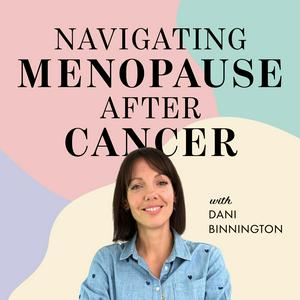
About Navigating Menopause After Cancer
Has cancer treatment led you to early menopause? Do you feel confused about your options? This podcast hosts conversations with cancer patients, survivors and medical professionals to learn about treatments available for women with a cancer diagnosis.
I’m Dani Binnington, after breast cancer, surgery to remove my ovaries led me to early menopause, I had no idea what my treatment options were and who in my medical team could help me figure out what to do about my symptoms. I felt alone and unsupported. It took me so long to discover I had lots of options too.
If only I’d known sooner!
Everything I wish I’d known back then is inside these conversations - so you can make the right choices now.
Podcast websiteListen to Navigating Menopause After Cancer, The High Performance Podcast and many other podcasts from around the world with the radio.net app
Get the free radio.net app
- Stations and podcasts to bookmark
- Stream via Wi-Fi or Bluetooth
- Supports Carplay & Android Auto
- Many other app features
Get the free radio.net app
- Stations and podcasts to bookmark
- Stream via Wi-Fi or Bluetooth
- Supports Carplay & Android Auto
- Many other app features
Navigating Menopause After Cancer
Scan code,
download the app,
start listening.
download the app,
start listening.
 UK
UK