
Listen to this podcast in the app for free: Download for free in the App Store
radio.net
Sleep timer
Save favourites
221 episodes
Unmasking Our Health: ADHD, IBS & the gut-brain connection
19/10/2026 | 58 mins.Episode 219 with Katy Weber & Kalin Johnson
Welcome back to our ongoing series, “Unmasking Our Health,” in which host Katy Weber teams up with medical expert Dr. Kalin Johnson, PharmD, to look beyond the neurodivergent brain and explore what it means to live in a neurodivergent body.
In this episode, we explore the relationship between ADHD and gut health, including IBS, constipation, diarrhea, bloating, and abdominal pain. We discuss how the gut and brain communicate, why ADHD-related behaviors, routines, and medication can all affect digestion, and why a one-size-fits-all approach to gut health can miss what an individual actually needs.
The conversation also looks at what supportive care can involve: listening to your body, making manageable changes, and finding a provider who’s curious about the whole picture — not just one symptom.
In this episode, we cover:
What IBS is and how it’s diagnosed
How ADHD and gastrointestinal symptoms may be associated
The two-way communication between the gut and brain
How stress, routines, hydration, eating patterns, and body cues can affect digestion
Potential effects of stimulants, SSRIs, and antibiotics on gut symptoms
Why fiber, fermented foods, and other common recommendations aren’t right for everyone
How to look for care that considers ADHD and the whole person
Why small, sustainable changes may feel more manageable than a complete overhaul
Note: Nothing in this episode constitutes medical advice. Always consult with your physician and pharmacist before starting, stopping, or changing any medication.
Kalin’s website: kalinjohnson.com
Instagram: @kalinpharmd
Links & Resources:
The Association Between Attention-Deficit Hyperactivity Disorder and Gastrointestinal Symptoms: A Systematic Review and Meta-Analysis
Have a topic you want Katy and Kalin to cover? Contact us
- - - - -
Episode edited by E Podcast Productions
- - - - -
Women & ADHD coaching: www.womenandadhd.com/coaching
- - - - -
Work 1-on-1 with Katy: www.womenandadhd.com/katy
- - - - -
Order the “Hey, it’s ADHD!” course: www.womenandadhd.com/adhdcourse
- - - - -
Did you love this episode? Click here to pledge a one-time donation to the podcast!
- - - - -
If you are a woman who was diagnosed with ADHD and you’d like to apply to be a guest on this podcast, visit womenandadhd.com/podcastguest.
Instagram: @womenandadhdpodcast
Tiktok: @womenandadhdpodcast
Twitter: @womenandadhd
Facebook: @womenandadhd
Advertising Inquiries: https://redcircle.com/brands
Privacy & Opt-Out: https://redcircle.com/privacyGreer Jones: The relief (and complexity) of an adult diagnosis
05/10/2026 | 51 mins.Episode 218 with Greer Jones.
Greer is the creator of The Unfinished Idea, a community that supports mamas raising neurodivergent kids. After her son, husband, and later herself were diagnosed, she walked through a dark season of overwhelm, burnout, and isolation. Over time, she discovered people and rhythms that supported her neurodivergent brain, rebuilt her family’s routines, and found the lights that guided her out — community, real stories, and small wins that gave her hope again. Today, she uses her voice, lived experience, and practical tools to help overwhelmed neurodivergent moms feel understood, equipped, and confident in the lives they’re building.
In our conversation, Greer shares what it was like to pursue an adult diagnosis in the UK, advocate for her neurodivergent son, and make sense of the ways ADHD has shaped her life. We talk about the relief of finally having an explanation, the grief and self-compassion that can come with looking back, and why ADHD in women doesn’t always look like hyperactivity on the outside.
We explore what meaningful connection can look like when life is messy, schedules are unpredictable, and nobody has all the answers. And finally, we talk about the Beautifully Wired Summit — a free, three-day online event hosted by Greer, bringing together over 20 experts to share practical, real-life strategies for raising neurodivergent kids. From navigating meltdowns and school advocacy to creating doable daily routines, it’s packed with neuro-affirming tools that actually work. The summit takes place October 5th through 7th, and you can grab your free ticket right now by heading to womenandadhd.com/summit. I’ve also placed that link right at the top of the show notes for you.
Key topics:
How Greer’s son’s diagnoses helped her recognize her own ADHD
What Greer’s UK diagnosis process was like
Why ADHD in women may not match familiar stereotypes
The relief—and complexity—of receiving a diagnosis as an adult
Advocating for a neurodivergent child in the school system
Racing thoughts, emotional intensity, and decision fatigue
How The Unfinished Idea grew into a podcast, business, and community
Creating flexible, vulnerable connection for neurodivergent moms
The Beautifully Wired Summit and its focus on ADHD and autism in girls and women
Website: theunfinishedidea.com
Instagram: @theunfinishedidea
Links & Resources:
Greer’s podcast: Neurodivergent Conversations
- - - - -
Episode edited by E Podcast Productions
- - - - -
Women & ADHD coaching: www.womenandadhd.com/coaching
- - - - -
Work 1-on-1 with Katy: www.womenandadhd.com/katy
- - - - -
Order the “Hey, it’s ADHD!” course: www.womenandadhd.com/adhdcourse
- - - - -
Did you love this episode? Click here to pledge a one-time donation to the podcast!
- - - - -
If you are a woman who was diagnosed with ADHD and you’d like to apply to be a guest on this podcast, visit womenandadhd.com/podcastguest.
Instagram: @womenandadhdpodcast
Tiktok: @womenandadhdpodcast
Twitter: @womenandadhd
Facebook: @womenandadhd
Advertising Inquiries: https://redcircle.com/brands
Privacy & Opt-Out: https://redcircle.com/privacyUnmasking Our Health: Hypermobility & hypermobile Ehlers-Danlos syndrome (hEDS), Part 2
21/09/2026 | 1h 3 mins.Episode 217 with Katy Weber & Kalin Johnson
Welcome back to our new series, “Unmasking Our Health,” in which host Katy Weber teams up with medical expert Dr. Kalin Johnson, PharmD, to look beyond the neurodivergent brain and explore what it means to live in a neurodivergent body.
After years of interviewing late‑diagnosed women and seeing the same patterns — chronic pain, fatigue, autoimmune issues, hormonal chaos, gut problems, “mystery” symptoms — Katy created the Unmasking Our Health series to explore the bigger questions behind neurodivergence: What if ADHD isn’t just about our brains, but about our whole bodies — and how and why is the medical system missing the full picture?
In Part 2 of a 2-part series, we continue the conversation on hypermobility, hypermobile Ehlers-Danlos Syndrome, and the often misunderstood symptoms that can show up alongside ADHD and autism. This episode focuses on the signs people miss, why those symptoms happen, and what kinds of support may help rather than hurt.
Kalin explains the connective tissue and autonomic nervous system connections behind bruising, fatigue, digestive issues, migraines, dizziness, pelvic floor problems, and joint pain, while Katy shares personal examples of how these patterns have shown up in her own life.
In this episode, we cover:
A recap of Part 1, including hypermobility, hypermobile EDS, the Beighton score, and the connection with neurodivergence
Why bruising, slow wound healing, nosebleeds, and fragile blood vessels can occur
Proprioception, balance, spatial awareness, and why “clumsiness” may be more than distraction
Fear of falling and the increased risk of pain or injury in hypermobile bodies
Constant bracing, muscle guarding, and why hypermobile people may feel exhausted even while resting
Digestive symptoms, including constipation, bloating, slow motility, and dysmotility
Migraines, neck tension, craniocervical instability, POTS, and blood-flow regulation
Dizziness upon standing, fluid pooling, low blood volume, electrolytes, and compression
Pelvic floor issues, urinary symptoms, incomplete emptying, and prolapse
Skin texture, softness, stretchiness, and translucency
Why aggressive stretching and yoga can sometimes worsen instability and pain
Strength training, swimming, pacing, and learning to stop before end range
Estrogen, perimenopause, muscle building, and hypermobility symptoms
Collagen, creatine, and what supplements can and cannot do
Exercise intolerance, internalized beliefs about laziness, and body shame
Finding healthcare providers who are knowledgeable, curious, and willing to listen
Note: Nothing in this episode constitutes medical advice. Always consult with your physician and pharmacist before starting, stopping, or changing any medication.
Kalin’s website: kalinjohnson.com
Instagram: @kalinpharmd
Links & Resources:
The Beighton Scoring System
Hypermobility Screening Tool
Growing Up with Ehlers-Danlos Syndrome: 27 Telltale Signs
Chronic Pain Partners
Have a topic you want Katy and Kalin to cover? Contact us
- - - - -
Episode edited by E Podcast Productions
- - - - -
Women & ADHD coaching: www.womenandadhd.com/coaching
- - - - -
Work 1-on-1 with Katy: www.womenandadhd.com/katy
- - - - -
Order the “Hey, it’s ADHD!” course: www.womenandadhd.com/adhdcourse
- - - - -
Did you love this episode? Click here to pledge a one-time donation to the podcast!
- - - - -
If you are a woman who was diagnosed with ADHD and you’d like to apply to be a guest on this podcast, visit womenandadhd.com/podcastguest.
Instagram: @womenandadhdpodcast
Tiktok: @womenandadhdpodcast
Twitter: @womenandadhd
Facebook: @womenandadhd
Advertising Inquiries: https://redcircle.com/brands
Privacy & Opt-Out: https://redcircle.com/privacyElizabeth Ahmann & Micah Saviet: How clinicians and coaches can help ADHD clients flourish
07/09/2026 | 59 mins.Episode 216 with Elizabeth Ahmann & Micah Saviet
Elizabeth Ahmann, ScD, RN, PCC, NBC-HWC is an ADHD and health and wellness coach, professor, researcher, and Micah Saviet, LCSW-C, NBC-HWC is a trauma-informed, neurodiversity-affirming clinician.
Their book, Flourishing with Adult ADHD, offers a research-informed, strengths-based, and trauma-informed framework for supporting adults with ADHD beyond symptom management. Grounded in neuroscience, psychology, public health, and wellness research, the book challenges deficit-based models and provides practical, affirming guidance for professionals supporting adults with ADHD.
Rather than focusing solely on coping strategies, this book centers flourishing — supporting adults with ADHD in developing self-trust, self-compassion, emotional regulation, clarity, and lives aligned with their values.
We talk about how coaching and therapy can work together, why Liz and Micah originally wrote the book for clinicians but found it resonated with adults with ADHD, and their hopes for the future of ADHD care, from better training to broader acceptance.
Key topics:
Micah shares that he was diagnosed with ADHD at age 11 and describes how his hyperactivity was noticeable early on.
Liz explains that she has not been diagnosed with ADHD, but family experience, especially with her husband, led her into ADHD coaching.
The conversation reframes ADHD as a difference in attention and regulation, not simply a deficit.
Micah and Liz explain that their book grew out of research on ADHD coaching and focus groups with experienced coaches.
Shame comes up repeatedly as one of the biggest barriers to growth, self-understanding, and flourishing for adults with ADHD.
They emphasize that many therapists and coaches still lack meaningful training in ADHD, especially adult ADHD, masking, and neurodivergence.
The episode draws a clear distinction between a deficit-based medical model and a client-centered, strengths-based approach.
They discuss how coaching and therapy can complement each other rather than compete, especially when grief, trauma, and executive functioning challenges overlap.
Validation, self-compassion, psychoeducation, and mindfulness are presented as foundational tools for helping clients move away from self-criticism.
The conversation also addresses diagnosis, stigma, trauma, education trauma, and the social conditions that can make ADHD feel more impairing than it is in isolation.
Website: https://www.pathways-ahead.com/ ; https://www.adulttraumaandadhdsolutions.com
Instagram: @adulttrauma_adhdsolutions
LinkedIn: https://www.linkedin.com/in/micah-saviet/ ; https://www.linkedin.com/in/lizahmann/
Links & Resources:
Flourishing with Adult ADHD: The Evidence-Based Guide to Well-Being for Therapists, Coaches & Clients
Kristin Neff’s self-compassion resources
- - - - -
Episode edited by E Podcast Productions
- - - - -
Women & ADHD coaching: www.womenandadhd.com/coaching
- - - - -
Work 1-on-1 with Katy: www.womenandadhd.com/katy
- - - - -
Order the “Hey, it’s ADHD!” course: www.womenandadhd.com/adhdcourse
- - - - -
Did you love this episode? Click here to pledge a one-time donation to the podcast!
- - - - -
If you are a woman who was diagnosed with ADHD and you’d like to apply to be a guest on this podcast, visit womenandadhd.com/podcastguest.
Instagram: @womenandadhdpodcast
Tiktok: @womenandadhdpodcast
Twitter: @womenandadhd
Facebook: @womenandadhd
Advertising Inquiries: https://redcircle.com/brands
Privacy & Opt-Out: https://redcircle.com/privacyUnmasking Our Health: Hypermobility & hypermobile Ehlers-Danlos syndrome (hEDS), Part 1
17/08/2026 | 58 mins.Episode 215 with Katy Weber & Kalin Johnson
Welcome back to our new series, “Unmasking Our Health,” in which host Katy Weber teams up with medical expert Dr. Kalin Johnson, PharmD, to look beyond the neurodivergent brain and explore what it means to live in a neurodivergent body.
After years of interviewing late‑diagnosed women and seeing the same patterns — chronic pain, fatigue, autoimmune issues, hormonal chaos, gut problems, “mystery” symptoms — Katy created the Unmasking Our Health series to explore the bigger questions behind neurodivergence: What if ADHD isn’t just about our brains, but about our whole bodies — and how and why is the medical system missing the full picture?
In part one of a 2-part series, we unpack hypermobile Ehlers-Danlos syndrome (hEDS) and hypermobility, and why these connective tissue conditions so often show up alongside ADHD and autism. This episode focuses on the lived experience, the diagnostic gray areas, and the body-wide symptoms that can look unrelated until you understand the connective tissue thread running through them.
We discuss how hypermobility is different from flexibility, why the Beighton score can miss real cases, and why symptoms like bruising, pain, dizziness, brain fog, and poor stamina often get mislabeled as “just clumsiness” or “just anxiety.”
In this episode, we cover:
The difference between hypermobility spectrum disorder and hypermobile EDS, including the extra diagnostic criteria for hEDS beyond joint laxity
Kalin explains the difference between flexibility and hypermobility using the rope-versus-bolts analogy
The Beighton score is helpful as a screening tool, but it only checks five joints and can miss people whose hypermobility shows up elsewhere, especially with age
Kalin shares her diagnosis story, including years of worsening symptoms, specialist dead ends, and being told it was mental health before the physical pattern was recognized
We discuss why ADHD and autism appear more often in hypermobile people, with possible shared genetics, connective tissue differences in the brain, autonomic nervous system dysregulation, and altered sensory processing
The connections between hEDS and POTS, orthostatic intolerance, fatigue, GI symptoms, interoception differences, mast cell issues, and inflammation
Common real-life clues like “party tricks,” joint pain in yoga, easy bruising, weak grip, poor stamina, and the feeling of being “a creaky old lady” after sitting too long
Why car rides, standing still, and long periods of upright posture can be especially hard because of blood flow, proprioception, and joint instability
Why some people with hEDS need more numbing medication at the dentist, and why urinary leakage, pelvic floor fatigue, and foot pain can all be part of the same connective tissue story
Practical next steps: track symptoms, document family history, protect joints and autonomic function, and look for a provider or physical therapist familiar with hEDS
Note: Nothing in this episode constitutes medical advice. Always consult with your physician and pharmacist before starting, stopping, or changing any medication.
Kalin’s website: kalinjohnson.com
Instagram: @kalinpharmd
Links & Resources:
NYT Magazine article: Inflammation Keeps Us Alive. It's Also Making Us Sick.
ADDitude Magazine: Bendy Bodies, ADHD Brains: Connecting the Dots
The Beighton Scoring System
Hypermobility Screening Tool
Growing Up with Ehlers-Danlos Syndrome: 27 Telltale Signs
Have a topic you want Katy and Kalin to cover? Contact us
- - - - -
Episode edited by E Podcast Productions
- - - - -
Women & ADHD coaching: www.womenandadhd.com/coaching
- - - - -
Work 1-on-1 with Katy: www.womenandadhd.com/katy
- - - - -
Order the “Hey, it’s ADHD!” course: www.womenandadhd.com/adhdcourse
- - - - -
Did you love this episode? Click here to pledge a one-time donation to the podcast!
- - - - -
If you are a woman who was diagnosed with ADHD and you’d like to apply to be a guest on this podcast, visit womenandadhd.com/podcastguest.
Instagram: @womenandadhdpodcast
Tiktok: @womenandadhdpodcast
Twitter: @womenandadhd
Facebook: @womenandadhd
Advertising Inquiries: https://redcircle.com/brands
Privacy & Opt-Out: https://redcircle.com/privacy
More Education podcasts








Trending Education podcasts








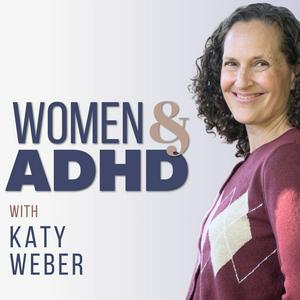
About Women & ADHD
A late diagnosis turned her world upside down. Now Katy Weber interviews women who discovered they have ADHD in adulthood, while exploring the topics and life experiences unique to adult-diagnosed neurodivergent women. Women & ADHD is a community for those who are finally understanding themselves, finding validation, and learning to lean into their strengths, both professionally and personally. For more information and support, visit https://www.womenandadhd.com.
Podcast websiteListen to Women & ADHD, IMO with Michelle Obama and Craig Robinson and many other podcasts from around the world with the radio.net app
Get the free radio.net app
- Stations and podcasts to bookmark
- Stream via Wi-Fi or Bluetooth
- Supports Carplay & Android Auto
- Many other app features
Get the free radio.net app
- Stations and podcasts to bookmark
- Stream via Wi-Fi or Bluetooth
- Supports Carplay & Android Auto
- Many other app features
Women & ADHD
Scan code,
download the app,
start listening.
download the app,
start listening.
Women & ADHD: Podcasts in Family
 UK

