
Listen to this podcast in the app for free: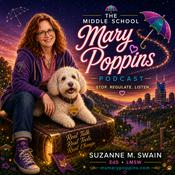 Download for free in the App Store
radio.net
Sleep timer
Save favourites
The Middle School Mary Poppins Podcast
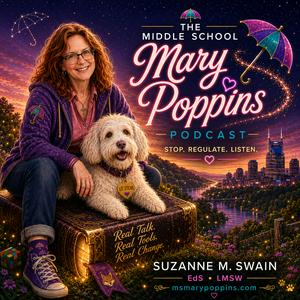
The Middle School Mary Poppins Podcast with Suzanne Swain, EdS LMSW
Latest episode
47 episodes
Talking in Your Sleep: Why Sleep Is a Middle School Superpower
20/10/2026 | 40 mins.Why can a middle schooler be wide awake late at night and nearly impossible to wake up in the morning?
Why does sleep matter so much for learning, memory, growth, mood, and emotional regulation? And what in the world is your brain doing when you dream?
In this episode of The Middle School Mary Poppins Podcast, Suzanne explores what really happens in the adolescent brain and body during sleep.
We talk about circadian rhythms, why puberty can shift sleep timing later, how deep sleep supports growth and physical restoration, what REM sleep does, and why cutting sleep short can affect attention, memory, decision-making, and school performance.
We also get into dreams: why they can feel so real, why they can be completely bizarre, and why there is no scientifically proven dream dictionary where one symbol means the same thing for everyone. Instead, we look at the emotions inside dreams and what they may tell us about how the brain is processing experiences.
There are also practical ideas for families, including a simple “landing strip” before bed, the problem with social jet lag on weekends, and a seven-day Sleep Detective Challenge to help kids notice how sleep affects their own mood, focus, and energy.
And yes, Lieutenant Steve makes an appearance, along with his new best friend and preferred chin rest, Jimothy the raccoon.
Suzanne also introduces a brand-new companion podcast, Bedtime Stories for Middle School Hearts, featuring gentle, imaginative animal stories created especially for middle schoolers who still want comfort, humor, and a softer place to land at the end of the day.
Visit MsMaryPoppins.com for more episodes, resources, and updates.
Short description / summary:
What happens to the middle school brain during sleep? Suzanne explores circadian rhythms, deep sleep, REM, dreams, learning, memory, emotional regulation, and why quality sleep is one of the most underrated middle school superpowers.
Tags:
middle school, tween, teens, parenting, parenting tweens, parenting teens, adolescent development, sleep, sleep deprivation, teen sleep, tween sleep, circadian rhythm, melatonin, REM sleep, deep sleep, dreams, dream science, adolescent brain, brain development, learning, memory, emotional regulation
Become a supporter of this podcast: https://www.spreaker.com/podcast/the-middle-school-mary-poppins-podcast--7467210/support.
☂️ CONNECT WITH THE MIDDLE SCHOOL MARY POPPINS PODCAST™
Website • Episodes • Resources • More
https://msmarypoppins.com
🎧 Listen and follow The Middle School Mary Poppins Podcast™ wherever you get your podcasts.
📺 YouTube
https://youtube.com/@middleschoolmarypoppinspodcast
💌 CONTACT
Media • Speaking • Sponsorships • Advertising • Brand Partnerships
suzanneswain@gmail.com
Listener correspondence & messages for Lieutenant Steve 🐾
dearstevemsmp@gmail.com
The Middle School Mary Poppins Podcast™ is independently produced. Partnerships are considered based on mission alignment, relevance, and appropriateness for young people, families, educators, and schools.
Stop. Regulate. Listen. ☂️
Helping adults understand the kids in the middle.
© The Middle School Mary Poppins Podcast™MSMP Special: Bedtime Prayer for Bend, Oregon
16/10/2026 | 2 mins.A quiet bedtime prayer and audio hug for the children, families, educator, and community of Bend, Oregon. Tonight, we simply hold them close in our hearts and send love, comfort, and kindness.
Become a supporter of this podcast: https://www.spreaker.com/podcast/the-middle-school-mary-poppins-podcast--7467210/support.
☂️ CONNECT WITH THE MIDDLE SCHOOL MARY POPPINS PODCAST™
Website • Episodes • Resources • More
https://msmarypoppins.com
🎧 Listen and follow The Middle School Mary Poppins Podcast™ wherever you get your podcasts.
📺 YouTube
https://youtube.com/@middleschoolmarypoppinspodcast
💌 CONTACT
Media • Speaking • Sponsorships • Advertising • Brand Partnerships
suzanneswain@gmail.com
Listener correspondence & messages for Lieutenant Steve 🐾
dearstevemsmp@gmail.com
The Middle School Mary Poppins Podcast™ is independently produced. Partnerships are considered based on mission alignment, relevance, and appropriateness for young people, families, educators, and schools.
Stop. Regulate. Listen. ☂️
Helping adults understand the kids in the middle.
© The Middle School Mary Poppins Podcast™2 Life Truths & a Lie: Critical Thinking Brain Training Game - Week 2
13/10/2026 | 32 mins.2 Life Truths and a Lie: Busting Cognitive Distortions - Critical Thinking Brain Training Pt. 2What if your brain is telling you a story that feels completely true… but isn’t?In Season 4, Episode 4 of The Middle School Mary Poppins Podcast, we continue our Critical Thinking Brain Training series with a game of Two Life Truths and a Lie.
This week, we’re exploring some of the most common thinking traps middle schoolers face, including catastrophizing, mind reading, personalization, all-or-nothing thinking, emotional reasoning, and the spotlight effect.
We’ll also talk about why adolescence can make emotions and social situations feel so intense, how the developing brain processes those experiences, and how to slow down long enough to ask:
What do I actually know? What am I assuming? What evidence do I have? Could there be another explanation?
And of course, Lt. Steve is serving as our official lie detector doggie friend.
This episode is designed for tweens, teens, parents, educators, and caregivers who want practical ways to strengthen critical thinking, emotional regulation, and self-awareness.Next week: consent, boundaries, body autonomy, and respect.
Download This Week’s FREE MSMP Family Pack with a Leveled-Up Group Challenge:
https://drive.google.com/file/d/16a_SMceMwZH5OL6pdbcvnz56Gtc1wQaf/view?usp=drivesdk
Visit msmarypoppins.com for more episodes & resources.
Email: suzanneswain@gmail.com
#MiddleSchoolMaryPoppins #CriticalThinking #CognitiveDistortions #MiddleSchool #Tweens #Teens #ParentingTweens #ParentingTeens #EmotionalRegulation #MentalHealthForKids #BrainTraining #GrowthMindset #SocialEmotionalLearning #SEL #MiddleSchoolParents #Teachers #Educators #TeenMentalHealth #TweenMentalHealth #PodcastForParents
Become a supporter of this podcast: https://www.spreaker.com/podcast/the-middle-school-mary-poppins-podcast--7467210/support.
☂️ CONNECT WITH THE MIDDLE SCHOOL MARY POPPINS PODCAST™
Website • Episodes • Resources • More
https://msmarypoppins.com
🎧 Listen and follow The Middle School Mary Poppins Podcast™ wherever you get your podcasts.
📺 YouTube
https://youtube.com/@middleschoolmarypoppinspodcast
💌 CONTACT
Media • Speaking • Sponsorships • Advertising • Brand Partnerships
suzanneswain@gmail.com
Listener correspondence & messages for Lieutenant Steve 🐾
dearstevemsmp@gmail.com
The Middle School Mary Poppins Podcast™ is independently produced. Partnerships are considered based on mission alignment, relevance, and appropriateness for young people, families, educators, and schools.
Stop. Regulate. Listen. ☂️
Helping adults understand the kids in the middle.
© The Middle School Mary Poppins Podcast™Let’s Get Critical! Are You Smarter Than an Eighth Grader?
05/10/2026 | 36 mins.MSMP Family Game Week begins with seven verbal brain games designed for middle schoolers, parents, teachers, and anyone else who wants to play along.
Inspired by our field trip to Creature Features in Athens, Tennessee, these puzzles feature Drift the Arctic fox, Coco the capybara, Willow the wallaby, Maisie the Highland cow, a possibly innocent kangaroo, and Lieutenant Steve—who has somehow gained access to the prize vault.
Along the way, we explore what is happening inside the developing middle-school brain and practice critical-thinking strategies such as examining evidence, questioning assumptions, eliminating possibilities, building mental models, and changing approaches when the first strategy doesn’t work.Josh from Canada also asks which games can help middle schoolers become stronger thinkers.
We discuss mysteries, riddles, chess, logic puzzles, strategy games, escape rooms, brain-supporting foods—and whether blueberries can actually make algebra easier.Play in the car, around the dinner table, in a classroom, or anywhere your family could use a brain workout. No worksheets required.
Critical thinking isn’t something you either have or don’t have. It is a collection of skills that grows through practice.Find episode updates and practical resources at MSMaryPoppins.com.
Stop. Regulate. Listen. And stay clever, little foxes.
Become a supporter of this podcast: https://www.spreaker.com/podcast/the-middle-school-mary-poppins-podcast--7467210/support.
☂️ CONNECT WITH THE MIDDLE SCHOOL MARY POPPINS PODCAST™
Website • Episodes • Resources • More
https://msmarypoppins.com
🎧 Listen and follow The Middle School Mary Poppins Podcast™ wherever you get your podcasts.
📺 YouTube
https://youtube.com/@middleschoolmarypoppinspodcast
💌 CONTACT
Media • Speaking • Sponsorships • Advertising • Brand Partnerships
suzanneswain@gmail.com
Listener correspondence & messages for Lieutenant Steve 🐾
dearstevemsmp@gmail.com
The Middle School Mary Poppins Podcast™ is independently produced. Partnerships are considered based on mission alignment, relevance, and appropriateness for young people, families, educators, and schools.
Stop. Regulate. Listen. ☂️
Helping adults understand the kids in the middle.
© The Middle School Mary Poppins Podcast™Living in a Material World - Ego, Spotlight People, Scapegoats, & Staying Clever
15/09/2026 | 27 mins.What happens when someone seems to value your talent, creativity, or helpfulness more than they value you?
In “Living in a Material World: Spotlight People, Scapegoats, and Staying Clever,” I explore something I desperately needed an adult to explain when I was young: other people do not necessarily think the way you do.
That does not mean everyone is bad, and it certainly does not mean kids should become frightened or suspicious. It means we can keep our good hearts while learning to notice patterns, set boundaries, and choose carefully who receives access to our time, trust, and ideas.
We talk about “spotlight people,” the surprising strengths often found in the person who becomes the scapegoat, and why being useful to someone is not the same as being valued by them. For neurodivergent kids—and every helper, fixer, creative engine, and brave truth-teller—this episode offers permission to remain kind without measuring self-worth by how much you can do for everyone else.
This week’s kid question takes us to India and gives Lieutenant Steve an opportunity to demonstrate his most important superpower. We also explore why animals can feel especially safe to neurodivergent young people, why support is a verb, and why my granny loved to say, “In Dog We Trust.”
This is a hopeful flashlight conversation—not a warning siren. There is also Madonna, Dolly Parton, a Disney-villain detour, and a dog guarding the bedroom from invaders who never arrive.
Recommended for middle schoolers ages 10–15 and the parents, educators, counselors, and caregivers who love them.
Visit https://msmarypoppins.com for more about the podcast and upcoming downloadable materials that will help families, teachers, and young people carry these ideas into real life.Stay clever, little foxes. 🦊💜☂️🍪
Become a supporter of this podcast: https://www.spreaker.com/podcast/the-middle-school-mary-poppins-podcast--7467210/support.
☂️ CONNECT WITH THE MIDDLE SCHOOL MARY POPPINS PODCAST™
Website • Episodes • Resources • More
https://msmarypoppins.com
🎧 Listen and follow The Middle School Mary Poppins Podcast™ wherever you get your podcasts.
📺 YouTube
https://youtube.com/@middleschoolmarypoppinspodcast
💌 CONTACT
Media • Speaking • Sponsorships • Advertising • Brand Partnerships
suzanneswain@gmail.com
Listener correspondence & messages for Lieutenant Steve 🐾
dearstevemsmp@gmail.com
The Middle School Mary Poppins Podcast™ is independently produced. Partnerships are considered based on mission alignment, relevance, and appropriateness for young people, families, educators, and schools.
Stop. Regulate. Listen. ☂️
Helping adults understand the kids in the middle.
© The Middle School Mary Poppins Podcast™
More Education podcasts







Trending Education podcasts


















About The Middle School Mary Poppins Podcast
THE MIDDLE SCHOOL MARY POPPINS PODCAST™The #1-charting podcast about the wonderfully complicated years between childhood and adolescence.Hosted by educator, educational technology specialist, and licensed social worker Suzanne M. Swain, EdS, LMSW, The Middle School Mary Poppins Podcast™ has grown into an internationally listened-to platform for families, educators, counselors, and everyone helping young people navigate the middle.With more than 900,000 lifetime plays and downloads, 48,000+ Spotify followers, 8,000+ Spotify ratings with a 5.0-star rating, listeners in 135+ countries, and repeated #1 placements on Apple Podcasts—including #1 chart positions in Parenting and Kids & Family—MSMP™ has become a growing voice in the conversation about middle school development.But the numbers aren't the reason this show exists.The kids are.STOP. REGULATE. LISTEN.™Middle school isn't simply an academic transition. It is a neurological, emotional, social, technological, and identity transition.MSMP™ explores what is happening underneath young people's behavior—and what the adults who love, teach, counsel, and care for them can do next.Episodes combine developmental science, educational practice, mental-health perspectives, neuroscience, technology, humor, storytelling, and more than two decades of experience working with young people.Topics include emotional regulation, executive functioning, critical thinking, anxiety, friendships, bullying, identity, resilience, motivation, school success, family communication, creativity, digital citizenship, social media, artificial intelligence, gaming, screen use, and the rapidly changing adolescent brain.NEURODIVERGENT BRAINS BELONG HERENeurodiversity isn't an occasional topic on MSMP™. It is part of the way we understand young people.The show regularly explores autism, ADHD, giftedness, twice-exceptionality, sensory needs, masking, executive-function differences, emotional intensity, communication differences, accommodations, regulation, and what happens when a child's brain doesn't fit neatly into the environment adults have created for them.Instead of beginning with:“How do we stop this behavior?”MSMP™ begins with:“What is happening underneath this behavior—and what does this young person need next?”EDUCATION + TECHNOLOGY + MENTAL HEALTHSuzanne began her career with an unusual long-term plan: experience education from as many perspectives as possible before trying to tell anyone how schools should work.That meant teaching. Libraries. Curriculum. School administration. Higher education. Educational technology. And eventually mental health.Her Educational Specialist degree in Educational Technology informs one of MSMP's continuing conversations: what technology is doing FOR young people, what it may be doing TO them, and how adults can help adolescents develop healthy relationships with screens, social media, artificial intelligence, gaming, information, and emerging technologies.After decades in education, Suzanne returned to graduate school for social work and became a Licensed Master Social Worker because mental health cannot be separated from learning, relationships, behavior, or healthy adolescent development.A FREE PUBLIC DISSERTATIONSuzanne sometimes calls The Middle School Mary Poppins Podcast™ her “free public dissertation.”The idea began taking shape in her early twenties: spend a career learning about young people from different corners of education and then bring those perspectives together somewhere useful.MSMP™ is that somewhere.Rather than examining adolescence through one professional lens, the show brings together lessons from teaching, school leadership, librarianship, curriculum, educational technology, higher education, mental health, research—and, most importantly, years spent listening to kids.The goal isn't perfect children.It isn't perfect parenting.And it certainly isn't perfect teaching.It's helping adults become more curious about the young people standing in front of them and helping those young people become competent, capable, connected human beings.Research matters here.Relationships matter.Humor matters.And ridiculous joy matters.THE MIDDLE SCHOOL MARY POPPINS PODCAST™A ChalkSpace Media™ ProductionThe Middle School Mary Poppins Podcast™ is the flagship program from ChalkSpace Media™, an expanding home for thoughtful, accessible programming about education, adolescence, relationships, emotional health, and the people who help young humans grow.COMING SOON FROM CHALKSPACE MEDIA™BEDTIME STORIES FOR MIDDLE SCHOOL HEARTS™Stories, reflection, reassurance, imagination, and calm created for kids who aren't little anymore—but aren't quite grown either.THE PEOPLE IN YOUR NEIGHBORHOOD™Conversations built around curiosity about the people whose lives and work make our communities function—because understanding one another begins by listening to one another.For parents.For educators.For counselors and mental-health professionals.For caregivers.For neurodivergent families.For everyone who believes the middle years deserve to be understood rather than merely survived.And sometimes, for the kids listening along too.There is no instruction manual for the middle.But we can get much better at listening.STOP. REGULATE. LISTEN.™The Middle School Mary Poppins Podcast™Helping adults understand the kids in the middle.A ChalkSpace Media™ ProductionBecome a supporter of this podcast: https://www.spreaker.com/podcast/the-middle-school-mary-poppins-podcast--7467210/support.
Podcast websiteListen to The Middle School Mary Poppins Podcast, 6 Minute English and many other podcasts from around the world with the radio.net app
Get the free radio.net app
- Stations and podcasts to bookmark
- Stream via Wi-Fi or Bluetooth
- Supports Carplay & Android Auto
- Many other app features
Get the free radio.net app
- Stations and podcasts to bookmark
- Stream via Wi-Fi or Bluetooth
- Supports Carplay & Android Auto
- Many other app features
The Middle School Mary Poppins Podcast
Scan code,
download the app,
start listening.
download the app,
start listening.
 UK
UK