PodcastsBusinessThe Julia La Roche Show

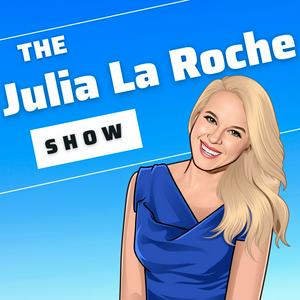
The Julia La Roche Show

Julia La Roche
The Julia La Roche Show
Latest episode

370 episodes

  • The Julia La Roche Show

    #368 Michael Pento: The i-Shaped Economy Destroying the Middle Class, $2 Trillion Private Credit Bubble, and Why Credit Markets Will Fracture First

    12/05/2026 | 44 mins.
    Michael Pento, president and founder of Pento Portfolio Strategies (PPS), returns to The Julia La Roche for episode 368 to warn that the three asset bubbles in stocks, credit, and real estate continue growing to unprecedented levels, with total market cap now at 230% of GDP versus a 90% average. He reveals that Powell has quietly printed $170 billion since December in an undeclared QE program, calls Powell's tenure "horrific," and celebrates his departure. Pento explains he's "nervously long" the market using his five-sector inflation-deflation model, currently positioned for stagflation with commodities, precious metals, and energy. He warns that credit markets will fracture first, with private credit now at $2 trillion (bigger than the $1.3 trillion subprime market in 2008), and predicts June redemptions could trigger a death spiral. Pento believes we need a 50% market correction to return to normalcy, warns we could see 15% interest rates like the 1980s but with a far worse debt backdrop, and argues the bottom 80% of Americans are already living in depression-like conditions while crony capitalism enriches the top 20%. He sees two paths forward: voluntary asset price reconciliation or forced hyperinflation leading to currency reset.

    Links:
    https://pentoport.com/
    https://twitter.com/michaelpento

    0:00 Introduction - Michael Pento returns after 6 months
    0:59 Big picture macro view - Bubbles grow bigger
    2:19 Powell's "horrific tenure" - $4.5 trillion printed
    3:32 QE program continues - $170 billion since December
    4:39 Kevin Warsh-led Fed - What changes are coming?
    5:52 Warsh will punish Wall Street, boost Main Street
    7:06 Stock bubble metrics - 230% of GDP (average is 90%)
    8:24 Crony capitalism vs. free market economics
    9:10 Why capitalism gets a bad name
    10:01 Home price to income ratio at all-time highs
    11:01 Disconnect between stock market highs and consumer sentiment lows
    11:35 Only top 20% doing well - The "i-shaped economy"
    12:33 AI spending reminds Michael of 1999 tech bubble
    13:33 Are you confident Kevin Warsh can get us back to normalcy?
    14:41 What would normal market valuations look like?
    15:06 Would need 50% correction to return to normal
    17:05 Wouldn't printing just set us up for more problems?
    18:57 Either scenario leads to higher rates
    19:37 Implications of double-digit rates on everything
    20:38 Are you still nervously long the market?
    21:19 Michael's not a perma bear - History of market crashes
    23:02 How dangerous can this bubble be when it bursts?
    24:03 Michael's 5-sector inflation-deflation model
    25:14 Precious metals trade - Why only 6% position
    26:41 Energy thesis - After Iran war
    27:30 Explaining the 5 sectors - Which is most worrisome?
    28:25 Stagflation is the base case going forward
    29:01 Post-recession: $6 trillion deficits, $12 trillion Fed balance sheet
    29:55 Could we see 15% interest rates like 1980?
    31:17 What's the end game here?
    33:21 Are we past the point of no return?
    34:58 Which bubble bursts first - The epicenter?
    35:44 Watch credit markets first - Private credit warning
    36:46 June redemptions could trigger death spiral
    37:47 Is private credit too big to fail now?
    38:21 Risk not getting attention - Pressure on middle class
    40:00 Buy now pay later defaults surging
    40:29 Bottom 80% living in depression conditions
    41:18 Preventing tremors creates epic shocks
    42:48 Has anyone talked about $170 billion of QE since December?
    43:24 What makes Michael hopeful for the future
    44:01 Closing thoughts

  • The Julia La Roche Show

    #367 Chris Whalen: "No Rate Cuts For a While" — Warsh's Fed Earthquake, Silver Shortage, and Why Inflation Is Here to Stay

    09/05/2026 | 32 mins.
    Warsh's arrival at the Fed actually means in practice — significant personnel changes, new models, and what Chris calls nothing short of an "earthquake at the central bank." Chris explains why there will be no rate cuts for a while, why the Fed balance sheet is growing again despite Warsh wanting to shrink it, and the one-to-one relationship between the balance sheet and public debt that most people aren't talking about. Plus: silver is in physical shortage and can't be delivered in parts of Asia, private credit is getting quiet as the bad headlines pile up, AMD is Chris's AI play of choice, and why the Iran war means "traumatic shortages by June" even if a deal were struck tomorrow. Chris also answers viewer questions on Warsh shrinking the balance sheet, gold under a tightening regime, the PennyMac LIBOR lawsuit, and Annaly Capital earnings. And Julia closes on her first house.

    Thank you to our partners at Goldco. Get your free 2026 Gold & Silver Kit at https://goldco.com/thewrap or call 855-573-0817

    Links:    
    The Institutional Risk Analyst: https://www.theinstitutionalriskanalyst.com/ 
    The Wrap: https://www.theinstitutionalriskanalyst.com/post/theira842
    Inflated book (2nd edition): https://www.barnesandnoble.com/w/inflated-r-christopher-whalen/1146303673
    Twitter/X: https://twitter.com/rcwhalen    

    Use the code TheWrap2026 for 25% off your first year of The Institutional Risk Analyst https://www.theinstitutionalriskanalyst.com/plans-pricing

    Timestamps:
    0:00 Welcome & intro
    0:49 Fed balance sheet growing again even though Warsh wants to shrink it
    1:08 The one-to-one relationship between the Fed balance sheet and public debt
    3:28 Will we continue to see a more inflationary environment?
    3:37 Silver on a tear — physical shortage, can't deliver the metal
    4:41 Still money pouring into private credit
    8:32 Too many dollars chasing too few returns — what this means for markets
    11:10 Are we setting up for a longer term risk?
    12:13 GameStop CEO's bid for eBay — what does Chris make of it?
    14:08 Changing the models, retiring staff — "an earthquake at the central bank"
    16:32 "No rate cuts for a while" — Warsh has to establish rapport first
    19:25 Iran hostilities dragging on — how much longer is this a major risk?
    the year
    23:02 Adding to gold positions — "the selloff was a gift"
    25:36 Mortgage sector — rates up, companies waiting for cuts that aren't coming
    26:16 Banks not attractive right now — what would make them more attractive?
    27:30 Viewer Q — How could Warsh shrink the Fed balance sheet?
    27:56 Scarce reserve regime — T-bills, discount window, can he get it done?
    29:02 Viewer Q — Is gold a good investment under a tightening regime?
    29:52 Viewer Q — PennyMac lawsuit over LIBOR/SOFR transition
    31:31 Viewer Q — Annaly Capital earnings — "good earnings, beat expectations"
    32:13 What is Chris watching next week?
    33:17 GoldCo sponsor — goldco.com/thewrap — 855-573-0817
  • The Julia La Roche Show

    #366 Michael Green: Why A 1987-Style Crash Is Now Almost Inevitable — Here's the Math

    07/05/2026 | 38 mins.
    Michael Green, Chief Strategist and Portfolio Manager for Simplify Asset Management, joins Julia La Roche on episode 366 to break down what he calls the most important and overlooked structural shift in financial history — the rise of passive investing. Green argues that the market isn't broken in the way most people think: it's not fraud or irrational exuberance, it's the mechanical consequence of a regulatory change in 2006 that turned 401k contributions into an automatic, valuation-blind buying machine. With passive now at 55% of the market — and rising 4% per year — Green shares new research showing that somewhere between 65% and 80%, a 1987-style crash stops being a possibility and becomes nearly inevitable. He also connects the dots between our retirement system, the housing crisis, and why both boomers and millennials are scared — just for completely different reasons.

    Links:
    Follow Mike on X: https://twitter.com/profplum99Read
    Mike’s Substack: https://www.yesigiveafig.com/Visit Simplify: https://www.simplify.us/

    Timestamps
    00:00 Intro and welcome Mike Green
    1:04 - What "broken markets" actually means today
    2:40 - The Costanza market and how Mike's research began
    6:21 - Passive went from 2% to 55% of the market since 1992
    7:05 - Why passive investing is just momentum with no valuation filter
    9:45 - The 2006 Pension Protection Act — the legislation nobody talks about
    10:13 - Why Vanguard and Bogle aren't the ones to blame
    10:19 - The book: The Greatest Story Ever Sold
    10:39 - The academic paper that forced Mike to rewrite the book
    13:59 - Type A vs Type B savers — and the snow cone moment
    14:35 - Prices don't move because of information. They move because of flows.
    15:08 - The threshold: 65–80% passive and the market becomes unstable
    16:07 - Why the coming crash could be worse than 1987
    19:37 - The XIV collapse — and what it taught Mike about predicting crashes
    22:00 - Is there a disconnect between markets and the economy right now?
    22:19 - Nvidia's margins, vendor financing, and the Cisco parallel
    24:10 - The S&P could be worth less than 2,000 on a pure DCF basis
    25:29 - Pushing back on the "we've never been better off" narrative
    27:21 - The valley of death and the precarity line
    28:36 - Why demographics are at the center of everything
    29:29 - Why boomers are terrified too — and why that matters for younger people
    31:14 - The housing trap: boomers won't sell, millennials can't buy
    34:21 - What does all this say about the social fabric?
    35:18 - "Tax wealth, not work" — the tax code we had in the 1950s
    36:41 - Why a wealth tax is actually the wrong solution
    38:11 - Wrap up
  • The Julia La Roche Show

    #365 Rick Rule: 'All The News I See Is Bad' — Oil Shortage, Gold & Why The Worst Is Still Ahead

    05/05/2026 | 47 mins.
    Veteran natural resource investor Rick Rule, CEO of Rule Investment Media and co-founder of Battle Bank, returns to break down a rapidly deteriorating macro picture, warning that oil markets are currently pricing in anticipation of a shortage — not the shortage itself — and that the next seven to ten days could be a watershed moment if the Gulf conflict doesn't de-escalate. He explains why gold may moderate near term despite the chaos (strong dollar, rising yields), but remains convicted it will preserve purchasing power over the next decade as the US dollar loses 75% of its purchasing power. Rick also flags uranium and nuclear power as the clearest long-term beneficiary of the energy crisis, updates his silver miner trade (up ~21%), and sounds the alarm on a potential credit crunch in private and junk bond markets that few are talking about.

    00:00 — Introduction
    00:43 — Oil crisis: why prices are "anticipatory" & what happens in 7–10 days
    06:07 — The truth about gold & fear (it's not what you think)
    08:03 — Long bonds breach 5% — what that means for you
    11:31 — How to protect yourself: liquidity, gold & balance sheets
    15:36 — Gold at $4,800 & the silver miner trade update
    19:35 — Oil above $100 and what it signals about the global economy
    22:47 — Why the next 7–10 days are critical
    27:28 — The biggest unsung winner of this war: uranium & nuclear
    31:07 — How to actually invest in uranium (names & tickers)
    32:53 — Near-term bleak, long-term better — Rick's full outlook
    34:05 — Why is the stock market hitting new highs during a war?
    37:06 — New Fed Chair Kevin Warsh: hawk or not?
    38:54 — Where we are in the commodity super cycle
    41:44 — Battle Bank update + Symposium + free portfolio ranking offer
  • The Julia La Roche Show

    #364: Chris Whalen: Powell Stays to "Block Trump" — Warsh Faces Major Obstacles and "The Fed Caused High Home Prices"

    02/05/2026 | 37 mins.
    In this episode of The Wrap, Chris Whalen breaks down what he calls one of the most significant weeks in Fed history — Powell's final press conference as chairman, his decision to stay on as a Fed governor to block Trump from a second appointment, and what it means for Kevin Warsh walking into a hostile committee with the most dissenting votes since 1992. Chris explains why the Fed has been "the key engine of progressive socialism in Washington" since 1935, what a Warsh-led Fed actually looks like in practice, and why the Trump White House missed a political layup by not hanging "the burning tire of home price affordability" around Powell's neck. Plus: why sulfur — not oil — is the one word that sums up the biggest threat to the global economy right now, what China's sulfuric acid export ban means for copper, silver, and inflation, and why distressed real estate is "the next trade."

    Thank you to our partners at Goldco. Get your free 2026 Gold & Silver Kit at https://goldco.com/thewrap or call 855-573-0817

    Links:    
    The Institutional Risk Analyst: https://www.theinstitutionalriskanalyst.com/ 
    The Wrap: https://www.theinstitutionalriskanalyst.com/post/theira840
    Inflated book (2nd edition): https://www.barnesandnoble.com/w/inflated-r-christopher-whalen/1146303673
    Twitter/X: https://twitter.com/rcwhalen    

    Use the code TheWrap2026 for 25% off your first year of The Institutional Risk Analyst https://www.theinstitutionalriskanalyst.com/plans-pricing

    Timestamps:
    0:00 Welcome & intro — what a week it was
    2:05 Powell staying as fed governor
    5:08 Warsh — "a hawk on inflation but a supply sider"
    7:15 Powell's warning about regional Fed presidents
    8:10 What can we expect from a Warsh-led Fed?
    11:30 "The burning tire they should have hung around Powell's neck"
    12:25 "What would be the message?" — Chris on political messaging and affordability
    14:44 What change is Chris most looking forward to at the Fed?
    16:41 Inflation is accelerating
    17:28 Sulfur — the one word that sums up the global economic threat
    20:17 What is Chris doing with his precious metals right now?
    21:17 US equity markets hitting record highs — what does Chris make of it? 24:30 Distressed real estate is "the next trade"
    29:40 One year anniversary of Inflated — reflection and what's come to fruition
    34:32 What is Chris watching next week?
More Business podcasts
About The Julia La Roche Show
Julia La Roche brings her listeners in-depth conversations with some of the top CEOs, investors, founders, academics, and rising stars in business. Guests on "The Julia La Roche Show" have included Bill Ackman, Ray Dalio, Marc Benioff, Kyle Bass, Hugh Hendry, Nassim Taleb, Nouriel Roubini, David Friedberg, Anthony Scaramucci, Scott Galloway, Brent Johnson, Jim Rickards, Danielle DiMartino Booth, Carol Roth, Neil Howe, Jim Rogers, Jim Bianco, Josh Brown, and many more. Julia always makes the show about the guest, never the host. She speaks less and listens more. She always does her homework.
Podcast website

Listen to The Julia La Roche Show, The Story of Money and many other podcasts from around the world with the radio.net app

Get the free radio.net app

  • Stations and podcasts to bookmark
  • Stream via Wi-Fi or Bluetooth
  • Supports Carplay & Android Auto
  • Many other app features