
Listen to this podcast in the app for free: Download for free in the App Store
radio.net
Sleep timer
Save favourites
29 episodes
How To Age In A Space That Helps Not Hurts Your Body
22/10/2026 | 1h 37 mins.Is the room you're sitting in quietly aging you? Dr. Esther Sternberg, the Research Director of the Andrew Weil Center for Integrative Medicine and Professor of Medicine at the University of Arizona, says the answer is yes.
The numbers are stark: Americans spend over 98% of their time indoors. People working in well-designed open offices move 32% more during the day than people in private offices, and are 14% less stressed at night. Chronic stress can leave your telomeres looking 10 to 17 years older than your actual age. And unmanaged sleep loss alone can cost an organization roughly $3,000 per employee, per year.
Her own body forced the next chapter of the research. While buried in the stress of a federal whistleblower case, a dying parent, and a divorce, Dr. Sternberg developed the very autoimmune disease she studied and recovered not with a new drug, but by spending two weeks in a tiny Greek village. That became the seed of a 20-year, NIH- and U.S.-government-funded research program on how the physical spaces we live and work in shape our stress, sleep, movement, and long-term health.
In this episode you'll learn:
Why Dr. Sternberg's own supervisors told her the brain and immune system “don't communicate” — and the rat study that proved them wrong
The “Seven Domains of Integrative Health” she identified after her own recovery in Crete
Why open-plan offices — done right — beat cubicles and private offices on nearly every health metric
How color temperature and intensity of light control your cortisol, focus, and sleep and why evening screen light acts like a shot of coffee
The surprising neuroscience behind why looking at green light can reduce chronic pain
Why humans are wired to find nature images calming (hint: it's about fractals)
Concrete, low-cost changes anyone can make at home or at work even without control over the building itself
Literature
The Balance Within
Healing Spaces
Well at Work
Timestamps
0:43 The 1979 patient who convinced her the brain and immune system are connected
7:54 The 1989 L-Tryptophan case: 1,500 people ill, 45 dead, and a $2–10B lawsuit
10:15 The Greek neighbors who changed the course of her illness
13:26 The Seven Domains of Integrative Health, explained
17:15 The stat: Americans spend over 98% of their time indoors
25:03 The finding: open-office workers move 32% more and sleep better
36:50 Why blue light at night works on your brain like a cup of coffee
44:29 The green light/chronic pain discovery, and the lab behind it
52:50 The brain-imaging study that mapped “beauty” to a real reward pathway
1:09:03 Inside “The Recharge Room” — immersive nature rooms built for hospital staff
1:13:33 What to do if you have zero control over your office
1:20:05 Chronic stress and the 17-years-older telomere finding
1:21:41 “Allostatic load”: the stress you’re carrying without realizing it
1:23:34 Why poor sleep costs companies roughly $3,000 per employee a year
1:34:54 Her closing message: what to fix first in your own space
Show Notes
People
Kevin Kampschroer former Research Director, U.S. General Services Administration (GSA); later Director of High Performance Federal Green Buildings and Chief White House Sustainability Officer for GSA
Robert Propst credited with developing the open-office “Action Office” concept
Mirelle Phillips founder of Studio Elsewhere creator of “The Recharge Room”
Institutions, Labs & Initiatives
National Institutes of Health (NIH) / National Institute of Mental Health (NIMH)
Andrew Weil Center for Integrative Medicine, University of Arizona
Walter Reed National Military Medical Center — National Intrepid Center of Excellence
Mount Sinai Hospital
University of Southern California (USC) — fMRI imaging research
International WELL Building Institute
Nature Sacred — nonprofit building healing gardens in areas of disaster/devastation
Studies, Papers & Reported Data Points
Effects of Office Workstation Type on Physical Activity and Stress Casey M. Lindberg, Esther M. Sternberg, Kevin Kampschroer, et al.
Wellbuilt for Wellbeing: Controlling Relative Humidity in the Workplace Matters for Our Health Ester Sternberg, et al.
Accelerated Telomere Shortening in Response to Life Stress Elissa S. Epel, Elizabeth H. Blackburn, Jue Lin, et al.
Effect of Comprehensive Lifestyle Changes on Telomerase Activity and Telomere Length in Men With Biopsy-Proven Low-Risk Prostate Cancer: 5-Year Follow-Up of a Descriptive Pilot Study Dean Ornish, Elizabeth Blackburn, Lorne Hofmann, et al.
Neural Correlates of Beauty Hideaki Kawabata, Semir Zeki
The Cost of Poor Sleep: Workplace Productivity Loss and Associated Costs Ronald C. Kessler, et al.
Discovery of Associative Patterns Between Workplace Sound Level and Physiological Wellbeing Using Wearable Devices and Empirical Bayes Modeling Casey M. Lindberg, Esther M. Sternberg, Kevin Kampschroer, et al.Can We Wake Up Sleeping Brain Cells? ‘Zombie Cells’ And The Aging Brain
14/10/2026 | 1h 25 mins.Are stem cells used for ‘better aging’ a fairytale future or a near reality? This conversation lays out what stem cell therapies actually are, where today’s methods stand, and where the legitimate research is actually headed. Our guest Dr. Darcie Moore, PhD, studies neural stem cells in the adult brain at the University of Wisconsin–Madison, a lab internationally known for stem cell research.
Stem cells are what keep tissue regenerating throughout life, replenishing it, repairing it, and keeping it functionally young. As we age, that capacity declines, and the effects show up across the body: slower wound healing, weaker skeletal muscle, a blunted immune response, and cognitive decline.
Understanding how to protect or restore aging stem cells means understanding both halves of the problem, not just how they age, but what keeps them young in the first place. Dr. Moore's lab studies the exact opposite question: what keeps the stem cells that could make new neurons stuck in a dormant, "quiescent" state, and what it would take to safely wake them back up.
IN THIS EPISODE YOU'LL LEARN:
• What a stem cell actually is, and why not all stem cells are created equal
• How scientists "erase" a cell's identity and turn it back into a stem cell
• Why 3D-printing a working organ could still be years away (the surprising reason involves your immune system)
• The real difference between a dormant ("quiescent") cell and a "zombie" (senescent) cell
• Why human cloning is not possible with current stem cell science — and what is actually happening instead
• The two things proven to boost brain cell growth — and the two proven to shut it down
• Her blunt take on stem cell clinics, and what she would and would not inject into her own body
• The truth about popular stem cell ‘therapies’ and the very real dangers associated with them
Want to learn more? Each month, we send a newsletter curated by our scientific council on what's actually advancing the science of human longevity — and what isn't. Subscribe at https://www.thewndrlab.com/mailing-list
Check out The WNDR Lab
Connect with Dr. Darcie Moore
Connect with our host Chris Wharton
Follow The LIVING Room Podcast on Socials:
The LIVING Room on Instagram
The LIVING Room on TikTok
The WNDR Lab on LinkedIn
The WNDR Lab: https://www.thewndrlab.com/
The views, opinions, and stories Chris Wharton shares on The LIVING Room are his own and don't necessarily reflect the official positions of The WNDR Lab. This podcast is a space for candid, personal conversation and not company communications. Nothing said here constitutes medical advice, a statement of clinical efficacy, or an official company claim about our products or outcomes.
Subscribe for new conversations every week, and drop your answer to our pinned question below. We read every one!
Timestamps
0:18 — What a stem cell actually is, from scratch
1:28 — Turning your own skin cells into neurons with your exact disease mutation
5:43 — The stem cells already living in your body right now
8:34 — How scientists erase a cell’s identity back to its stem state
10:40 — The “baby bird of himself” biohacker claim — and why it’s not real
12:57 — Why cloning a human is still not possible
16:06 — Her rule for any bold science timeline: add 20 years
20:45 — The exact moment of her biggest research discovery
28:29 — The 100-year fight over whether adult brains make new neurons
32:43 — She grew real human brain stem cells from patient tissue — in a dish
33:25 — The two things proven to boost brain cell growth (and the two that shut it down)
39:45 — Quiescent vs. senescent: “dormant” vs. a literal “zombie cell”
45:24 — “Hype is a real thing” — her warning on overclaiming
1:10:54 — What it actually takes to get a research grant funded
1:14:26 — Dr. Moore's warning on stem cell clinics
────────────────────────────────────
Show Notes
A quick clarification from our conversation: when we talked about cooling and spinal cord injury, the example I meant to reference was the case of Kevin Everett of the Buffalo Bills. His early treatment included an experimental cold‑saline IV infusion started by the team physician about fifteen minutes after impact, with continued cooling in the hospital to help limit swelling and tissue damage. This approach was inspired by research from The Miami Project to Cure Paralysis. Separately, the University of Miami football program uses cooling chambers and cryotherapy for general athlete recovery — a different kind of “cooling” altogether. Just wanted to make that distinction clear for listeners.
People Mentioned
Dr. Darcie Moore, PhD — guest. Faculty page· Lab site: dlmoorelab.com
Shinya Yamanaka — co-discoverer of induced pluripotency (Yamanaka factors). Nobel biography
James Thomson — isolated the first human embryonic stem cells, UW–Madison
Santiago Ramón y Cajal — historical "no new neurons" dogma.
Institutions / Labs
University of Wisconsin–Madison — Department of Neuroscience: neuro.wisc.edu
Waisman Center (UW–Madison)
Allen Institute (Seattle) — cell-type/connectivity mapping referenced re: AI and neuroscience data.
EPFL / NeuroRestore (Switzerland) — robotic/neural interface work for spinal cord injury referenced.
ISSCR (International Society for Stem Cell Research) guidelines, referenced re: cloning/organoid ethics. isscr.org
WiCell Research Institute WI.Chris Williamson's Take On ‘Optimization Culture’; Longevity Lessons from 1100 episodes of Modern Wisdom
07/10/2026 | 1h 47 mins.In this conversation our host, Chris Wharton, does a deep dive on the media phenomenon Chris Williamson who hosts the billion-view YT channel Modern Wisdom where he has interviewed over 1,100 guests.
In this honest conversation, Williamson opens up about how he, despite having gained insights from experts from around the world, for two years was at a loss when his own body started falling apart.
Chris Williamson runs the world's largest interview and self-improvement podcasts, with over 4.5 million YouTube subscribers. But how does a lifestyle inspired by 1000+ hours of expert conversation really look? And what happens when one’s train, thriving on optimization, suddenly in an unexplainable way rails out? From two years of fatigue, and low mood, compounded by a genetic predisposition to poor detoxification, to how loneliness penetrates the bubble of famedom, Williamson gets personal about challenging life changes and essentials for his well being. In this conversation Chris and Chris explore the health habits and life practices Williamson considers actually worth sticking with.
In this episode, you'll learn:
How two years of unexplained fatigue and memory loss turned out to be toxic mold poisoning in Williamson's own home
What “advice hyper-responders” means, and why the people most likely to take extreme advice to heart are usually the ones who need it least
Why he still doesn't wear a wearable device
The three health habits he'd keep if he had to give up everything else
Why he believes the backlash against health-optimization culture is overdue
What “fading affect bias” is, and why it explains why people abandon habits that once worked
Why he calls sleep the most underrated lever in longevity, despite being the most talked about
Show Notes
Want to learn more? Each month, we send a newsletter curated by our scientific council on what's actually advancing the science of human longevity — and what isn't. Subscribe at https://www.thewndrlab.com/mailing-list
Check out The WNDR Lab
Connect with Chris Williamson https://www.instagram.com/chriswillx/?hl=en & check out Modern Wisdom https://www.youtube.com/@ChrisWillx
Connect with our host Chris Wharton: https://www.instagram.com/chriswharton1/
Follow The LIVING Room Podcast on Socials:
Instagram: https://www.instagram.com/the.living.room.pod/
Follow The LIVING Room Podcast on Socials:
Instagram
LinkedIn
The WNDR Lab
Show notes
Institutions & Studies
World Health Organization: https://www.who.int/
Companies & Products Mentioned
Neutonic: https://www.neutonic.com/en-us?srsltid=AU7gw4Uy2NRt6WYFqZ8S2sgJrqCk6suZROApfIvbSjxDFAZ2TZotH8IW
LMNT: https://drinklmnt.com/collections/salt?utm_source=google&utm_medium=cpc&utm_campaign=evergreenmisspellcold&gad_source=1&gad_campaignid=21002967780&gbraid=0AAAAAC5L3ce1pCCF0zEL_2g0PZ0PEVHLI&gclid=CjwKCAjw25fWBhAVEiwAMopNjnon1JKatm1Yg4cXrx4YDCPL4b05hQkiU73zdD4GCfA1wOnFQHwLQRoC48cQAvD_BwE
OHM.health lamp:https://ohm.health/ — a heart-rate-variability biofeedback device used for resonance breathing.
MoldCo: https://www.moldco.com/ — companies referenced for home mold and air-quality testing.
The views, opinions, and stories Chris Wharton shares on The LIVING Room are his own and don't necessarily reflect the official positions of The WNDR Lab. This podcast is a space for candid, personal conversation — not company communications. Nothing said here constitutes medical advice, a statement of clinical efficacy, or an official company claim about our products or outcomes.This Will Make You Strength Train. Build Muscle Today And Live a Longer, Healthier Life
30/09/2026 | 1h 11 mins.Why do two people on the exact same exercise program end up with completely different results — and what does that mean for the roughly 80 percent of American adults who aren't getting enough exercise in the first place?
Professor John Hawley is the Director of the Centre for Human Metabolism & Performance at Australian Catholic University in Melbourne and has published more than 300 scientific papers on the interaction between exercise and nutrition.
This conversation keeps coming back to one idea: the biggest gains in health span don't come from a new molecule or a wearable — they come from getting the fundamentals of exercise and nutrition right, and understanding why so many people who genuinely try still don't stick with it. Embracing the mindset and making exercise a habit is discussed as the greatest challenge. However, as Chris and Dr. Hawley mentions, with minimal effort one can gain huge rewards.
Muscle mass peaks in your mid-30s and declines by roughly 1 percent a year after 50, accelerating sharply after 60 and 70. VO2 max — a simple, testable number — is currently the single best predictor of all-cause mortality we have. Strength training is a clear indicator for longevity and remember, it’s never too late to start!
In this episode, you'll learn:
Why identical exercise programs produce wildly different results in different people — and what the science says about “responders” and “non-responders”
Why “no pain, no gain” is actively driving people away from a lifelong exercise habit
Why lack of time isn't really why most people don't exercise — and what is
The hidden cost GLP-1 weight-loss drugs can carry for muscle and bone, especially later in life
The three simple tests that best predict how long — and how well — you'll live
Why there is still no pill on Earth that replicates what exercise does to the body
A simple way to build meaningful activity into a busy day without ever setting foot in a gym
Want to learn more? Each month, we send a newsletter curated by our scientific council on what's actually advancing the science of human longevity — and what isn't. Subscribe at https://www.thewndrlab.com/mailing-list
Check out The WNDR Lab
Connect with Dr. Hawley
Connect with our host Chris Wharton
Follow The LIVING Room Podcast on Socials:
Instagram: https://www.instagram.com/the.living.room.pod/
LinkedIn: linkedin.com/company/wndrlab/
The WNDR Lab: https://www.thewndrlab.com/
Show Notes
People
Professor Louise Burke — Chair in Sports Nutrition, ACU
Professor Tim Noakes — University of Cape Town
Dave Costill — Ball State University; “grandfather of exercise physiology”
Professor Claude Bouchard — Pennington Biomedical Research Institute; led the HERITAGE Family Study on exercise responders/non-responders
Professor Stuart Phillips — referenced for a study debunking the need to lift near-maximal loads to build muscle.
Professor. Martin Gibala, the McMaster researcher known for 6x1-minute HIIT protocols and the book The One-Minute Workout.
Institutions
Loughborough University
Ball State University
University of Cape Town
The Sports Science Institute of South Africa
Australian Catholic University
Mary MacKillop Institute for Health Research
Pennington Biomedical Research Center
McMaster University
Studies & Findings Referenced
HERITAGE Family Study (Bouchard et al., Pennington Biomedical) — identical exercise produced VO₂ max gains ranging from ~0% to 45%; genetics did not fully explain the variation.
Light-load vs. heavy-load resistance training (Stuart Phillips et al.) — ~30% 1RM taken to failure produced a comparable muscle protein synthesis response to much heavier loads.
McMaster HIIT research — brief high-intensity intervals produced adaptations comparable to substantially longer continuous exercise.
JAMA push-up study — push-up capacity was associated with cardiovascular disease risk in a cohort of male firefighters.
Concepts
Myokines — signaling molecules released by contracting muscle that communicate with other organs
DOMS (delayed onset muscle soreness) — muscle damage from eccentric load, not a required marker of a “good” workout
VO2 max, and grip strength, two tests discussed as strong predictors of longevity/health
Timestamps:
0:00 — Cold open
1:41 — The only metabolic chamber in the Southern Hemisphere
6:38 — Why loud, unqualified voices beat scientists in the media
9:48 — “Exercise is medicine” — myokines and organ-to-organ crosstalk
19:53 — Responders vs. non-responders: the HERITAGE Study's 0%–45% spread
24:16 — Six 1-minute intervals can rival 30–40 minutes of continuous exercise
34:06 — Fidgeters, NEAT, and staying lean
42:44 — The hidden cost of GLP-1 weight-loss drugs: muscle and bone
58:14 — The three best tests for predicting longevity
1:07:11 — Three takeaways in under 60 secondsThe World's 'Most Measured Man' Stanford scientist on the future of Genomics and Wearables
23/09/2026 | 1h 45 mins.What if the device on your wrist could warn you that you have a life-threatening illness before you feel a single symptom? That's exactly what happened to our guest — twice.
Dr. Michael Snyder is the Director of the Center for Genomics and Personalized Medicine at Stanford University. Nicknamed “medicine's most measured man,” he pioneered the Integrative Personal Omics Profiling (iPOP) study by turning himself into the first subject — tracking his genome, blood, urine, and even his gut microbiome in extraordinary detail, years before wearables and at-home testing became mainstream.
This conversation traces how that personal experiment scaled into a study of over 100 people, nearly half of whom uncovered a serious, pre-symptomatic health problem, and into a broader argument: healthcare today only measures you once you're already sick. But it also gets practical, tackling the questions anyone shopping for a wearable actually has: which device, e.g., Oura, Fitbit, Apple, WHOOP, etc, is worth buying and for what, whether tracking your own body constantly does more harm than good psychologically, and who actually has access to the data once it's collected. Dr. Snyder makes the case for a different approach — deep, continuous, personalized data collection while you're still healthy, so problems get caught upstream instead of in an emergency room.
In this episode, you'll learn:
How Snyder discovered his own Lyme disease and diabetes risk before he ever felt sick
That roughly 12 percent of the U.S. population is diabetic, closer to 40 percent are pre-diabetic and headed there — still, many are completely unaware
Why nearly half the people in his deep-data study found a serious health problem they didn't know they had
Which wearable is actually best for what — why no single device does sleep, exercise, and nutrition equally well, and which one he reaches for each
Whether constantly tracking your health data causes more anxiety than it prevents, and how to tell if you're the kind of person it will help or hurt
What actually happens to your health data once a company collects it, and whether it's really private
That genome sequencing which once cost roughly a billion dollars now costs about $500
Why most physicians advise against whole-body MRIs — and why Snyder disagrees
Why the same food can spike one person's blood sugar and do almost nothing to another's
How Snyder used AI to help diagnose his own back injury faster than the emergency room
Why he believes everyone should get a health baseline in their 20s, if not earlier
Want to learn more? Each month, we send a newsletter curated by our scientific council on what's actually advancing the science of human longevity — and what isn't. Subscribe at https://www.thewndrlab.com/mailing-list
Check out The WNDR Lab
Connect with Dr. Snyder
Connect with our host Chris Wharton on Instagram: instagram.com/chriswharton1
Follow The LIVING Room Podcast on Socials:
Instagram: https://www.instagram.com/the.living.room.pod/
LinkedIn: linkedin.com/company/wndrlab/
The WNDR Lab: https://www.thewndrlab.com/
Show Notes
Institutions & Companies
Stanford University — Snyder Lab
Michael Snyder — Stanford Profile
TED Talk ”Why I’m Obsessed with Health Wearables (and You Should Be Too)”
SensOmics
Q Bio
January AI — About Us
Studies & Findings
Integrative Personal Omics Profiling (iPOP)
iPOP and its Role in Participatory Medicine
Wearable Sensors Can Tell When You Are Getting Sick
Real-time Alerting System for COVID-19 Using Wearable Data
Ageotypes Provide Window Into How Individuals Age
Personalized Nutrition by Prediction of Glycemic Responses
Techniques & Concepts
Multiomics — combined measurement of the genome (DNA), transcriptome (RNA), proteome (proteins), and metabolome (metabolites), plus the microbiome
Continuous glucose monitors (CGMs) — and glucose dysregulation subtypes (muscle insulin resistance, beta-cell defect, hepatic insulin resistance) that determine which specific foods spike an individual's blood sugar
Whole-body MRI as a longitudinal baseline tool, rather than a single-point-in-time scan
Wearable-based detection of AFib, respiratory infection, menstrual cycle shifts, and mental/workplace stress
More Health & Wellness podcasts


Trending Health & Wellness podcasts







About The LIVING Room Podcast | Inside The WNDR Lab
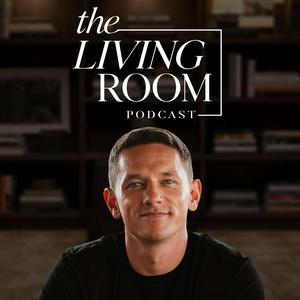
What if longevity wasn’t owned by a single voice—but shaped by many?Our host, Chris Wharton, brings together the world’s leading scientists, doctors, performers, and cultural icons—each offering a distinct perspective on the art of living better, longer. From cutting-edge, data-backed research to lived experience, we explore the habits, mindsets, and breakthroughs that truly move the needle when it comes to elevating both the quality and length of your life.Built on collective expertise, not individual opinion, The Living Room is where science, experience, and insight come together—bringing the most trusted thinking in longevity to your living room, whether that’s your couch or your commute…This is not about shortcuts. It’s not about hype. It’s about understanding the full picture—and giving you the clarity to act on it.Because a long life, well lived, is never one-dimensional—and neither is the path to getting there.Step into The LIVING Room, where the future of LIVING comes alive.
Podcast websiteListen to The LIVING Room Podcast | Inside The WNDR Lab, ZOE Science & Nutrition and many other podcasts from around the world with the radio.net app
Get the free radio.net app
- Stations and podcasts to bookmark
- Stream via Wi-Fi or Bluetooth
- Supports Carplay & Android Auto
- Many other app features
Get the free radio.net app
- Stations and podcasts to bookmark
- Stream via Wi-Fi or Bluetooth
- Supports Carplay & Android Auto
- Many other app features
The LIVING Room Podcast | Inside The WNDR Lab
Scan code,
download the app,
start listening.
download the app,
start listening.
The LIVING Room Podcast | Inside The WNDR Lab: Podcasts in Family
 UK

