
Listen to this podcast in the app for free: Download for free in the App Store
radio.net
Sleep timer
Save favourites
90 episodes
EP 27: Why Gen Z Is Refusing to Become Managers (And What It Means for You)
20/10/2026 | 11 mins.What Kind of Leader Do You Want to Become? Complete the free Self-Assessment Now:
https://www.loisburtononline.com/pl/2148831091
Only 6% of Gen Z view traditional leadership as their primary career goal, yet three quarters still aspire to executive roles. It isn't that young talent lacks ambition; they are actively redefining what success looks like in a changing workforce. From burnout concerns and side hustles to bottom-up AI adoption, generational misunderstandings are holding organizations back. Bridging this gap requires challenging outdated workplace cultures, shifting focus from hours to outcomes, and opening genuine two-way dialogues. Discover three game-changing questions that will help adapt leadership approaches, harness early-career talent, and future-proof business for the decade ahead.
5 Key Takeaways
Gen Z rejects traditional middle management due to stress and burnout, preferring clear pathways built on purpose, flexibility, and growth.
Side hustles and boundaries do not reflect a lack of commitment; portfolio careers build skills that directly enrich primary roles.
Younger employees lead daily AI adoption and expect senior leadership to match their capability and pace.
Modern organizational culture must prioritize measurable outcomes over total hours spent present at a desk.
Reverse mentoring unlocks untapped innovation, helping established leaders discover where emerging team members are ahead.
5 Direct Quotes
"The way we led yesterday will not lead us into tomorrow."
"Focus on outcomes, not hours."
"Holding boundaries does not mean lack of commitment."
"It isn't that leadership is undesirable. It's the pathway to getting there."
"Assuming that what motivates you will motivate others is where there can be serious misunderstandings."
Chapter Timestamps
00:00 - The Gen Z Leadership Paradox
01:05 - Burnout, Stress, and Conscious Unbossing
02:18 - Side Jobs, AI, and Bottom-Up Change
03:32 - Debunking Generational Misunderstandings
04:54 - How Organizations Must Adapt
06:05 - 3 Questions to Future-Proof Leadership
About the Host:
Lois Burton is a highly respected executive coach and leadership development specialist with over 25 years of experience supporting senior leaders and executives across a wide range of sectors, including leisure, manufacturing, financial services, healthcare, and higher education.
Early in her career, Lois worked closely with coaching pioneers Sir John Whitmore, author of Coaching for Performance, and Peter Bluckert, co-founder of the European Mentoring and Coaching Council, gaining first-hand experience during the formative years of professional coaching in both the UK and the USA.
In 2000, she founded Lois Burton Ltd, growing it into one of the UK’s leading specialist leadership coaching consultancies. Widely regarded as “the leaders’ coach,” Lois is recognised for her expertise in developing high-performing, high-potential leaders and helping them navigate complex leadership challenges.
Lois works with organisations and executives nationally and internationally, partnering with leaders across multiple countries to drive lasting leadership impact.
www.loisburton.co.uk
www.loisburtononline.com
https://www.linkedin.com/in/LoisBurton
www.facebook.com/LoisBurton
www.instagram.com/loisburtoncoach
This Podcast has been brought to you by Disruptive Media. https://disruptivemedia.co.uk/EP 26: Are You An Athlete Leader? With Alex Gerbasi
13/10/2026 | 45 mins.What Kind of Leader Do You Want to Become? Complete the free Self-Assessment Now:
https://www.loisburtononline.com/pl/2148831091
Leading today isn’t easy. Between managing generational shifts, adopting new technology, and trying to stay agile in an unpredictable world, modern leadership requires a completely dynamic skill set. Professor Alexandra Gerbasi, Executive Dean at the University of Exeter and Professor of Leadership, breaks down what it truly takes to build a high-performing team and step up as a trailblazer. Discover why pure subject expertise isn't enough, how sports-style performance reviews can transform your leadership, and why building a team that actively challenges you is the ultimate secret to success. The conversation also tackles navigating Gen Z workplace expectations, mastering organizational networks, and bringing your authentic self to work without alienating those around you. Packed with practical wisdom, this episode offers a refreshing guide to thriving as a modern leader.
5 Key Takeaways
- Build Complementary Teams: A truly effective team shouldn't clone its leader; it should compensate for weaknesses and offer constructive challenge.
- Prioritise Self-Reflection: Success relies heavily on pausing to review leadership actions and outcomes, much like athletes reviewing match film.
- Master Cross-Generational Management: Adapting to changing expectations from Gen Z and Alpha requires greater agility, support, and inclusive communication.
- Leverage Strategic Networks: True leadership impact extends beyond immediate team management to engaging broader internal and external stakeholders.
- Balance Authenticity with Respect: Bringing an authentic self to work means building positive relationships without using personal style as an excuse for poor behaviour.
5 Direct Quotes
"It's not easy, I think it's becoming harder and harder actually, the more I think about it."
"It might be impossible to be the perfect person, but I think you can build a pretty darn close to perfect team."
"One of the most important things you can get people to do is stop, pause, and reflect."
"Athletes watch tape. They review their performance."
"How to be authentic without being a jerk."
Chapter Timestamps
00:00 – Welcome & Intro: Meet Prof. Alex Gerbasi
00:55 – What Makes a Trailblazing Leader Today?
04:30 – Knowing vs Doing: The Power of Self-Regulation
07:49 – Cultivating a Growth Mindset and Team Challenge
10:36 – Navigating Feedback Culture Across Regions
14:46 – Managing Gen Z and the Future Workforce
18:18 – Agility, Trust, and Flattening Hierarchies
22:39 – Human Connection in the Age of AI
26:08 – Making Leadership Visible Without Overexposure
31:09 – Strategic Network Thinking for Leaders
39:59 – Defining Leadership Moments & "Watching the Tape"
42:29 – Authentic Leadership Without Being a Jerk
44:01 – Wrapping Up & How to Connect
How To Connect with Our Guest:
https://sloanreview.mit.edu/article/are-you-an-authentic-leader-or-an-authentic-jerk/
Email: a.gerbasi@exeter.ac.uk
About the Host:
Lois Burton is a highly respected executive coach and leadership development specialist with over 25 years of experience supporting senior leaders and executives across a wide range of sectors, including leisure, manufacturing, financial services, healthcare, and higher education.
Early in her career, Lois worked closely with coaching pioneers Sir John Whitmore, author of Coaching for Performance, and Peter Bluckert, co-founder of the European Mentoring and Coaching Council, gaining first-hand experience during the formative years of professional coaching in both the UK and the USA.
In 2000, she founded Lois Burton Ltd, growing it into one of the UK’s leading specialist leadership coaching consultancies. Widely regarded as “the leaders’ coach,” Lois is recognised for her expertise in developing high-performing, high-potential leaders and helping them navigate complex leadership challenges.
Lois works with organisations and executives nationally and internationally, partnering with leaders across multiple countries to drive lasting leadership impact.
www.loisburton.co.uk
www.loisburtononline.com
https://www.linkedin.com/in/LoisBurton
www.facebook.com/LoisBurton
www.instagram.com/loisburtoncoach
This Podcast has been brought to you by Disruptive Media. https://disruptivemedia.co.uk/EP 25: Building Hope: How Leaders Drive High Performance & Engagement
06/10/2026 | 15 mins.What Kind of Leader Do You Want to Become? Complete the free Self-Assessment Now:
https://www.loisburtononline.com/pl/2148831091
Hope isn't just a warm feeling—it's an essential strategic engine for high-performing, engaged teams. With employee engagement dropping to alarming levels, cultivating genuine hopefulness across an organisation has never been more critical for leaders. Drawing on psychological research, neuroscience, and decades of executive coaching experience, this practical episode breaks down how to construct a culture of hope without falling into common organizational traps. Discover the essential balance between unwavering long-term vision and radical present honesty, learn to avoid the subtle dangers of a rescue culture, and gain concrete strategies to empower teams to shape their own successful futures.
Key Takeaways
True hope relies on clear goals, credible pathways, and individual agency rather than vague optimism.
Engagement surges when leadership actively fosters genuine enthusiasm about what lies ahead.
Creating a rescue culture breeds dependency, placing an unsustainable burden solely on leadership.
Grounding hope in transparent evidence and visible progress builds authentic organizational trust.
Shared accountability ensures teams maintain active control over achieving ambitious milestones.
Quotes
"Building hopefulness into your culture as a leader is very, very significant."
"The goal equates to the ambition and the agency equates to motivation."
"Top teams set the emotional weather in the organization."
"Hopefulness is not one person's job. It's everyone's job."
"Hope does come from honesty, but it starts with being honest with yourself."
Podcast Chapters
00:00 Welcome to Leadership Trailblazers
01:24 Defining Hope: Goals, Agency, and Neuroscience
02:51 The Impact of Hope on Engagement & Performance
05:18 Three Pitfalls Leaders Must Avoid
10:58 Three Practical Tips for Cultivating Hope
13:30 Recap & Moving the Conversation Forward
About the Host:
Lois Burton is a highly respected executive coach and leadership development specialist with over 25 years of experience supporting senior leaders and executives across a wide range of sectors, including leisure, manufacturing, financial services, healthcare, and higher education.
Early in her career, Lois worked closely with coaching pioneers Sir John Whitmore, author of Coaching for Performance, and Peter Bluckert, co-founder of the European Mentoring and Coaching Council, gaining first-hand experience during the formative years of professional coaching in both the UK and the USA.
In 2000, she founded Lois Burton Ltd, growing it into one of the UK’s leading specialist leadership coaching consultancies. Widely regarded as “the leaders’ coach,” Lois is recognised for her expertise in developing high-performing, high-potential leaders and helping them navigate complex leadership challenges.
Lois works with organisations and executives nationally and internationally, partnering with leaders across multiple countries to drive lasting leadership impact.
www.loisburton.co.uk
www.loisburtononline.com
https://www.linkedin.com/in/LoisBurton
www.facebook.com/LoisBurton
www.instagram.com/loisburtoncoach
This Podcast has been brought to you by Disruptive Media. https://disruptivemedia.co.uk/EP 24: Why Difficult Conversations Fail (and How to Fix Them)
29/09/2026 | 14 mins.What Kind of Leader Do You Want to Become? Complete the free Self-Assessment Now:
https://www.loisburtononline.com/pl/2148831091
Putting off that uncomfortable chat with a team member because you’re dreading how it’s going to land? Difficult conversations usually derail not because of the message itself, but because harsh delivery triggers defensive threat responses. In this episode, executive coach Lois Burton breaks down how to navigate tough dialogue using the power of gentle conversations. Far from being soft or conflict-averse, gentle conversations ensure hard messages are truly heard and acted upon. You’ll explore the six core principles of compassionate communication, a practical five-step structure to structure your approach, and actionable tips to prepare internally, rehearse opening lines, and debrief effectively. Discover how handling difficult moments with calm intention and silence helps build a psychological safe team culture, one conversation at a time.
5 Key Takeaways
- Delivery, not content, causes difficult conversations to fail by triggering a defensive amygdala response.
- Separate the individual from the behavior to ask genuine questions with natural curiosity.
- Regulate internal emotions first so tone and body language communicate genuine goodwill.
- Holding silence during tough chats gives others space to process without feeling pressured.
- Leadership culture is built incrementally through how every everyday conversation is handled.
5 Key Direct Quotes
"A gentle conversation doesn't mean a soft conversation."
"It's almost never the content. It's almost always the delivery."
"Holding silence, giving somebody thinking time is really, really powerful."
"Culture is built not in dramatic gestures. Culture is built one small conversation... at a time."
"Lead with understanding before asking to be understood."
About the Host:
Lois Burton is a highly respected executive coach and leadership development specialist with over 25 years of experience supporting senior leaders and executives across a wide range of sectors, including leisure, manufacturing, financial services, healthcare, and higher education.
Early in her career, Lois worked closely with coaching pioneers Sir John Whitmore, author of Coaching for Performance, and Peter Bluckert, co-founder of the European Mentoring and Coaching Council, gaining first-hand experience during the formative years of professional coaching in both the UK and the USA.
In 2000, she founded Lois Burton Ltd, growing it into one of the UK’s leading specialist leadership coaching consultancies. Widely regarded as “the leaders’ coach,” Lois is recognised for her expertise in developing high-performing, high-potential leaders and helping them navigate complex leadership challenges.
Lois works with organisations and executives nationally and internationally, partnering with leaders across multiple countries to drive lasting leadership impact.
www.loisburton.co.uk
www.loisburtononline.com
https://www.linkedin.com/in/LoisBurton
www.facebook.com/LoisBurton
www.instagram.com/loisburtoncoach
This Podcast has been brought to you by Disruptive Media. https://disruptivemedia.co.uk/EP 23: Why Unspoken Expectations Sinks Team Performance
22/09/2026 | 15 mins.Click below for the free PDF guide on ‘Setting Clear Expectations’
What Kind of Leader Do You Want to Become? Complete the free Self-Assessment Now:
https://www.loisburtononline.com/pl/2148831091
Unclear expectations trigger the brain’s threat response, driving down team focus and motivation. Bridging the gap between setting clear targets and driving daily momentum requires practical shift in communication. Discover how explicit conversations transform outcomes across the entire team, keeping high achievers challenged whilst ensuring steady performers feel genuinely valued. Simple adjustments—like adopting tailored success briefs and quarterly expectation MOTs—reconnect every individual to their core purpose, eliminate uncertainty, and unlock consistent, high-level results across the board.
Key Takeaways
Unclear expectations trigger the amygdala's threat response, lowering cognitive performance.
Tailored success briefs remove ambiguity by defining what good looks like.
Connecting individual roles to overall purpose drives deep work engagement.
Regular expectation MOTs maintain ongoing clarity, alignment, and momentum.
True fairness means consistent standards applied flexibly to individual needs.
Quotes
"Clarity is a cognitive performance enhancer."
"Purpose and belonging are psychological needs. Meet them and performance soars."
"Fairness is not treating everybody identically. Fairness is about giving each individual what they need to succeed."
"High achievers need stretch, challenge and space and your steady and reliable performers need clarity, stability and acknowledgement."
"That one conversation can change everything."
About the Host:
Lois Burton is a highly respected executive coach and leadership development specialist with over 25 years of experience supporting senior leaders and executives across a wide range of sectors, including leisure, manufacturing, financial services, healthcare, and higher education.
Early in her career, Lois worked closely with coaching pioneers Sir John Whitmore, author of Coaching for Performance, and Peter Bluckert, co-founder of the European Mentoring and Coaching Council, gaining first-hand experience during the formative years of professional coaching in both the UK and the USA.
In 2000, she founded Lois Burton Ltd, growing it into one of the UK’s leading specialist leadership coaching consultancies. Widely regarded as “the leaders’ coach,” Lois is recognised for her expertise in developing high-performing, high-potential leaders and helping them navigate complex leadership challenges.
Lois works with organisations and executives nationally and internationally, partnering with leaders across multiple countries to drive lasting leadership impact.
www.loisburton.co.uk
www.loisburtononline.com
https://www.linkedin.com/in/LoisBurton
www.facebook.com/LoisBurton
www.instagram.com/loisburtoncoach
This Podcast has been brought to you by Disruptive Media. https://disruptivemedia.co.uk/
More Business podcasts





Trending Business podcasts






















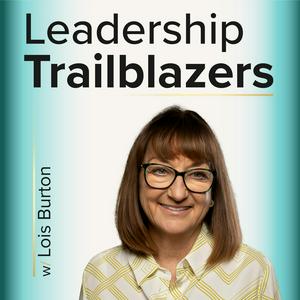
About Leadership Trailblazers
Leadership Trailblazers is for leaders who know the playbook that got them here won’t get them where they need to go.
Each week, the podcast brings you conversations with trailblazing leaders who are redefining what’s possible, alongside practical, focused episodes on building resilience, navigating complexity, and leading with authenticity.
For leaders ready to explore new territory and push boundaries, Leadership Trailblazers charts the future of leadership — together.
Podcast websiteListen to Leadership Trailblazers, Working Hard with Grace Beverley and many other podcasts from around the world with the radio.net app
Get the free radio.net app
- Stations and podcasts to bookmark
- Stream via Wi-Fi or Bluetooth
- Supports Carplay & Android Auto
- Many other app features
Get the free radio.net app
- Stations and podcasts to bookmark
- Stream via Wi-Fi or Bluetooth
- Supports Carplay & Android Auto
- Many other app features

Leadership Trailblazers
Scan code,
download the app,
start listening.
download the app,
start listening.
 UK
UK