

Listen to this podcast in the app for free: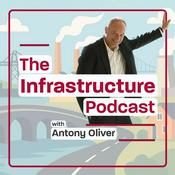 Download for free in the App Store
radio.net
Sleep timer
Save favourites
180 episodes
Powering our digital future with Javier Cavada
14/09/2026 | 41 mins.In this episode we focus on the challenge of meeting the growing global demand for power.
The arrival of Andy Burham as Prime Minister and the latest ministerial reshuffles certainly does not undermine the government’s desire to invest in the infrastructure needed to bolster the UK’s energy supply.
But it is also clear that the acceleration of artificial intelligence, and the growth in the data centres powering the technology, has triggered a new and growing clash between the needs and aspirations of digital tech and our ability to power the reality.
My guest this week is Javier Cavada, President and CEO of Mitsubishi Power for the EMEA region, someone who is without question at the heart of creating and delivering the technology that is capable of bridging this widening power gap.
And he knows all too well the dilemma - while so-called hyperscalers are racing to construct gigawatt-scale data centre campuses within 18 to 36 months, delivery of the high-voltage transmission lines, substations, and generation assets required to energize these facilities often takes 5-to-10-year infrastructure planning cycles.
We therefore face an escalating "infrastructure debt"; a systemic deficit where regional grid capacity, regulatory queues, and aging distribution networks are lagging way behind the relentless power demands of modern computing.
This means that the data sector can no longer rely solely on traditional public power grids for their survival.
Instead, navigating this bottleneck requires a fundamental transition toward a resilience-first mindset, one that fuses rapid network reinforcement and grid-enhancing technologies with on-site, so-called “behind-the-meter” generation and intelligent load balancing.
From hydrogen-ready gas turbines and large-scale battery storage to digital plant optimization and industrial heat management, the technology is there to bridge the gap. But how will it be financed and how will it be delivered at pace?
Resources
Mitsubishi Power website
JAC-series gas turbines capable of using hydrogen blends
TOMONI® digital solutions platform
Battery Energy Storage Systems (BESS)
UK government drive to net zero
DESNZ: UK government energy policy
The World Economic Forum: data centres stats
Javier Cavada Linked In
Wärtsilä, Finnish decarbonisation specialist
Highview PowerBringing Hospital 2.0 to life with Emma Whigham, Martin John and James Britt
07/09/2026 | 43 mins.In this episode are back with the latest in our series exploring the New Hospital Programme (NHP), the single largest investment in NHS infrastructure in recent decades.
Hopefully you have caught the first two episodes on the programme published last February and December in which we explored the immense scale of this massive national endeavour and set out how the supply chain is gearing up to support the ambitious £37bn Hospital 2.0 industrialised delivery programm.
Since our last podcast in February this year, ten delivery partners have been announced to work on the eleven projects in wave one of the programme which will be completed by 2033. In total three project delivery waves will see the huge programme stretch out to the mid 2040s.
Today, we are stepping into the operational reality of how these state-of-the-art facilities will actually be delivered on the ground and how this bold Hospital 2.0 Alliance will actually work in practice.
So lots to talk through and to unpack and to do that I am joined by a panel representing one part of the new Hospital 2.0 Alliance: Emma Whigham, the NHP Hospital 2.0 Alliance Director, Martin John, Strategic Director for Kings Lynn and James Paget hospital trust, and James Britt, Programme Director at construction partner, Skanska.
Some context – historically, and as explained in our last two podcasts, NHS hospitals were built individually by autonomous trusts under a fragmented approach that frequently led to budget overruns and timeline delays. The new (H2A) Hospital 2.0 Alliance Framework aims to completely rewrites that playbook.
By replacing traditional, often adversarial procurement with a 12-year collaborative ecosystem, NHP is backing an industrialised approach, leveraging standardisation, off-site manufacturing, and repeatable designs to speed up construction and drive value.
But moving from theory to practice is highly complex. It demands an entirely new culture of transparency, shared risk, and collective resilience.
So let’s dive in with the folk on the front line and explore how this radical approach actually is set to change things for frontline clinical staff, deliver consistent long term value for taxpayers and crucially, improve patient outcomes.
Resources
New Hospital Programme: Plan for Implementation
Government hospital investment press release
Hospital 2.0 Alliance
Episode 143 - Hospital 2.0
Episode 152 - The Hospital 2.0 Alliance
Supplier Guide.
Skanska website
Kings Lynn and James Paget hospital trust
Queen Elizabeth Hospital trust
Egan review 1998
Latham review 1994Unlocking UK potential with Paul Reilly
31/08/2026 | 40 mins.In this episode I am joined by Paul Reilly, President & Managing Director for the UK & Ireland at global consulting giant WSP.
There is plenty to chat through with Paul today. We are halfway through the parliamentary term and have a new Prime Minister in the shape of former Manchester Mayor Andy Burnham. His administration continues to place infrastructure delivery at the heart of its national economic strategy.
And with NISTA, the National Infrastructure and Service Transformation Authority, now fully embedded in its second year, the focus has shifted sharply from strategic vision to the execution of an unprecedented £718 billion public and private investment pipeline.
Achieving this vision, alongside the mandate to deliver 1.5 million new homes and meet critical net-zero carbon targets, presents a transformative opportunity for the infrastructure sector.
Unlocking this potential requires overcoming deep-rooted, systemic hurdles: embedding digital technology into legacy supply chains, industrialising construction through modern methods, and closing an alarming deficit of 100,000 workers annually.
Businesses like WSP have a key role to play in achieving the required delivery transformation. As one of the world’s leading engineering and professional services consultancies, with 12,000 specialists across the UK and Ireland and a global network of over 83,000 professionals, Paul leads a team capable of rethinking the way we turn ambition into delivery.
Resources
WSP website
NISTA
UK Infrastructure Pipeline
10 year infrastructure strategyAn OBR for infrastructure with Sir John Armitt
24/08/2026 | 42 mins.In this episode discuss how the new Burnham administration can use host public debate to accelerate its plans for infrastructure investment and actually start to turn ambition into reality.
My guest is Sir John Armitt, arguably one of the most prominent, knowledgeable and influential figures when it comes to setting and delivering UK infrastructure policy.
As former longstanding chair of the National Infrastructure Commission, a past president of the Institution of Civil Engineers, former boss of Network Rail and contractor Costain, and the leader of high-profile infrastructure projects such as the 2012 Olympics, Medway Crossing and the Channel Tunnel High Speed Rail Link, he really needs no further introduction.
Sir John is now chair of the new Public Private Partnership Commission which aims to overhaul how the UK selects, funds, delivers, and operates infrastructure. In a recent Financial Times editorial, John and the Commission advocates for a new Office of Budget Responsibility for Infrastructure, designed to, as he puts it, shield major investments from political interference and move decisions away from the so-called "Treasury brain."
Lots to unpack there.
Infrastructure investment is, as we continue to hear, critical to the government’s plans to devolve power, accelerate growth and drive living standards up across the whole of the UK.
But despite huge amounts of ambition, delivery remains challenging. Decades of short-term policy pivots and inflated project delivery costs have hampered our ability to turn great visions into reality.
This has to change. With a £725billion+ infrastructure investment strategy slated over the next decade, split evenly between the taxpayer and private markets, delivering long-term growth hinges on restoring investor confidence and operational stability.
So let’s hear how political leaders like Andy Burnham can better navigate our 5-year electoral cycles and actually unlock the vast amounts of private capital ready and willing to rebuild the nation's delivery capability.
Resources
The Public Private Partnership Commission
FT article "We need and OBR for infrastructure"
Bradshaw Advisory website
NISTA website
Ten year infrastructure plan
UK infrastructure pipelineMega programmes for community benefit with Victoria Johnson
10/08/2026 | 45 mins.In this episode of The Infrastructure Podcast, we discuss mega projects, specifically their potential impact, positive and negative, on the communities they serve and the environment they leave behind.
While historically the success of a mega project was measured in terms of its delivery to budget or completion to schedule, today these metrics have shifted wider and deeper as populations grow and the pressure of climate change bites. Today's measures of success and our focus on the human return on investment, the benefits created to living standards, including carbon reduction, economic growth and environmental improvement. In short, we're no longer just building assets, we're building the social and environmental scaffolding for the 21st century.
To discuss this change and its impact on the infrastructure sector, my guest today is Victoria Johnson, Vice President and global infrastructure executive at infrastructure consultant HDR Engineering, Inc., who has spent the last two decades redefining the architecture of our cities.
The episode was recorded during my recent trip to New York, where she chaired a panel at the Transforming Infrastructure Perform Summit organized by the Infrastructure Policy Advancement team at software giant Bentley Systems. Her panel focused on mega programs for community and climate with fellow experts including Stephanie Wiggins, Chief Executive Officer of Los Angeles Metropolitan Transit Authority, the transit agency preparing for the LA 2028 Olympics, and recently wrapping up the 2026 FIFA World Cup.
Victoria’s work with a wide array of municipal, state and federal leaders globally makes her an ideal expert to tackle this subject today, as does her glittering career, which over the last few decades has spanned advising the Biden-Harris administration on the historic $1.2 trillion Bipartisan Infrastructure Law (BIL) to her leadership in the US Conference of Mayors and the African American Mayors Association.
Victoria certainly bridges the gap between high level public policy and street level impact with recent mega project work, including transformation of JFK, LaGuardia and Newark airports in New York, and innovative insights on planning of Olympic legacies at Milano Cortina 2026 and LA 2028 Olympic games, which shares more deeply in an upcoming white paper she is co-authoring in collaboration Bentely Systems and Bocconi University in Italy.
Resources
Championing Equitable Infrastructure with Victoria Johnson | Data-Smart City Solutions
Investing in people to power our infrastructure | The Hill
Mayors Business Council - United States Conference of Mayors
Governor Hochul Announces JFK Airport Construction Sets Record MWBE Participation With $2.3 Billion in Contracts Awarded | Governor Kathy Hochul (ny.gov)
Milestone Convening of ‘Equity in Infrastructure Project’ | The Equity in Infrastructure Project
Transforming Infrastructure Performance Summit New York 2026
Victoria Johnson | LinkedIn
More Business podcasts
 Thriving Minds with Alberto ZandiBusiness, Education, Entrepreneurship, Personal Journals, Self-Improvement, Society & Culture
 Hot Smart Rich with Maggie Sellers ReumBusiness
 UnhedgedBusiness, Business News, Investing, News
 The Resilient Retail Game Plan - retail insights, retail trends and best practicesBusiness, Entrepreneurship, Management, Marketing
 Working Hard with Grace BeverleyBusiness, Education, Health & Wellness, Marketing, Self-Improvement
 Aspire with Emma GredeBusiness, Entrepreneurship, Society & Culture
 A Bit of OptimismBusiness, Careers, Education, Self-Improvement
 The Diary Of A CEO with Steven BartlettBusiness, Education, Society & Culture
 Prof G MarketsBusiness, Investing
 Embracing Marketing MistakesBusiness, Entrepreneurship, Management, Marketing
Trending Business podcasts
 Macro VoicesBusiness, Investing
 TRAP: The Real Adviser PodcastBusiness, Entrepreneurship, Investing, Marketing
 Money Stuff: The PodcastBusiness, News, Society & Culture
 Ones and ToozeBusiness, Business News, History, News
 Market MakerBusiness, Business News, Investing, News, News Commentary
 The Pomp PodcastBusiness, Investing
 Helm Talks - energy climate infrastructure & moreBusiness
 Raoul Pal: The Journey ManBusiness, Investing
 Chill & Prosper with Denise Duffield-ThomasBusiness, Entrepreneurship
 HUNGRY.Business, Entrepreneurship, Marketing
 Extraordinary Life StoriesBusiness
 How To Become A...Business, Careers, Education, Society & Culture
 Mad Money w/ Jim CramerBusiness, Investing, News
 Rich Dad Radio Show: In-Your-Face Advice on Investing, Personal Finance, & Starting a BusinessBusiness, Entrepreneurship, Investing
 Money BoxBusiness
 The Rational Reminder PodcastBusiness, Investing
 Morning Brew DailyBusiness, Business News, News
 Friends That InvestBusiness, Education, Investing
 Top Traders UnpluggedBusiness, Business News, Investing, News
 Investors' ChronicleBusiness, Business News, Investing, News
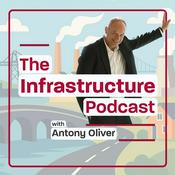
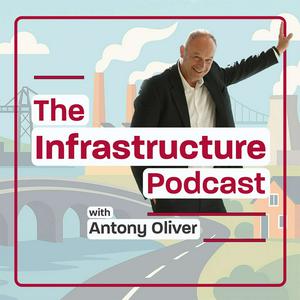
About The Infrastructure Podcast
A new regular podcast series which features conversations with some of the key leaders and influencers from across UK infrastructure sector.
Podcast websiteListen to The Infrastructure Podcast, Thriving Minds with Alberto Zandi and many other podcasts from around the world with the radio.net app
Get the free radio.net app
- Stations and podcasts to bookmark
- Stream via Wi-Fi or Bluetooth
- Supports Carplay & Android Auto
- Many other app features
Get the free radio.net app
- Stations and podcasts to bookmark
- Stream via Wi-Fi or Bluetooth
- Supports Carplay & Android Auto
- Many other app features

The Infrastructure Podcast
Scan code,
download the app,
start listening.
download the app,
start listening.
 UK
UK