
Listen to this podcast in the app for free: Download for free in the App Store
radio.net
Sleep timer
Save favourites
Our Paranormal Afterlife : Finding Proof of Life After Death
Simon Bown
Latest episode
772 episodes
A Journey Into Mediumship
25/10/2026 | 55 mins.In this episode I'm talking to Nick Lloyd about his book 'The Medium’s Path: Embracing the Spirit’s Whisper'
What if the experiences you can’t explain are the beginning of your mediumship journey?
Have you felt a presence, received a sudden knowing, seen Spirit, or experienced something you simply couldn’t explain?
In The Medium’s Path: Embracing the Spirit’s Whisper, experienced medium Nick Lloyd shares his personal journey through childhood visitations, Spirit communication, spiritual development and the discovery of his own mediumistic abilities.
Exploring mediumship development, intuition, Spirit guides, energy, psychic experiences and life beyond the physical, Nick offers an honest and personal look at what it can really mean to follow the path of a medium.
Whether you are new to mediumship, developing your spiritual gifts, attending a development circle, or questioning your own experiences, this book offers insight, encouragement and a different perspective on the journey.
Your journey may have already begun. Are you ready to listen to the whisper?
Bio
Since I was just 3 years old, I've had a remarkable sensitivity to spirits. This extraordinary gift allows me to connect with energies that go beyond the physical world, acting as a bridge between the living and the departed. I find fulfilment in offering solace, resolution, and guidance to those trying to reach out to their loved ones. Frequently, I experience glimpses into the intangible realm, receiving vivid images, visions, and symbols that provide deep insights. Through these experiences, I can visualize loved ones and significant moments, which helps me communicate profound messages from the spirits. This unique ability enables me to gather precise, visual information, as spirits often share specific details about their lives or present intricate imagery, like the contents of a person’s wardrobe. I truly value the understanding that every message, no matter how complex, carries significant meaning.
https://www.nicklloydmedium.com/
https://www.amazon.com/Mediums-Path-Embracing-Spirits-Whisper-ebook/dp/B0HH8J4MFK
https://simonbown.com/
https://www.patreon.com/c/ourparanormalafterlife
My book 'Verified Near Death Experiences' https://www.amazon.com/dp/B0DXKRGDFP
My book 'Aspects of Alien Abduction' https://www.amazon.com/dp/B0GRRPCT9Y
Hosted by Simplecast, an AdsWizz company. See pcm.adswizz.com for information about our collection and use of personal data for advertising.The Birth of Physical Mediumship
24/10/2026 | 11 mins.This episode I am reading from Julie Adreani's book 'Physical : The Windy City Circle'
Julie Adreani is a physical medium, spiritualist and healing practitioner. Her background includes more than two decades working as a paramedic, alongside experience in neonatal care and bereavement counselling.
Drawing on experiences that began in childhood, Julie discusses her development as a physical medium and her involvement in séances, where she has explored some of the more extraordinary aspects of spirit communication. She offers insight into phenomena including ectoplasm, independent voice communication and spirit materialisation, as well as the role of trance in physical mediumship. Julie also examines the challenges of working in a field often met with scepticism, the importance of ethical responsibility and the relationship between mediumship, spiritual healing and personal experience.
Bio
My earliest memory of being able to see and sense spirit was at the early age of four. My guardian in a suit and derby hat has served me well through the years. I can’t and don’t take credit for my abilities, God made me this way. I’ve dedicated my life to God and my family with a high degree of paranormal ability thrown in. This is a very natural and undeniable ability. The more I use my abilities the more balance I find in my daily life.
I grew up and have always lived in the Chicago metropolitan area. To me being a medium is not a profession so much as it is a life of service. My experiences have given me an existence that is very personally and professionally fulfilling. This work is very humbling. I am forever grateful and thankful. I feel like I’m living life at my fullest. My family and home are my favorite things. French cheesecake is a serious weakness, and as my girlfriends can attest to. I also like liquid spirits and can yap endlessly when in the company of both. My goal is to have everyone walk away in a better place than before they met me. The deceased have so much to share about what creates a happy successful life and it is my great honor to share their messages.
https://julieadreanispiritmedium.com/
ministerofangels@gmail.com
https://simonbown.com/
https://www.patreon.com/c/ourparanormalafterlife
My book 'Verified Near Death Experiences' https://www.amazon.com/dp/B0DXKRGDFP
My book 'Aspects of Alien Abduction' https://www.amazon.com/dp/B0GRRPCT9Y
Hosted by Simplecast, an AdsWizz company. See pcm.adswizz.com for information about our collection and use of personal data for advertising.Past Lives and Reincarnation
23/10/2026 | 1h 3 mins.This week I am talking about Barry Eaton's book 'Past Lives Unveiled, Discover How Consciousness Moves Between Lives'.
What are soul groups? What is the reality of the spirit world? What lies at the mysterious realm of life between lives? Do our past lives really catch up with us in the present? Past Lives Unveiled takes a fresh, new look at past lives and reincarnation. It features some highly unusual case studies, including two intriguing hypnotic regressions by eminent psychologist, author and past life expert Dr Michael Newton. Two sisters were regressed independently by Dr Newton and went back to life in a Stone Age tribe, details of which have until now been limited to members of the Newton Institute.
Barry has wide international experience in all areas of the media and entertainment industries. He is a highly experienced radio and TV presenter, having spent many years with the Australian Broadcasting Corporation and various commercial radio and TV stations. His profile embraces news and sports anchoring, lifestyle shows, current affairs, talk back radio and in what feels like an earlier incarnation, was even a DJ.
His first book Afterlife Uncovering the Secrets of Life After Death , tracing the journey of the spirit in between incarnations, was published in 2011.
No Goodbyes is the follow-on from Afterlife and was released in 2015. His third book, The Joy of Living, Postponing the Afterlife was co-written with his partner Anne Morjanoff and tells how he healed from cancer by combining holistic and mainstream medical practices.
Barry is a qualified astrologer, psychic and medium and in 2012 did what he terms a postgraduate course in mediumship at the world famous Arthur Findlay College in the UK. In 2012 he was given the 2012 Hall of Fame Award by the Australian Psychics Association and made a life member.
Barry is also well known in the US through a series of radio and TV interviews, including three major appearances on the iconic Coast to Coast program and of course Radio Out There.
His third book, which he wrote with his partner Anne Morjanoff, was released in April 2017. The Joy of Living Postponing the Afterlife tells of his battle with cancer and how he survived the ordeal with a combination of various holistic practices and therapies along with mainstream medicine. Anne provides the other half of the story, proving how the love and support of a partner is so vital to the whole experience.
https://www.amazon.com/Past-Lives-Unveiled-Discover-consciousness-ebook/dp/B07S2ZKC1W/
https://radiooutthere.com/
https://simonbown.com/
https://www.patreon.com/c/ourparanormalafterlife
My book 'Verified Near Death Experiences' https://www.amazon.com/dp/B0DXKRGDFP
My book 'Aspects of Alien Abduction' https://www.amazon.com/dp/B0GRRPCT9Y
Hosted by Simplecast, an AdsWizz company. See pcm.adswizz.com for information about our collection and use of personal data for advertising.Physical Mediumship
18/10/2026 | 56 mins.In this episode I'm talking to Julie Adreani about her book 'Physical Mediumship: The Windy City Circle'
Julie Adreani is a physical medium, spiritualist and healing practitioner. Her background includes more than two decades working as a paramedic, alongside experience in neonatal care and bereavement counselling.
Drawing on experiences that began in childhood, Julie discusses her development as a physical medium and her involvement in séances, where she has explored some of the more extraordinary aspects of spirit communication. She offers insight into phenomena including ectoplasm, independent voice communication and spirit materialisation, as well as the role of trance in physical mediumship. Julie also examines the challenges of working in a field often met with scepticism, the importance of ethical responsibility and the relationship between mediumship, spiritual healing and personal experience.
Bio
My earliest memory of being able to see and sense spirit was at the early age of four. My guardian in a suit and derby hat has served me well through the years. I can’t and don’t take credit for my abilities, God made me this way. I’ve dedicated my life to God and my family with a high degree of paranormal ability thrown in. This is a very natural and undeniable ability. The more I use my abilities the more balance I find in my daily life.
I grew up and have always lived in the Chicago metropolitan area. To me being a medium is not a profession so much as it is a life of service. My experiences have given me an existence that is very personally and professionally fulfilling. This work is very humbling. I am forever grateful and thankful. I feel like I’m living life at my fullest. My family and home are my favorite things. French cheesecake is a serious weakness, and as my girlfriends can attest to. I also like liquid spirits and can yap endlessly when in the company of both. My goal is to have everyone walk away in a better place than before they met me. The deceased have so much to share about what creates a happy successful life and it is my great honor to share their messages.
https://julieadreanispiritmedium.com/
ministerofangels@gmail.com
https://simonbown.com/
https://www.patreon.com/c/ourparanormalafterlife
My book 'Verified Near Death Experiences' https://www.amazon.com/dp/B0DXKRGDFP
My book 'Aspects of Alien Abduction' https://www.amazon.com/dp/B0GRRPCT9Y
Hosted by Simplecast, an AdsWizz company. See pcm.adswizz.com for information about our collection and use of personal data for advertising.A 5 Year Old's Near Death Experience
17/10/2026 | 10 mins.This episode I am reading from E.A. Sabean's book 'My Life Between Worlds: Ghosts, Near-Death Experiences, Psychic Dreams, and the Afterlife'
What if the boundary between this life and the next is closer than we think?
At five years old, E. A. Sabean found herself moving through a hospital, unaware that she was outside her body. As a teenager, she experienced another unexplained journey—through the wall of her bedroom and into the sky above her neighborhood. Years later, a beloved friend appeared to take her flying at the very moment he died.
These encounters were only part of a lifetime of experiences that left her questioning the nature of reality.
In My Life Between Worlds, Sabean shares her personal accounts of near-death experiences, ghosts, prophetic dreams, premonitions, an extraordinary healing, and a face-to-face encounter with an angel. Some experiences brought comfort. Others frightened her so deeply that she still sleeps with a light on.
Among the stories she recounts:
• Dreams that revealed hidden truths and offered a chance to say goodbye.
• Overpowering premonitions that prompted her to change her plans.
• Footsteps in an empty attic and an unseen arrival at her apartment.
• A voice heard through a phone before anyone discovered that a tenant had died.
• Vivid dreams of Atlantis, possible past lives, and a joyful reunion with her mother.
With candor, curiosity, and occasional humor, Sabean explores how these experiences shaped her childhood, followed her into adulthood, and gradually changed her fear of death into a conviction that life continues.
She also reflects on the questions that remain. Why do near-death experiences differ so much? Could dreams allow the living and the departed to meet? Do we exist before birth? And might we have lived other lives that we no longer remember?
This intimate memoir invites readers interested in the paranormal, near-death experiences, and the afterlife to consider one woman’s encounters and the possibilities they suggest. Sabean distinguishes what she remembers from what she wonders, leaving room for uncertainty even as she shares her deeply held beliefs.
Her experiences have given her reasons to believe—and more questions than she ever expected.
Who are we? And what happens when we leave this life?
https://www.amazon.com/Life-Between-Worlds-Near-Death-Experiences-ebook/dp/B0HLWTM7C9
https://simonbown.com/
https://www.patreon.com/c/ourparanormalafterlife
My book 'Verified Near Death Experiences' https://www.amazon.com/dp/B0DXKRGDFP
My book 'Aspects of Alien Abduction' https://www.amazon.com/dp/B0GRRPCT9Y
Hosted by Simplecast, an AdsWizz company. See pcm.adswizz.com for information about our collection and use of personal data for advertising.
More Alternative Health podcasts

Trending Alternative Health podcasts
About Our Paranormal Afterlife : Finding Proof of Life After Death
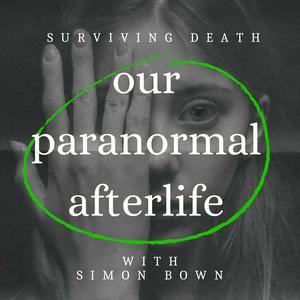
Do you ever wonder if we survive death? Join me as I delve into compelling evidence that shows our consciousness continues when our body dies. Explore near-death experiences, reincarnation, mediumship, and other fascinating phenomena through insightful discussions with researchers and individuals who have had remarkable experiences. Prepare to reevaluate how you perceive life and death as we journey through these intriguing topics.Support the podcast on Patreonhttps://www.patreon.com/ourparanormalafterlifeBecome a supporter of this podcast: https://www.spreaker.com/podcast/our-paranormal-afterlife-finding-proof-of-life-after-death--5220623/support.
Podcast websiteListen to Our Paranormal Afterlife : Finding Proof of Life After Death, The Julia Bradbury Podcast and many other podcasts from around the world with the radio.net app
Get the free radio.net app
- Stations and podcasts to bookmark
- Stream via Wi-Fi or Bluetooth
- Supports Carplay & Android Auto
- Many other app features
Get the free radio.net app
- Stations and podcasts to bookmark
- Stream via Wi-Fi or Bluetooth
- Supports Carplay & Android Auto
- Many other app features
Our Paranormal Afterlife : Finding Proof of Life After Death
Scan code,
download the app,
start listening.
download the app,
start listening.
Our Paranormal Afterlife : Finding Proof of Life After Death: Podcasts in Family
 UK
UK