
Listen to this podcast in the app for free: Download for free in the App Store
radio.net
Sleep timer
Save favourites
220 episodes
Why Prescribing HRT Made Her a Target with Dr Louise Newson #193
29/10/2026 | 54 mins.Dr Louise Newson, GP, menopause specialist and founder of Newson Health and the Balance app, joins Laura Dowling for a frank conversation about hormone replacement therapy (HRT), the barriers women face in accessing treatment and the criticism she has faced for challenging established approaches to menopause care.
Louise traces her advocacy back to the 2002 Women's Health Initiative (WHI) study and the publication of NICE's first menopause guidance in 2015. She explains why she believes the risks of HRT have been misunderstood, why prescribing remains low, and why the distinction between different types of hormones matters.
Laura and Louise discuss testosterone for women, starting HRT later in life, individual responses to estradiol, and difficult questions around hormone treatment following breast cancer. Louise also explores progesterone, PMS, premenstrual dysphoric disorder (PMDD) and postnatal depression, including the influence of Dr Katharina Dalton's work. These are complex areas where treatment decisions require individual medical advice.
Louise speaks openly about professional opposition, BBC Panorama, correspondence involving the British Menopause Society and the scrutiny of her clinic. She reflects on the personal cost of speaking out, why she continues to campaign for better menopause education and what she hopes will change for women's healthcare.
🔑 Key Points
HRT prescribing fell off a cliff after 2002
Louise kept prescribing HRT as a GP for decades and only realised after NICE's 2015 guidance that many colleagues had stopped, while her friends were being given antidepressants instead.
Guidelines are only a guide
She says the NICE guidance mentions risk 22 times more than benefit and groups synthetic and bioidentical hormones together, which leaves busy clinicians confused.
The over-60 risk came from synthetic hormones
The heart attack signal in the Women's Health Initiative study was in women given horse-derived oestrogen and a synthetic progestogen, not the estradiol and progesterone she prescribes.
Testosterone has a long history in women
It was prescribed in the 1940s and '50s for period problems and menopausal symptoms, and she says its reputation comes from the synthetic anabolic steroids of the '60s and '70s.
Some women need more than the licensed dose
Skin varies in how much estradiol it absorbs, and her clinic's published data shows about a fifth of patients need a higher than licensed dose.
Progesterone changed her thinking on PMDD
A colleague's own postnatal illness led Louise to Katharina Dalton's work, and her clinic now prescribes progesterone for PMS, PMDD and postnatal depression.
Ten years of being targeted
Louise says the emails she obtained show people trying to silence her, and the pressure on her and her family brought her close to giving up.
Only 5% of menopausal women get HRT
Every menopause guideline calls HRT first-line treatment for most women, yet she says only 14% of menopausal women in the UK and 5% globally are prescribed it.
📚 Resources
Newson Clinic
The hormone clinic Louise co-founded with Dr Rebecca Lewis
Balance
Louise's free app for tracking symptoms and learning about hormone health
Confidence in Hormones
The hormone health education programme for doctors and healthcare professionals
⏱️ Timestamps
00:00 — Welcome to The Laura Dowling Experience
03:47 — Rereading the WHI study after NICE's 2015 guidance
11:18 — Why HRT is scrutinised like no other medicine
15:43 — Testosterone's forgotten history in women
20:43 — Starting HRT after 60
24:43 — "A body of people trying to take me down"
29:33 — If she were a male gynaecologist
32:07 — Are her doses too high?
35:45 — HRT after breast cancer
39:43 — Progesterone, PMDD and postnatal depression
42:16 — The Care Quality Commission inspection
45:47 — Running a private clinic
48:27 — Has the pendulum swung too far?
53:02 — Advice for young people and the meaning of life
Thanks for listening! You can watch the full episode on YouTube here. Don’t forget to follow The Laura Dowling Experience podcast on Instagram @lauradowlingexperience for updates and more information. You can also follow our host, Laura Dowling, @fabulouspharmacist for more insights and tips. If you enjoyed this episode, please subscribe and leave a review—it really helps us out! Stay tuned for more great conversations.
Hosted on Acast. See acast.com/privacy for more information.Bitesize Moment: "Midlife Muscle Matters." — Dr Clare Cromwell on Strength in Midlife
27/10/2026 | 8 mins.In this bitesize moment pulled from the Laura Dowling Experience back catalogue, Dr Clare Cromwell explains why muscle is just as important as bone in midlife, and lays out a simple twice-weekly strength routine that protects against falls and fractures.
We talk a lot about protecting our bones in midlife. But what if the real key to staying steady on your feet, and even to your brain health decades from now, is your muscles?
🔑Key Points
• As oestrogen drops, bone density naturally declines, but muscle loss speeds up too, especially after menopause
• Strong muscles improve balance and reaction time, so you're less likely to fall, and better protected if you do
• Aim for at least two strength sessions a week: roughly three exercises for your upper body and three for your lower body, a few sets of moderate reps
• It doesn't need to be heavy lifting or a gym membership; a couple of dumbbells at home can be enough, as long as you feel it
🎧 Listen to the full episode here.
Thanks for listening! You can watch the full episode on YouTube here. Don’t forget to follow The Laura Dowling Experience podcast on Instagram @lauradowlingexperience for updates and more information. You can also follow our host, Laura Dowling, @fabulouspharmacist for more insights and tips. If you enjoyed this episode, please subscribe and leave a review—it really helps us out! Stay tuned for more great conversations.
Hosted on Acast. See acast.com/privacy for more information.What Your Vet Wishes You Knew About Your Pet with Charles Cosgrave #192
22/10/2026 | 53 mins.Veterinary surgeon and founder of Village Vets, Charles Cosgrave, joins Laura to share what every pet owner should know about keeping their animals healthy, happy and safe — from neutering and pet insurance to behavioural problems, emergency care and the realities of life as a vet.
Growing up on a dairy farm in County Meath, Charles watched his father answer veterinary calls at all hours, even on Christmas Day. After qualifying from UCD and working in the UK, he returned to Ireland and helped build Village Vets, which has grown to 35 locations, including three 24-hour emergency centres.
Charles takes us behind the scenes of veterinary medicine, explaining what happens during overnight emergencies, why children can provide the most useful information about a sick pet and how veterinary care has evolved to include specialist treatment for conditions such as diabetes, epilepsy and cancer.
Laura also asks the questions many dog owners have: Should you neuter your dog? What should you look for in pet insurance? How can you prevent behavioural problems? And what needs to change to tackle puppy farming in Ireland?
They explore the responsibility of pet ownership, the importance of early training and socialisation, the challenges of treating seriously ill animals and the difficult decisions surrounding end-of-life care.
Alongside the practical advice, Charles shares the challenges of growing a family business, the shortage of vets in Ireland and why, despite running 35 practices, he still misses working directly with animals.
🔑 Key Points
Neutering and pet health:
Charles discusses neutering male dogs, potential health concerns and factors owners should consider with their vet.
Pet insurance:
Why Charles recommends insurance, what to check before choosing a policy and how switching providers can affect cover for existing conditions.
Training and behaviour:
The importance of socialising dogs early, establishing routines and helping them adjust to people, noise and unfamiliar environments.
Puppy farming and microchipping:
Charles discusses dog breeding in Ireland, existing microchipping requirements and the challenges of tackling irresponsible breeding.
When pets become seriously ill:
How vets manage chronic conditions including diabetes and epilepsy, treat cancer and approach difficult end-of-life decisions.
Inside veterinary medicine:
From overnight emergencies to specialist care, Charles explains the pressures facing vets and the growing demand for veterinary services.
📚 Resources
Village Vets
Charles's practice group, 35 clinics across Ireland and three 24-hour emergency centres
UCD School of Veterinary Medicine
where Charles trained, and still the main route into the profession
Dog microchipping
what's required in Ireland, and the measure Charles says would curb puppy farming
⏱️ Timestamps
02:37 – Growing up with a vet for a father
05:36 – How vets treat different animal species
07:30 – Building Village Vets
10:00 – Veterinary education and the shortage of vets
13:44 – Inside 24-hour emergency veterinary care
15:45 – Why children notice changes in sick pets
17:00 – Pet ownership and rehoming
19:20 – Neutering male dogs
21:09 – Puppy farming and microchipping
23:30 – The responsibility of owning a dog
26:30 – Unusual pets and animal stories
29:30 – Cats, dogs and different personalities
31:54 – Dog training and socialisation
33:41 – Pet insurance and switching providers
35:25 – Diabetes, epilepsy and chronic illness
37:20 – End-of-life decisions and cancer treatment
40:20 – Why Charles misses being a practising vet
43:00 – Growing Village Vets while maintaining quality
50:15 – Be bold, be brave and back yourself
Thanks for listening! You can watch the full episode on YouTube here. Don’t forget to follow The Laura Dowling Experience podcast on Instagram @lauradowlingexperience for updates and more information. You can also follow our host, Laura Dowling, @fabulouspharmacist for more insights and tips. If you enjoyed this episode, please subscribe and leave a review—it really helps us out! Stay tuned for more great conversations.
Hosted on Acast. See acast.com/privacy for more information.Bitesize Moment: "I Will Not Be Pressured Into Anything." — Meghan O'Neill on Consent and Boundaries
20/10/2026 | 6 mins.In this bitesize moment pulled from the Laura Dowling Experience back catalogue, Meghan O'Neill, online content creator and mother of two explains how she holds firm boundaries for herself, then how she is teaching her young children about consent, from everyday moments like a kiss or a tickle through to the bigger conversations about porn and never being with someone who is drunk.
What if the most important thing you teach your kids about sex has nothing to do with sex, and everything to do with the word no?
🔑Key Points
• Meghan will not be pressured into anything; she can walk away right up to the last moment if something does not feel right
• She wants her kids to know porn is not real, because no one ever told her that
• At home, her kids can say no to a kiss or a tickle, and that no is respected straight away
• She is direct with her son: never sleep with someone who is drunk, because they cannot consent
🎧 Listen to the full episode here.
Thanks for listening! You can watch the full episode on YouTube here. Don’t forget to follow The Laura Dowling Experience podcast on Instagram @lauradowlingexperience for updates and more information. You can also follow our host, Laura Dowling, @fabulouspharmacist for more insights and tips. If you enjoyed this episode, please subscribe and leave a review—it really helps us out! Stay tuned for more great conversations.
Hosted on Acast. See acast.com/privacy for more information.What Advanced Breast Cancer Really Looks Like with Helen Forristal & Dr Tonya Leonard #191
15/10/2026 | 1h 4 mins.#AD - This episode is sponsored by AstraZeneca
Dr Tonya Leonard was a GP when she found a lump she was sure was a cyst. By half past nine that morning, she was being told it was breast cancer and asked to decide by the following week whether she had finished her family. Her twin boys were just 18 months old.
Sixteen years, a second primary cancer and a diagnosis of advanced breast cancer later, Tonya joins Laura alongside Helen Forristal, Director of Nursing Services at the Marie Keating Foundation, for an honest conversation about living with advanced breast cancer.
They discuss metastatic or secondary breast cancer, breast cancer recurrence and the signs and symptoms women should be aware of, alongside treatment, scans, scanxiety, cancer fatigue and the difficulty of planning life beyond the next result.
Helen explains why advanced breast cancer remains largely invisible in Ireland, with no official count of how many women are living with it, and discusses the importance of specialist cancer support. Tonya shares the reality of living life in three-month segments, navigating mental health after diagnosis and learning that palliative care does not only mean end-of-life care.
The conversation is part of Living Loudly, Dying to be Heard, a campaign by AstraZeneca and supported by the Marie Keating Foundation, highlighting the experiences of people living with advanced breast cancer.
🔑 Key Points
Advanced breast cancer means it has spread
The cancer has moved from the breast to another organ; in Tonya's case, to lesions on her lung and under her arm.
Life in three-month segments
With a scan every three months, Tonya finds it hard to plan past the next result, the anxiety Laura calls scanxiety.
Fatigue is not the same as tiredness
Tonya describes cancer fatigue as like an injection of horse tranquilliser: once she feels it rising, she has minutes to lie down.
Women are living longer with it
Helen calls it the long middle, moving through lines of treatment; one woman in her group has lived with advanced breast cancer for 21 years.
Nobody is counting
Recurrences aren't recorded the way first diagnoses are; Helen's estimate is around 30% of women with primary breast cancer, and a University of Limerick project has started counting.
Know the signs of a recurrence
Symptoms depend on where it spreads, from a cough and breathlessness to weight change or bone pain; if something hasn't settled in three weeks, ask your doctor, "Could this be cancer?"
Mental health support needs to be specialist
Tonya waited eight weeks to see a psychologist; psycho-oncology services now run in Ireland's eight cancer centres.
Palliative care is not only for the end of life
Palliative teams help manage symptoms and support families, and the CLIMB programme supports children aged 5 to 12 who have a parent with cancer.
📚 Resources
Living Loudly. Dying to be Heard
A campaign by AstraZeneca and supported by the Marie Keating Foundation
Positive Living
The Marie Keating Foundation's support programme for people with advanced cancer
CLIMB
The HSE programme for children aged 5 to 12 affected by a parent's cancer
⏱️ Timestamps
00:00 — Welcome
01:52 — Helen Forristal and the Marie Keating Foundation
02:51 — Dr Tonya Leonard’s breast cancer diagnosis
06:21 — Advanced cancer support and Positive Living
09:28 — Scanxiety and living between results
12:08 — Living longer with advanced breast cancer
17:14 — Cancer fatigue
22:58 — Fertility and “Have you finished your family?”
29:17 — How many women are living with advanced breast cancer?
30:41 — Signs and symptoms of recurrence
37:57 — Mental health and psycho-oncology
46:45 — What palliative care really means
51:40 — Family, milestones and living with uncertainty
56:28 — Advice for young people
Thanks for listening! You can watch the full episode on YouTube here. Don’t forget to follow The Laura Dowling Experience podcast on Instagram @lauradowlingexperience for updates and more information. You can also follow our host, Laura Dowling, @fabulouspharmacist for more insights and tips. If you enjoyed this episode, please subscribe and leave a review—it really helps us out! Stay tuned for more great conversations.
Hosted on Acast. See acast.com/privacy for more information.
More Health & Wellness podcasts





Trending Health & Wellness podcasts





















About The Laura Dowling Experience
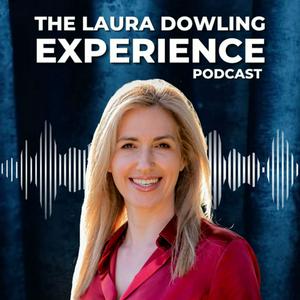
Conversations about health, science, wellness, life, love, sex and everything in-between. Laura is a Pharmacist who loves to talk to interesting people about their unique life and work experiences. See @fabulouspharmacist on instagram for more information. Hosted on Acast. See acast.com/privacy for more information.
Podcast websiteListen to The Laura Dowling Experience, Get Sleepy: stories for sleep and many other podcasts from around the world with the radio.net app
Get the free radio.net app
- Stations and podcasts to bookmark
- Stream via Wi-Fi or Bluetooth
- Supports Carplay & Android Auto
- Many other app features
Get the free radio.net app
- Stations and podcasts to bookmark
- Stream via Wi-Fi or Bluetooth
- Supports Carplay & Android Auto
- Many other app features

The Laura Dowling Experience
Scan code,
download the app,
start listening.
download the app,
start listening.
The Laura Dowling Experience: Podcasts in Family
 UK

