

Listen to this podcast in the app for free: Download for free in the App Store
radio.net
Sleep timer
Save favourites
31 episodes
Childrens' Health: What's Normal & When to Worry with Paediatrician Dr Lillie Parker
20/09/2026 | 54 mins.Between Instagram reels, TikTok trends and the 3am WhatsApp group panic, parents today are drowning in advice about their children's health, and half of it contradicts the other half. So how do you actually know what's worth listening to?
In this episode of Vision of Health, Dr Frankie sits down with paediatrician Dr Lillie Parker (known online as ‘Doctor Lils’) for a refreshingly honest, no judgement conversation about raising healthy kids in the real world, not the Instagram perfect one. They cover everything from sleep and fussy eating to rashes, wheeze and vaccines, with Dr Lils sharing what's actually backed by evidence versus what's just noise.
Expect practical, reassuring guidance you can use immediately, plus a few myths that deserve to be retired for good.
In this episode, you'll learn:
00:28 Meet Dr Lillie Parker, aka Doctor Lils
00:38 Where to actually find trustworthy children's health advice online
02:42 The health myths that make Dr Lils's eyes roll (yes, "natural is always better" is one of them)
05:23 What good child health really looks like in everyday family life
11:25 How to handle fussy eating without the guilt trip
15:14 Why "not sporty" doesn't mean "not active," and how to help kids who hate PE find movement they love
19:11 How much sleep kids actually need, and why broken sleep doesn't mean something's wrong
21:16 The BBC investigation into unregulated sleep consultants and unsafe sleep advice
27:08 How many colds and infections a year is genuinely normal for a nursery age child
30:37 What to do when you're not happy with a diagnosis and how to push for a second opinion
33:53 Rashes, wheeze and head bumps: the signs that mean it's time to get checked
41:16 Why vaccination is still one of medicine's biggest wins, and how to spot anti vax misinformation
47:19 Screen time advice that doesn't spiral into mum guilt
50:05 What a realistic, "good enough" day of health looks like for busy families
There's no such thing as 'perfect parenting', and this episode is proof that good enough, done consistently, is more than enough. Most of children's health comes down to a few simple foundations, knowing what's normal, and trusting yourself enough to ask for help when something feels off.
This episode is sponsored by Hiya. Featuring the Hiya Kids Daily Multivitamin. Contains Vitamin D and 14 other essential vitamins and minerals. Formulated for kids Age 3-12 years. Head to hiyahealth.com to learn more and get 50% off your first order today with my discount code DF50.
Connect with Dr Lillie Parker
Instagram: https://www.instagram.com/doctorlils/
Follow Dr Frankie Jackson-Spence @drfrankiejs
nstagram: https://www.instagram.com/drfrankiejs/
Follow Vision of Health
Instagram: https://www.instagram.com/visionofhealthpod/
If this episode helped clear up some of the confusion, send it to a fellow parent who is stuck scrolling for answers at midnight.
Hosted on Acast. See acast.com/privacy for more information.Do I Have ADHD, Or Is Social Media Telling Me I Do? with Dr Judith Mohring
13/09/2026 | 55 mins.ADHD has become one of the most talked-about mental health conditions online, but separating genuine symptoms from everyday forgetfulness, distraction and personality traits can be surprisingly difficult.
In this episode of Vision of Health, we take a closer look at what ADHD really is, how it can present beyond the stereotypical image of a hyperactive child, and why so many adults are only being diagnosed later in life.
Joining Dr Frankie is Dr Judith Mohring, a consultant psychiatrist with more than 25 years of experience working with ADHD. She is also the founder of ADHDEd, a platform focused on helping clinicians and patients better understand the assessment and treatment of ADHD.
We explore why ADHD can be missed for years, particularly in women, what happens in the brain, the connection between ADHD and emotional regulation, eating behaviours and sleep, and what changing hormones can mean for symptoms. We also look at medication, exercise, diet, GLP-1 receptor agonists and some of the latest thinking around the biology of ADHD.
In this episode you'll learn:
00:30 Do I Have ADHD or Is Social Media Telling Me I Do?
03:10 Diagnosed With ADHD in Midlife: What It Changes
04:27 What Is ADHD? Understanding the ADHD Diagnosis
06:40 ADHD Symptoms: Why It Doesn’t Always Look Like Hyperactivity
10:17 Why ADHD Is Often Missed or Diagnosed Later in Life
13:01 ADHD, Social Media and Screen Time: Is TikTok Making Us Less Focused?
14:14 ADHD and Dopamine: What’s Actually Happening in the Brain?
18:36 ADHD, Distraction and Hyperfocus: Why You Get Sidetracked
20:23 Is ADHD Genetic? Can ADHD Be Passed From Parents to Children?
23:02 Who Should Get Assessed for ADHD? When Do You Need a Diagnosis?
25:50 ADHD and Emotional Regulation: Sensory Overload and Autism
32:21 ADHD Time Blindness: Why You’re Always Running Late
35:14 ADHD and Binge Eating: How ADHD Can Affect Eating
36:57 ADHD in Women: How Hormones, Perimenopause and Menopause Affect Symptoms
ADHD isn't simply a question of whether you're distracted, late, energetic or forgetful. As this conversation makes clear, it can be much more nuanced than that, and a diagnosis doesn't necessarily mean that something is "wrong" with you. For some people, understanding how their brain works can provide a new framework for both their challenges and their strengths.
Learn more about Dr Judith Mohring: @adhded.with.drjudith
Website: https://www.diversediagnostics.co.uk/
Instagram: https://www.instagram.com/adhded.with.drjudith/
Follow Dr Frankie Jackson-Spence: @drfrankiejs
https://www.instagram.com/drfrankiejs/
Don’t forget to follow Vision of Health on Instagram too: https://www.instagram.com/visionofhealthpod
Hosted on Acast. See acast.com/privacy for more information.How Food Shapes Your Brain: What a Psychologist Wants You To Know - with Kimberley Wilson
06/09/2026 | 1hCan food really shape your brain? Chartered psychologist Kimberley Wilson on the science of nutrition, mood and mental health.
We treat the brain and the body as if they’re two different projects. A cardiologist for the heart, a gastroenterologist for the gut, a psychologist for the mind. But the brain is an organ, oxygenated by the same blood, fed by the same nutrients, and shaped by the same lifestyle as everything else.
As “brain health” becomes the next wellness buzzword and the internet is flooded with gut-brain axis claims, supplement pitches and mood-food promises, working out what’s actually supported by evidence has never been harder.
In this episode, Dr Frankie is joined by chartered psychologist and MSc-qualified nutritionist Kimberley Wilson, author of How to Build a Healthy Brain and Unprocessed, for a grounded, evidence-based conversation on what food, sleep, stress and movement actually do to your brain - and where the popular claims fall apart.
Drawing on more than a decade of clinical work, including seven years running the therapy service at Europe’s largest women’s prison, Kimberley explains where the science is strong, where it’s overstated, and why looking after your brain is about far more than doing a crossword.
In this episode, you’ll learn:
Timestamps:
00:00 Why We Can’t Separate the Brain from the Body
01:42 What Working in a Women’s Prison Taught Her About Nutrition and Behaviour
04:30 The Ultra-Processed Food Problem: What It Does to Your Brain
06:51 Insulin Resistance, Type 3 Diabetes and Dementia Risk
10:41 Why Healthy Life Expectancy in the UK Is So Low
13:19 Sleep as a Jet Wash for the Brain
16:12 Exercise, Brain Volume and Building Cognitive Reserve
19:28 Why the Benefits of Movement Are Independent of Weight Loss
22:00 The Gut-Brain Axis: What’s Real and What’s Overhyped
25:25 The 90% Serotonin Myth — and What It Actually Means
31:57 Why We Reach for Sugar When We’re Stressed
34:00 The Milkshake and Horror Movie Experiment
36:14 What Alcohol Really Does to Your Brain
38:11 The Red Wine Myth and the J-Curve Explained
39:52 Why the Mediterranean Diet Has the Strongest Data
42:25 The Truth About Blueberries and “Brain Foods”
46:05 The Reversed Flynn Effect: Are We Getting Less Intelligent?
50:04 Mindfulness and Gratitude — Fluffy or Physiological?
52:07 When Mindfulness Isn’t the Right Tool
55:41 Three Practical Tips for Building a Healthier Brain
Your brain isn’t a separate machine sitting on top of your body. It’s an organ, and it responds to the same things every other organ does - what you eat, how you sleep, how you move, and how you handle stress.
The evidence doesn’t support magic foods, single supplements, or one-size-fits-all fixes. It points, consistently, to overall dietary patterns, physical activity, sleep quality and social connection as the levers that actually matter for long-term brain health.
Connect with Kimberley Wilson
Instagram: https://www.instagram.com/foodandpsych
Follow Dr Frankie Jackson-Spence on Instagram: @drfrankiejs
https://www.instagram.com/drfrankiejs/
FOLLOW Vision of Health on Instagram: https://www.instagram.com/visionofhealthpod/
If you enjoyed this episode, please subscribe, leave a review and share it with someone who’s tired of oversimplified “brain food” advice.
Hosted on Acast. See acast.com/privacy for more information.Have We Got Ultra-Processed Foods All Wrong? with Specialist Dietitian Nichola Ludlam-Raine
30/08/2026 | 40 mins.Are ultra-processed foods really THAT bad? Dietitian Nichola Ludlam-Raine separates fact from fiction.
Ultra-processed foods (UPFs) have become one of the biggest talking points in nutrition. They're often blamed for obesity, heart disease, type 2 diabetes, gut health issues, and even poor mental wellbeing. But what does the evidence actually show?
As 'no UPF' products flood supermarket shelves and social media amplifies fear around food, separating evidence from hype has never been more difficult.
In this episode, Dr Frankie is joined by specialist dietitian Nichola Ludlam-Raine, author of How Not to Eat Ultra-Processed Food, for a balanced, evidence-based conversation on what ultra-processed foods actually are, what the research shows, and how to make healthier food choices without unnecessary fear or restriction.
With over 16 years of experience across the NHS and private practice, Nichola explains where the evidence is strong, where it remains uncertain, and why your overall dietary pattern matters far more than any single ingredient.
In this episode, you'll learn:
What ultra-processed foods actually are and how they differ from processed foods.
What the evidence says about obesity, diabetes, heart disease, and mental wellbeing.
Whether additives and emulsifiers are really harming your gut.
Why much of the current evidence is observational and how to interpret it.
How UPFs influence appetite, cravings, and satiety.
The role of sleep, stress, exercise, and overall diet quality.
Whether oat milk, protein bars, protein powders, and convenience foods deserve their bad reputation.
Plant-based processed foods vs animal-based options.
Simple, realistic ways to improve your diet without becoming overwhelmed.
Ultra-processed foods aren't inherently ‘good’ or ‘bad,’ and they aren't the sole cause of chronic disease.
The bigger issue is when they crowd out foods rich in fibre, protein, and essential nutrients. Rather than focusing on individual additives, the evidence consistently shows that overall dietary patterns have the greatest impact on long-term health.
Connect with Nichola Ludlam-Raine
Instagram: https://www.instagram.com/nicsnutrition/?hl=en
Website: https://nicsnutrition.com/
Follow Dr Frankie Jackson-Spence on Instagram: @drfrankiejs
https://www.instagram.com/drfrankiejs/
Follow Vision of Health on Instagram: https://www.instagram.com/visionofhealthpod/
If you enjoyed this episode, please subscribe, leave a review and share it with someone trying to make sense of the ultra-processed food debate.
Hosted on Acast. See acast.com/privacy for more information.The Pilates Reality Check: What Pilates Can Do for Your Health (and What It Can’t) with Tracy Ward
23/08/2026 | 55 mins.Pilates is everywhere. Reformer studios are popping up on every corner, social media is full of ‘Pilates body’, content, and it’s often positioned as a smarter, more supportive alternative to traditional gym training.
But what does the science actually say?
Can Pilates build muscle? Is Reformer Pilates enough for strength and fitness? Does it really improve posture and back pain? And how does Pilates compare with weights, cardio and HIIT when it comes to long-term health and longevity?
In this episode of Vision of Health, Dr Frankie Jackson-Spence is joined by physiotherapist, Pilates educator and author Tracy Ward to unpack the science behind one of the world’s most popular forms of movement.
Tracy is the founder of Freshly Centered, a physiotherapy-led Pilates platform focused on women’s health and evidence-based movement. With degrees in Biomedical Science and Physiotherapy, more than 15 years of teaching experience and a background in global Pilates education, she brings a research-led perspective to a space often shaped by trends and aesthetics.
Together, they explore what Pilates does particularly well, where it has limitations, and how it fits alongside strength training, cardio, HIIT and walking for long-term health.
What you’ll learn
The evidence behind Pilates for strength, posture, mobility and back pain
Whether Pilates can build muscle and improve strength on its own
Reformer Pilates vs mat Pilates - what’s the difference?
Pilates, body composition, ‘toning’ and fat loss
How Pilates compares with weights and cardio for fitness and longevity
Whether Pilates is enough for bone density, metabolic health and cardiovascular fitness
Pilates for chronic pain, injury rehabilitation and recovery
How often you need to do Pilates to see results
The truth behind common Pilates and wellness claims, including cortisol and stress
Pilates during pregnancy, postnatal recovery and menopause
How to combine Pilates, walking, cardio and weights into a balanced weekly routine
Pilates can be a powerful tool for strength, mobility and movement control - but it doesn’t have to be an either/or when it comes to exercise.
This episode cuts through the hype to explore where Pilates genuinely fits into a healthy, sustainable approach to movement, fitness and longevity.
Learn more about Tracy and Freshly Centered: https://www.freshlycentered.com/about/
Follow Tracy on Instagram: https://www.instagram.com/freshlycentered/?hl=en
Follow Dr Frankie Jackson-Spence on Instagram: https://www.instagram.com/drfrankiejs/
Follow Vision of Health on Instagram: https://www.instagram.com/visionofhealthpod/
If you found this episode useful, share it with a friend who’s trying to make sense of the Pilates boom or wondering how to build a balanced exercise routine for long-term health.
Hosted on Acast. See acast.com/privacy for more information.
More Health & Wellness podcasts
 Age Better with Liz EarleArts, Education, Fashion & Beauty, Health & Wellness, Self-Improvement
 Feel Better, Live More with Dr Rangan ChatterjeeAlternative Health, Health & Wellness
 The High Performance PodcastEducation, Health & Wellness, Self-Improvement, Sports
 Happy PlaceHealth & Wellness, Mental Health, Relationships, Society & Culture
 Huberman LabHealth & Wellness, Life Sciences, Science
 On Purpose with Jay ShettyBusiness, Health & Wellness, Mental Health
 No Appointment NecessaryHealth & Wellness, Medicine
 UNTAPPED with Spencer MatthewsEducation, Fitness, Health & Wellness, Mental Health, Self-Improvement
 Passion Struck with John R. MilesAlternative Health, Education, Health & Wellness, Mental Health, Self-Improvement
 ZOE Science & NutritionEducation, Health & Wellness, Nutrition, Science
Trending Health & Wellness podcasts
 The Shadow SessionsHealth & Wellness, Mental Health, Personal Journals, Society & Culture, True Crime
 You Are Not BrokenHealth & Wellness, Medicine
 The Declutter Hub PodcastEducation, Health & Wellness, Home & Garden, Leisure, Mental Health, Tutorials
 The Metabolic Classroom with Dr. Ben BikmanHealth & Wellness, Life Sciences, Nutrition, Science
 KICPodHealth & Wellness, Kids & Family, Mental Health, Parenting, Relationships, Society & Culture
 The RAISE PodcastAlternative Health, Health & Wellness, Kids & Family, Nutrition, Parenting
 The Ben Azadi ShowAlternative Health, Health & Wellness
 Dear HeadspaceHealth & Wellness, Mental Health, Relationships, Society & Culture
 Rise with RoxieHealth & Wellness, Mental Health
 The Human Upgrade: Biohacking for Longevity & PerformanceEducation, Health & Wellness, Science, Self-Improvement
 Navigating Menopause After CancerHealth & Wellness, Medicine, Mental Health
 Therapy WorksHealth & Wellness, Mental Health, Personal Journals, Society & Culture
 Don’t Scare the Newbies!Health & Wellness, Relationships, Sexuality, Society & Culture
 Stronger MindsArts, Food, Health & Wellness, Mental Health
 Alcohol Free Life - Janey Lee GraceHealth & Wellness, Mental Health
 Just As Well, The Women's Health PodcastHealth & Wellness
 Medics Money podcastEducation, Health & Wellness, Medicine, Self-Improvement
About Vision of Health
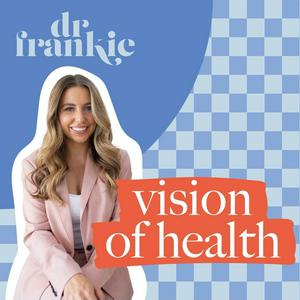
Welcome to Vision of Health podcast hosted by medical doctor, media and TV medic and personal trainer Dr Frankie Jackson-Spence. This podcast opens up conversations with the leading experts in their field surrounding the fundamental pillars of our health. There’s so much health content out there, it’s hard to know where to start. Vision of Health provides you with evidence based, practical health advice that you can actually implement into your busy lives. Bridging the gap between the scientific evidence based, and you, the everyday individual who just wants to live a healthier lifestyle. For more information you can find Dr Frankie on Instagram and TikTok @drfrankiejs or on her website www.drfrankiejs.com.Please do like and subscribe and stick around to become the healthiest version of you! Hosted on Acast. See acast.com/privacy for more information.
Podcast websiteListen to Vision of Health, Age Better with Liz Earle and many other podcasts from around the world with the radio.net app
Get the free radio.net app
- Stations and podcasts to bookmark
- Stream via Wi-Fi or Bluetooth
- Supports Carplay & Android Auto
- Many other app features
Get the free radio.net app
- Stations and podcasts to bookmark
- Stream via Wi-Fi or Bluetooth
- Supports Carplay & Android Auto
- Many other app features
Vision of Health
Scan code,
download the app,
start listening.
download the app,
start listening.
 UK
UK