

Listen to this podcast in the app for free: Download for free in the App Store
radio.net
Sleep timer
Save favourites
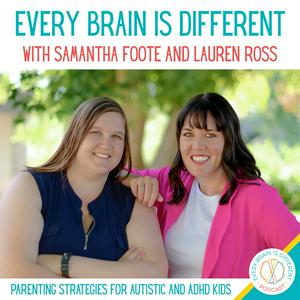
Autistic and ADHD Kids Parenting Strategies: Every Brain is Different
Samantha Foote & Lauren Ross | Parenting Neurodiverse Kids
Latest episode
198 episodes
What is Interoception and How Does it Affect Autism?
12/10/2026 | 23 mins.Connect with Samantha: https://everybrainisdifferent.com/
Get the Ultimate Guide to Raising Your Neurodivergent Child: https://everybrainisdifferent.com/
Samantha and Lauren discuss Samantha’s son’s years-long struggle with chronic, debilitating pain (legs, back, migraines) and how a pain clinic evaluation led to a new explanation: sensory processing disorder with heightened interoception. After extensive normal test results, a multidisciplinary team suggested his internal body-signal sense may be “turned up,” intensifying pain perception.
Samantha and Lauren define interoception (internal sensations like hunger, bathroom needs, heart rate, temperature, pain, and emotions) using occupational therapist Kelly Mahler’s framework and note that interoception differences can be muted, intense, or distorted, affecting interpretation of sensations and emotions.
The episode emphasizes validation, shifting from “why does he hurt?” to “what support does his nervous system need?”, and introduces Mahler’s “body, emotion, action” approach, encouraging parents to become “body detectives” with neutral body check-ins and curiosity rather than telling kids to “calm down.”
00:00 Welcome and Topic Setup
00:15 Years of Chronic Pain Search
00:46 Pain Clinic Evaluation
02:27 Unexpected Diagnosis Insight
04:32 Interoception Explained
06:24 When Signals Feel Too Loud
09:23 Muted vs Intense Awareness
11:56 Validation and Support Mindset
15:32 Body Emotion Action Framework
20:38 Becoming Body Detectives
22:06 Key Takeaways and Next Steps
23:44 Resources and Closing
Connect with Samantha Foote!
Website: https://everybrainisdifferent.com/
Instagram: https://www.instagram.com/everybrainisdifferent
YouTube: https://www.youtube.com/@everybrainisdifferentRaising Neurodivergent Kids Without Losing Your Marriage with Susan Minor
05/10/2026 | 29 mins.Connect with Samantha: https://everybrainisdifferent.com/
Get the Free Ultimate Guide to Parenting Your Neurodivergent Child: https://everybrainisdifferent.com/
Join the Neurodivergent Parenting Community: https://everybrainisdifferent.com/membership
Connect with Susan: https://www.LoveBridgecoaching.com
Samantha and Lauren interview Susan Minor, a certified relationship coach trained in the Laura Doyle method, about rebuilding connection in marriage, especially for parents under the stress of raising neurodivergent children.
Susan shares how, after nearly 30 years of feeling isolated and disconnected, she used the Laura Doyle skills privately and saw her relationship transform within months, later deepening the work with coaching.
She addresses common misunderstandings of The Empowered Wife, emphasizing it is not about shrinking or doing more, but about being heard and creating space for a partner to step up. The discussion covers “triage” after diagnosis, resentment, disengagement, “tools not rules,” gratitude and receiving, self-care, choosing connection over perfect logistics, and using conversation prompts to move beyond schedule-only talk.
00:00 Welcome and Guest Intro
01:28 Susan Marriage Turning Point
04:03 Empowered Wife Misconceptions
06:08 Neurodivergent Parenting Strain
11:16 Six Tools for Connection
14:28 Gratitude and Receiving
18:02 Beyond Logistics Talk
24:31 Conversation Starters Ideas
26:21 Where to Find Susan
28:10 Fun and Final Takeaways
28:54 Host Highlights and Wrap Up
Connect with Samantha Foote!
Website: https://everybrainisdifferent.com/
Instagram: https://www.instagram.com/everybrainisdifferent
YouTube: https://www.youtube.com/@everybrainisdifferentWhat to do When You're Autistic Raising Autistic Kids with Dalisse Sequeiros
28/09/2026 | 26 mins.Connect with Samantha: https://everybrainisdifferent.com/
Get the Free Ultimate Guide to Parenting Your Neurodivergent Child: https://everybrainisdifferent.com/
Join the Neurodivergent Parenting Community: https://everybrainisdifferent.com/membership
Connect with Dalisse:
Instagram: https://instagram.com/lovingpiecesbooks LinkedIn at LinkedIn: https://linkedin.com/in/sequeirosdalisse
Samantha and Lauren interview Dalisse, an autistic author and mom of two autistic boys, living in Barcelona, Spain, who wrote the five-book Loving Pieces series. Dalisse shares her family’s journey since her oldest son's diagnosis at 17 months, discussing early challenges such as meltdowns, guilt, grief, and uncertainty, and advises parents to give themselves time, take things one day at a time, and not treat bleak predictions as fixed outcomes.
Dalisse explains receiving her own autism diagnosis after recognizing similarities with her children, emphasizes being honest without romanticizing autism, and describes balancing differing sensory needs within the family through open communication and support from her husband and grandparents.
00:00 Welcome And Guest Intro
01:16 Life In Barcelona
02:11 Why She Wrote The Books
05:20 Advice After Diagnosis
10:52 Her Late Autism Diagnosis
13:34 Explaining Autism To Kids
15:44 Sensory Needs At Home
20:17 Finding Your Tribe
22:17 Resources And Where To Find Her
23:35 Fun Hobbies And Wrap Up
24:50 Host Highlights And Book Recap
27:45 Final Goodbye And Next Steps
Connect with Samantha Foote!
Website: https://everybrainisdifferent.com/
Instagram: https://www.instagram.com/everybrainisdifferent
YouTube: https://www.youtube.com/@everybrainisdifferentOut of the Box Parenting: How to Teach Your Neurodivergent Child to Cook | Ep. 184
21/09/2026 | 26 mins.Connect with Samantha: https://everybrainisdifferent.com/
Get the Ultimate Guide to Parenting Your Neurodivergent Child: https://everybrainisdifferent.com/
Join the Neurodivergent Parenting Community: https://everybrainisdifferent.com/membership
Samantha and Lauren discuss out-of-the-box ways to teach neurodivergent kids kitchen skills. They share practical strategies to include kids without overwhelm by breaking cooking into clear steps, assigning specific tasks, and using visuals, play kitchens, and practice activities like pouring between measuring cups or “mud pie” measuring. They cover progressive knife and cutting practice with kid-safe tools, softer foods, and Play-Doh, while emphasizing safety routines.
The episode also highlights sensory considerations (smells, textures, loud appliances, heat/steam) and executive-function supports (picture recipes, checklists, timers, color-coded tools), encourages experimentation when safe, and suggests building independence in stages and finding ways to say yes.
00:00 Podcast Welcome
01:42 Kitchen Skills Topic
01:58 Cold Oven Practice
04:02 Why Cooking Matters
05:43 Visual Steps and Roles
08:12 Play Kitchen Practice
10:01 Kid Safe Cutting Skills
13:37 Sensory Friendly Cooking
16:58 Food Reactions and Gloves
18:29 Executive Function Supports
21:25 Experiment and Independence
24:42 Find a Way to Yes
26:06 Resources and Wrap Up
Connect with Samantha Foote!
Website: https://everybrainisdifferent.com/
Instagram: https://www.instagram.com/everybrainisdifferent
YouTube: https://www.youtube.com/@everybrainisdifferentWhat to do When You Face Judgement With Your ADHD/Autistic Child | Ep. 183
14/09/2026 | 18 mins.Connect with Samantha: https://everybrainisdifferent.com/
Get the Ultimate Guide to Parenting Your Neurodivergent Child: https://everybrainisdifferent.com/
Samantha and Lauren discuss Samantha’s weekend camping trip with extended family and how a recent change in her son’s ADHD medication affected his behavior. Her son had previously thrived on stimulant medication, describing a “quiet” brain and better focus, but after switching meds due to appetite concerns, he became unusually emotional, restless, and reactive which led to conflicts, safety concerns, and relatives criticizing Samantha’s parenting strategies and implying he needed more discipline.
Once Samantha realized the new medication needed a higher dose and adjusted it, he returned to baseline and listened better, though others attributed it to discipline. Samantha and Lauren emphasize advocating for neurodivergent kids, using teachable moments to educate family, balancing compassion with expectations, and offering positive feedback amid frequent negative comments.
00:00 Welcome and Setup
00:14 ADHD Meds Success Story
02:24 Switching Meds Camping Meltdown
04:33 Family Judgment and Discipline
09:15 Safety and Fixing the Dose
10:30 Counting Consequences Reset
12:06 Advocating and Educating Family
14:01 Teachable Moments Sensory Needs
16:54 Positive Feedback and Wrap Up
Connect with Samantha Foote!
Website: https://everybrainisdifferent.com/
Instagram: https://www.instagram.com/everybrainisdifferent
YouTube: https://www.youtube.com/@everybrainisdifferent
More Health & Wellness podcasts










Trending Health & Wellness podcasts














About Autistic and ADHD Kids Parenting Strategies: Every Brain is Different
Welcome to Every Brain is Different, the podcast designed for parents raising kids with Autism, ADHD, and other neurodiverse conditions. Discover practical parenting strategies, expert insights, and real-life stories that highlight the strengths and challenges of neurodivergent individuals. Join us to connect with a supportive community of parents, gain tools to help your child thrive, and celebrate the unique ways every brain works. If you're looking for inspiration, effective parenting strategies, or simply a sense of connection, tune into Every Brain is Different and join a community that truly understands.
Website: www.everybrainisdifferent.com
Instagram: www.instagram.com/everybrainisdifferent
TikTok: www.tiktok.com/everybrainsidifferent
YouTube: www.youtube.com/@everybrainisdifferent
Podcast websiteListen to Autistic and ADHD Kids Parenting Strategies: Every Brain is Different, ZOE Science & Nutrition and many other podcasts from around the world with the radio.net app
Get the free radio.net app
- Stations and podcasts to bookmark
- Stream via Wi-Fi or Bluetooth
- Supports Carplay & Android Auto
- Many other app features
Get the free radio.net app
- Stations and podcasts to bookmark
- Stream via Wi-Fi or Bluetooth
- Supports Carplay & Android Auto
- Many other app features
Autistic and ADHD Kids Parenting Strategies: Every Brain is Different
Scan code,
download the app,
start listening.
download the app,
start listening.
 UK
UK